


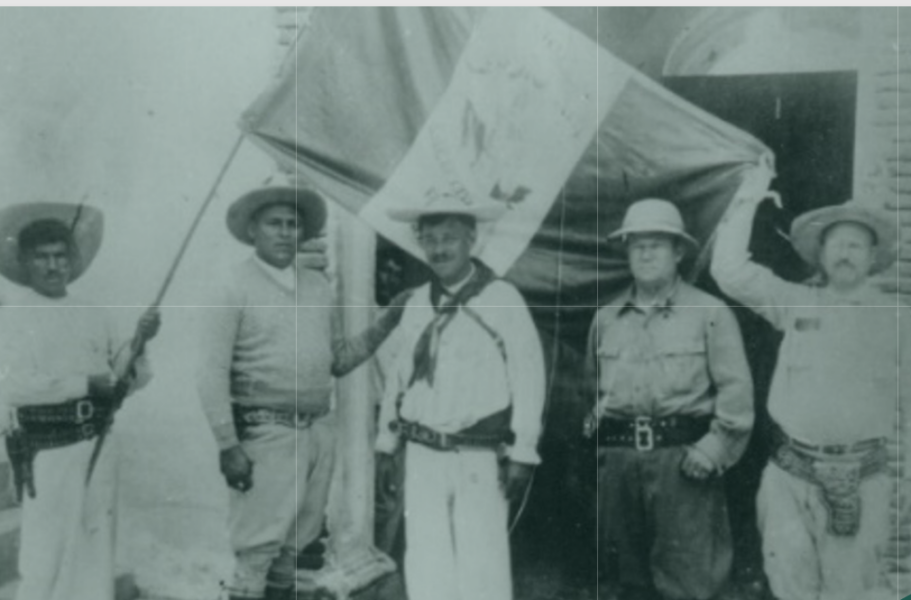
On this November 22, the Solemnity of Christ the King, the Mexican Episcopate releases its Pastoral Letter on the occasion of the centenary of the beginning of the Cristero resistance and the Jubilee Year granted by Pope Leo XIV. After a prolonged silence regarding collective pastoral letters, where messages and the pastoral approach of specific communiqués and declarations have predominated, the document recovers the value of ecclesial instruction capable of guiding deep reflection, beyond mere situational positioning.
The letter does not seek to stir up emotions or inflame contemporary consciences. As the bishops emphasize from the preamble, it does not celebrate armed conflict nor seek vengeance. It recalls the fidelity of a people who, amid fear, continued praying in their homes, baptizing in secret, and protecting their priests; the witness of the martyrs who did not kill for Christ, but died for Him while forgiving their executioners, and the lesson that religious freedom is not a clerical privilege, but the right of every person, whose denial ultimately costs blood. It is about recovering and updating memory from the realm of faith and pastoral care, precisely in a Mexico experiencing a convulsion that has been sold to us as “transformation.”
This updating becomes especially urgent when reading Chapter V, particularly the section “From Fratricide to the Construction of Peace: A Reconciling Church.” The bishops clearly acknowledge that religious persecution was real and that the war pitted Mexicans against Mexicans. Therefore, they warn that it is not possible to reduce memory to a simplistic history of good versus evil. They demand recognition of causes, responsibilities, sufferings, errors, and excesses, without renouncing the truth, but without turning it into a pretext for hatred or confrontation.
A Church that preserves the memory of its martyrs is called to be reconciling. And that responsibility, they affirm, is especially urgent today, in a country wounded by violence, insecurity, distrust, and the weakening of community bonds.
Mexico suffers a daily fratricide that is not exhausted by violence alone. It is expressed in political polarization that turns the adversary into an absolute enemy, in the erosion of the social fabric by organized crime and impunity, in poverty that dehumanizes, in corruption that undermines institutional trust, and in the fragmentation of families. The official “transformation” has promised peace and justice; however, reality delivers, in too many territories, fear and abandonment. In the face of this, the letter does not propose armed vengeance or confessional revenge. It proposes the reconstruction of the social fabric, justice, fraternity, and peace as lessons from the present.
This orientation is reinforced in the ethical, communal, and ecclesial commitments of the same chapter: defending religious freedom and freedom of conscience without claiming absolute sovereignty over the person, rejecting the use of violence as a means of vindication, strengthening networks of support and civic participation from a Christian ethic, making visible the role of women and youth in building peace, and promoting historical formation that avoids ideological manipulation of the past. Martyrial memory is only fruitful when it becomes an examination of conscience and a renewed commitment to life, not polarization.
Christ is King. Mexico must recognize the deep roots of these roots in its history and in its present, not to impose a state confession, but to affirm that the dignity of the person, freedom of conscience, and the construction of peace are not revocable concessions of power, but demands of a tradition that, at the cost of blood, defended that no human power is absolute.
In a convulsed country that is presented to us as transformed, this updated memory can be, if lived with truth and charity, a seed of reconciliation and not of new fratricide. The best tribute to the martyrs is not the exaltation of the past, but a new Cristero struggle in this Jubilee Year, that of the daily witness of a Church that, configured with Christ, works for peace founded on justice and truth. Long live Christ, King of the universe!