


Issue 64 of the Catholic Citizenship and Social Analysis Observatory, published on July 20, 2026, is titled “Anti-Fentanyl Summit: Mexico in the Eye of the Storm” and offers elements of ethical discernment on an event of great significance for the country. The document opens with a criterion taken from Pope Leo XIV’s encyclical letter Magnifica humanitas: “When politics renounces a long-term vision and is reduced to short-term calculations or sterile polarizations, discourses on the common good lose credibility, and at the same time inequalities and social fractures grow. This also applies to international politics”. From that compass, the Observatory poses two central questions: why Mexico’s image has changed so drastically, generating distrust among governments, international entities, and actors with economic, diplomatic, and military power, and what consequences a government that is moving toward authoritarianism, arbitrariness before the law, and murky alliances with criminal gangs—defying the warnings of the world’s most powerful country—may have for Mexican society.
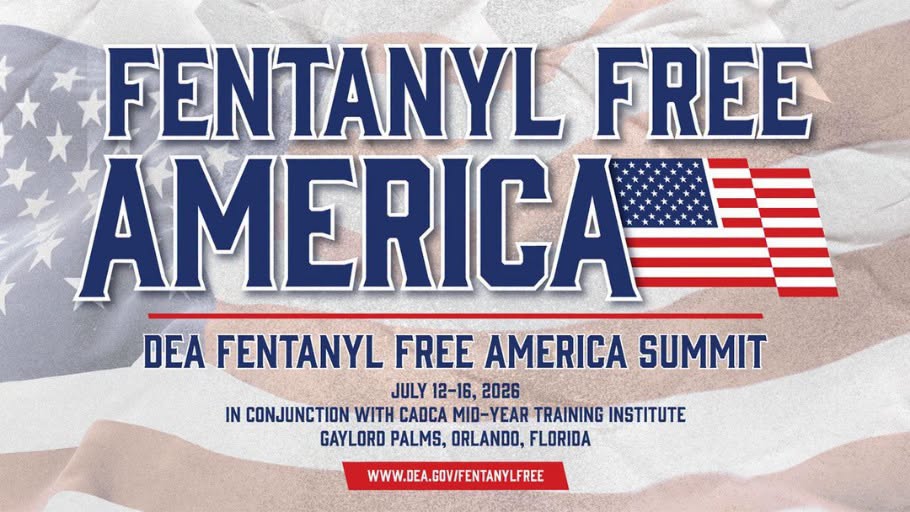
In the facts section, the Observatory documents that the United States government organized the “United States Free of Fentanyl” Summit from July 13 to 16, 2026, at Gaylord Palm, Orlando, Florida. It is a national and international event of great impact on Mexico because almost all production of this deadly drug takes place on Mexican territory, manufactured almost exclusively in laboratories established by the Sinaloa and Jalisco Nueva Generación cartels. In recent years, this substance has caused 70 percent of U.S. deaths from narcotic overdoses. More than 100,000 American consumers have died annually between 2022 and 2025, according to official reports from that country. Scientific studies establish that fentanyl is fifty times more potent than heroin. The document emphasizes that fentanyl is produced almost exclusively in Mexico, using precursor chemicals from China, India, and Singapore, and that available maps confirm this exclusive production. For this reason, the summit is aimed directly at the current Mexican government led by Claudia Sheinbaum, a government that, according to the analysis, is largely controlled by Andrés Manuel López Obrador through his operatives in the cabinet, in the chambers of Congress, and in almost all members of the Supreme Court of Justice of the Nation.
The Observatory details the duality of powers with the predominance of the former president and his circle, including control over the president’s communication exercised by Jesús Ramírez Cuevas and other actors. It points to the use of “distractions,” such as the arrest of former governor Ernesto Ruffo Appel on June 16, the date the summit concluded, to try to absorb the impacts of economic failure and the T-MEC negotiations. In the analysis section, the document clearly identifies the two central objectives of the summit. The first is to create an international network of countries that grant legitimacy to U.S. policies against fentanyl, including the militarization of the fight against organizations already classified as narco-terrorists or foreign terrorists. The second objective is to be able to deploy, with multilateral support from “friendly” governments and pro-Trump domestic organizations, global policies to combat fentanyl that, when properly understood, amount to extraterritorial U.S. intervention in Mexico, whose most sensitive policy is the pursuit of networks of Mexican politicians who provide cover and protection to the cartels. In the Observatory’s words, it is about legitimizing the legal prosecution of the highest-level politicians of the Morena party, including its top leader.
The Sheinbaum government deemed it appropriate not to attend a summit in which Mexico would practically be the main accused of having a government that protects fentanyl-producing organizations. In the morning press conference on July 17, the president explained that, from her perspective, it was more of a political issue than a real fight against criminal groups, and that is why the State Department was informed of the decision not to participate. The Observatory recalls that high representatives of U.S. national security have pointed out that the Mexican government maintains an “unfortunate liaison” with cartel criminals.
Terry Cole, director of the DEA and keynote speaker at the summit, stated from January 2026: “There is no doubt that drug traffickers and high-ranking officials in Mexico have been in bed for years.” In his opening speech, he maintained that the DEA fights not only the cartels, but also facilitators, distributors, money launderers, and chemical suppliers, and that “this includes the deadly connection between cartel networks and the Mexican government: they are the same thing”. While López Obrador categorically denied the existence of fentanyl-producing laboratories in Mexico, on July 14 Omar García Harfuch reported that the Sheinbaum government has dismantled 2,627 clandestine laboratories of fentanyl and other synthetic drugs, information equivalent to recognizing that Mexico is the great and only global factory of this substance.
As a necessary complement to strengthen reflection from the Church’s doctrine, it is pertinent to recover the teachings of the document “Church, Drugs and Drug Addiction” from the Pontifical Council for the Pastoral Care of Health. The text clearly establishes that human beings have no right to harm themselves. The consumption of narcotics constitutes an attack on the dignity of the person and a form of self-destruction that violates the natural moral order. Human life cannot be reduced to chemistry or immediate pleasure. The unbridled pursuit of sensations hides a profound difficulty in living and an absence of meaning. The magisterium categorically rejects any liberalization of drugs and demands three inseparable axes: prevention that educates in the value of life and temperance, cure that respects the dignity of the addicted person, and repression of “death traffickers” as a duty of justice.
Issue 64 of the Catholic Citizenship and Social Analysis Observatory thus places the Orlando summit before ethical discernment. The data on exclusive production, deaths, drug potency, dismantled laboratories, and DEA statements are public and verifiable. The objectives of the summit, according to the analysis, go beyond interdiction and point to an international legitimization of actions that could reach the highest spheres of Mexican political power. While demand and production continue, and while the moral void that drives so many people toward self-destruction is ignored, summits will continue to announce partial victories in a battlefield that demands a deeper victory: that of human dignity over the chemistry of death.
The report can be consulted here.
Ciudadania Catolica y Analisis Social 64