


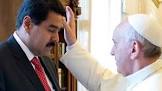
Rome is cool, around zero in any case, the holy door has been closed but other doors seem to remain open, or half-open. The winds of history have changed and everything seems to be doing so at a dizzying speed. In the Vatican, it’s always said that nothing changes until everything changes. We have lived years that it’s better not to forget to be aware of human stupidity and not stumble a thousand times over the same stone. Our image today tries to provoke, but above all, so that we don’t forget what we have seen and heard.
Everything points to us facing a very eventful 2026 on the civil side, the year has started very busy, and on the ecclesiastical side, we can’t complain. The world around us is getting complicated and invites us very little to optimism, what we do have is good information, also from the world of the Church. Once again, we thank Paco Pepe and his ‘Cigüeña’ for his kind references, his temporary absence filled us with sadness, but storks always return to the nest and we hope for a long time.
Pope Leo XIV to the diplomatic corps.
The extensive speech yesterday morning to the Diplomatic Corps is the most important since Prevost’s election as Pope. The Holy See’s diplomatic network remains one of the most extensive in the world: 184 States currently maintain official diplomatic relations with the Vatican. There are 93 diplomatic missions accredited to the Holy See with headquarters in Rome, including those of the EU and the Order of Malta. These embassies and representations are not physically located in the State of Vatican City, they operate from the Italian capital.
The content is a manifesto that explains his vision of the things of this world, of the pain and suffering that afflict humanity . There is little rhetoric, and on more than one occasion the traditional Vatican prudence gives way to words that in other times, even recently, would have been difficult to hear from a Pope especially in a global context like the current one. He even spoke of the forbidden jihad: «I wish to address a special thought to the numerous victims of violence, including those of religious motivation, in Bangladesh, the Sahel region and Nigeria, as well as to those of the serious terrorist attack last June in the parish of Saint Elias in Damascus, without forgetting the victims of jihadist violence in Cabo Delgado, Mozambique». Even he affirms that «religious motivations» have a lot to do with it, look at that, we’ve been saying it for years.
Leo XIV analyzed today the current situation of the world through «City of God», the work that Saint Augustine wrote «inspired by the tragic events of the sack of Rome in the year 410 A.D.» «It interprets events and historical reality according to the model of two cities: the city of God, eternal and characterized by the unconditional love of God (amor Dei), to which is joined the love of neighbor, especially the poor; and the earthly city, a temporary dwelling where human beings live until death». For Augustine, the cities are two and cannot be identified. And yet, throughout history, they are intertwined until the end of the world. There is a constant transit between both and whoever is a citizen of one of them can always become a citizen of the other. The experience of belonging to «another City» can help Christians to realistically recognize the inherent goods of the «City of Man», along with the violence and potential corruption associated with any power.
Leo XIV, finally, recognized the worrying weakness of multilateralism at the international level, given that «a diplomacy that promotes dialogue and seeks consensus among all is being replaced by a diplomacy of force, of individuals or groups of allies. War has come back into fashion and the war fervor is spreading». He pointed out that «especially in the West, the space for authentic freedom of expression is shrinking more and more, while a new language is developing, with Orwellian tones, which, in its eagerness to be more and more inclusive, ends up excluding those who do not fit into the ideologies that inspire it». He recognized that «freedom of conscience seems to be increasingly questioned by states, even by those that claim to be based on democracy and human rights».
He affirms that «the persecution of Christians remains one of the most widespread human rights crises today». He spoke of the “subtle form of religious discrimination against Christians, which is spreading even in countries where they are numerically majority, as in Europe or America”, especially “when they defend the dignity of the weakest, the unborn, refugees and migrants, or promote the family”. Splendid the reference to “projects designed to finance cross-border mobility to access the so-called ‘right to safe abortion’” and “surrogacy, which, by transforming gestation into a negotiable service, violates the dignity of both the child, reduced to a ‘product’, and the mother, by exploiting her body and the procreative process”. He also recognized that «a true ‘short circuit’ of human rights is occurring, with the result that «the right to freedom of expression, freedom of conscience, religious freedom, and even to life, are being limited in the name of other so-called new rights, with the result that the very structure of human rights is losing its vigor, leaving space for force and oppression».
And the UN? «It is necessary to strive for the United Nations not only to reflect the current world situation, instead of the post-war one, but also to be more oriented and more efficient in the application of policies aimed at the unity of the family of peoples, not at ideologies». He mentioned all the current conflicts and Venezuela was not missing, where he was subtle, but clear: «Respect the will of the Venezuelan people» and «commit to the protection of the human and civil rights of all and to the construction of a future of stability and harmony». His goal: “Build a society founded on justice, truth, freedom and fraternity, and thus recover from the serious crisis that has afflicted the country for many years”.
Vatican negotiations on Maduro.
On Venezuela we are learning more data and on Christmas Eve, Parolin , Secretary of State of the Vatican urgently summoned the US ambassador Brian Burch to talk about Venezuela and learn in detail the plans of the United States. The indiscretion was published by the Washington Post, which claims that the Vatican was mediating at that time to facilitate the transfer of Maduro to Russia. It seems that with the approval of Leo XIV, he urged the United States to offer the Venezuelan president an exit that Putin was willing to guarantee behind the scenes.
Vatican diplomacy was apparently driven by the great fear of a civil war, so, to avoid the risk of bloodshed, the cardinal took action. In his conversation with Burch, Parolin allegedly anticipated that Russia was willing to grant asylum to Maduro, pressing the Americans to consider that offer. The proposal did not go down well: «What was proposed to Maduro was that he leave and be able to enjoy his money». Parolin, according to the documents, focused the issue on whether the United States only attacked drug traffickers? Or was the Trump administration really interested in a regime change? Parolin would have stated that «Russia was willing to grant asylum to Maduro and asked the Americans for patience to convince the Venezuelan president to accept».
The Washington Post also reports on the Vatican press release in response to the article: « It is disappointing that parts of a confidential conversation have been published that do not accurately reflect the content of the conversation, which took place during the Christmas period». Neither the United States, nor the Kremlin, have commented anything. The attempts to find a diplomatic solution with Maduro continued until the eve of the attack.
Agenda of the Pope, the exercises return to the Sacred Palaces.
We are already getting the Pope Leo’s agenda for the coming months. The celebrations presided over by the Pope during the next two months, which will begin on January 25 with the celebration of Second Vespers in the Basilica of Saint Paul and conclude with the Lenten Spiritual Exercises that are recovered and return to the Apostolic Palace from February 22 to 27. On February 2, in the Basilica of Saint Peter, Leo XIV will preside over the Mass of the World Day of Consecrated Life. On February 18, Ash Wednesday, the Statio and the penitential procession from the Church of Saint Anselm on the Aventine to the Basilica of Santa Sabina.
Trip to Spain.
The president of the Spanish Episcopal Conference (CEE) and archbishop of Valladolid, Mons. Luis Argüello, met this Friday, January 9, in Rome with the Substitute Edgar accompanied by Cobo and Omella to talk about the preparations for the first visit of Pope Leo XIV to Spain, scheduled for 2026. The main destinations of Pope Leo XIV will be Madrid, Barcelona and the Canary Islands, confirmed by Cobo after this morning’s meeting: «We don’t have fixed dates yet, but I can anticipate that the destinations will be Madrid, Barcelona and the Canary Islands». The trip, still not officially confirmed by the Holy See, will be the first of a Pope to Spain in more than a decade, after Benedict XVI in 2011.
More on the consistory.
The format under Pope John Paul II allowed long plenary interventions. The current consistory allows approximately 90 minutes for the interventions of nearly 190 cardinals. Everything points to a clear orientation being sought. It is expected that future consistory sessions will open with reflections from José Tolentino de Mendonça and Luis Antonio Tagle, both widely regarded as prominent voices aligned with the current synodal emphasis within the Church. Pentin reports that some cardinals have expressed concern that the liturgy seems to have been relegated to the background in the consistory. Pope Leo XIV himself explained the issue: «due to time limitations and to foster a truly in-depth analysis, only two of them will be specifically addressed». The Pope thanked them for his election and added: «The other topics have not been lost. There are very concrete and specific issues that we still need to address». The 170 cardinals were divided into 20 linguistic groups, in turn divided into two blocks: one with cardinals resident in Rome and another with electors from local Churches.
The annoying questions from Zen.
Zen never disappoints and during an intervention before the extraordinary consistory of cardinals this week, he criticized the final document of the Synod on Synodality and the entire synodal process for overlooking the legitimate authority of bishops, allowing various interpretations and suggesting that the Holy Spirit can change his mind. He used the three minutes assigned to him to reprimand the document and the entire synodal process as a “ruthless manipulation” to strip bishops of authority by overlooking them in favor of the laity and for having a predetermined outcome. He pointed out the contradiction that Pope Francis declared the document to be «magisterium» but also «not strictly normative». He argued that the continuous invocation of the Holy Spirit by Vatican prelates for the Synod bordered on «blasphemy», since the Holy Spirit cannot repudiate what he inspired in the bimillennial tradition of the Church. We make his questions our own: «Has the Pope known how to listen to the entire People of God?. Do the lay people present represent the People of God? Have the bishops chosen by the Episcopate known how to carry out a work of discernment, which surely must consist of “dispute” and “judgment”? They expect surprises from the Holy Spirit; what surprises? Will he repudiate what he inspired in the Bimillennial Tradition of the Church? Given the dramatic rupture of the Anglican Communion, will we join the Archbishop of Canterbury (who remains with only about 10% of the global Anglican community), or the Global Future Anglican Conference (which retains about 80%)? And with the Orthodox? Their bishops will never accept Bergoglian synodality; for them, synodality is «the importance of the Synod of Bishops». Pope Bergoglio has exploited the word «synod » , but has made the Synod of Bishops disappear, an institution established by Paul VI.
Public cuts to abortion.
And we end with the United States and the great joy that affects the abominable crime of abortion. The cuts by the Trump administration to federal funding for entities involved in abortions have forced the International Planned Parenthood Federation (IPPF) to cut nearly a thousand jobs worldwide. Alliance Magazine reports that IPPF has published data indicating that its loss of $87.2 million has resulted in 40 percent of its member associations laying off 969 employees in 34 member associations, and that 1,394 so-called «health sites» closed or canceled their planned openings. The cuts are mainly the result of President Donald Trump’s reinstatement of the Mexico City Policy, which prohibits non-governmental organizations from using tax dollars for abortions abroad, and the cut of millions in pro-abortion subsidies distributed by the United States Agency for International Development (USAID).