


2025 is slipping away from us, the jubilee is ending, these are days of balances and proposals for the future. In the Church, we have experienced this 2025 the death of Pope Francis, we are not very clear if his pontificate has ended completely. Pope Leo XIV is not quite starting, the curia has not been renewed and no significant acts of government have been carried out. There are appointments that have a clear continuity with the previous pontificate, but the environment has changed and the wardrobes full of jackets don’t quite know which one to use. A greater tranquility is breathed, there are signs that we are not in the same time, the page is turning and attempting to reorient some of the open issues, but always with a ‘for now’ that closes and does not close. We have no doubts that Leo XIV does not want to polarize things and seeks a church in which everyone feels comfortable, this is nothing but a political strategy, what we do not see is a clear desire for what in other times was called the new evangelization. We can remain in maintaining a moribund body, saving the furniture, living off the rents, and forgetting a necessary projection towards the future. We have no doubt that 2026 will be a key year in which we will see if we fall into a sterile lethargy or turn the page and regain new apostolic vigor. What we do have clear is that Leo is not Francis, one period is closing and another is opening.
We are already finishing and yesterday, presided over by Cardinal Archpriest James Harvey, the rite of closure of the Holy Door of the Basilica of St. Paul Outside the Walls. After the Holy Doors of Rebibbia prison, that of St. Mary Major (where Pope Francis is buried) and that of St. John Lateran, this is the penultimate of the Holy Doors of the 2025 Jubilee Year dedicated to Hope, which has already been closed. Now only the Holy Door of the Basilica of St. Peter remains, whose rite is entrusted directly to the Pontiff who will be on January 6, the day of the Epiphany.
Luis Badilla analyzes the speech of Leo XIV to the curia framed in the Christmas greeting. «The reflections of Pope Leo XIV, on December 22, on certain behaviors and styles among the members of the Roman Curia, widely considered as ‘unexpected,’ ‘severe,’ and ‘strong’ criticisms, also caused surprise for being uncommon in his language. The reference to some interventions characteristic of Pope Francis, in at least three important speeches, was immediate, although any comparison is not automatic. The words and tone used by both Popes on the matter are different. Obviously, it makes no sense to create a competition between the two Bishops of Rome, especially because it is evident that Bergoglio and Prevost have a different overall vision of the Roman Curia.»
In the Vatican and the Holy See, more than 5000 people work, but if we reduce the number to the personnel of the dicasteries that affect the government of the Universal Church, we are left with many fewer. Luis Badilla: «The curial body, which includes clerics and laity, men and women, has around 400 members. The superiors are all clerics and priests. In recruiting this personnel, a significant part, almost the entirety, applies methods and mechanisms of co-optation. This method has been used for centuries and has not received criticisms or protests, perhaps because it is mistakenly associated with the unique nature of the Church, which, in modern language, is and acts as a monarchy. This monarchical character is then attributed to the State of Vatican City, something very different from the Christian faith, particularly the Catholic one.»
«Between 1588 and 2024, none of the five curial reforms addressed the issue of personnel selection called to collaborate with the Pope and his closest collaborators. Therefore, it can be said that the Curia was formed as a result of the sedimentation and stratification of a single mechanism: co-optation, a precise concept and mechanism that explains both the merits and talents of this highly professional and specialized ecclesiastical bureaucracy, as well as the defects, limitations, and shortcomings that still today seem almost impossible to overcome. «To co-opt» means to elect or welcome a new member to a collegial body through selection by the existing members, without external election.» In the Curia, it is perfectly normal to find members, often at high levels and of authority, who have not gone through any selection process and, therefore, are appointed simply by co-optation.» Unfortunately, to date there has been no news, nor the slightest indication, suggesting that this situation could be reformed sooner or later. It is difficult to imagine that things will change. All the dioceses of the world, even the smallest ones, behave in the same way.» How can we better select the members of the bodies called to collaborate with the Pontiff in the government of the Universal Church? How can we avoid ecclesiastical careerism, which is greatly facilitated and protected through co-optation?»
We still do not have all the data to assert what path Pope Leo XIV will follow on many hot topics. Something is being seen and there are many who do not like it. The Archbishop of Armagh, Eamon Martin, in Ireland has expressed his surprise at the «unanimity» of the members of the Vatican’s study commission in their decision on women deacons. He expresses his surprise at the fact that the study group’s report had been «published in isolation» from those of the other nine study groups created by Pope Francis to examine more controversial issues after the conclusion of the first meeting of the Synod on Synodality. He still has some hope: «It is very interesting that Pope Leo has said that this issue remains open instead of saying ‘that’s it, it’s over.’ «It is necessary to consider the issue of how women exercise their baptismal diaconate, which all lay men and women exercise.» «In our Irish Synodal Path, we have highlighted baptism and its call to mission. A crucial question for the Church is: how do women fully exercise their baptismal priesthood and, therefore, the whole issue of co-responsibility, the role of women in decision-making and leadership within the Church?» EThe Archbishop of Dublin, Dermot Farrell, seems much more realistic and states that he had «no doubt that many people, both women and men, will have felt disappointed by the reported outcome of the study on the issue of ordaining women to the diaconate.» His conclusion was that the evidence they considered excluded the possibility of proceeding to diaconal ordination for the priesthood.» He continues to maintain that: «the issue of women’s access to the diaconal ministry remains open. This discernment must continue.» «I have no doubt that in the near future, women will serve as parish leaders, continuing and developing the ministries they already exercise.»
The United Nations seems to miss ‘their’ Pope Francis and in their annual summary they have mourned his death in 2025, remembering His Holiness as a transcendent voice for peace, human dignity, and social justice. Secretary General António Guterres recalled that «Pope Francis was a messenger of hope, humility, and humanity.» It seems that Pope Leo pleases them less, a very good sign.
Message signed by Parolin, on behalf of Pope Leo XIV, for the 48th European Youth Meeting organized these days by the Taizé Community in Paris. «Your meeting marks a new stage in the ‘Pilgrimage of Trust on Earth’ initiated by Brother Roger almost half a century ago, in this same city of Paris. The Holy Father is pleased to know that you have gathered in a city characterized by a rich religious heritage, forged over the centuries by the luminous witness of so many holy figures who, each in their own way, have courageously responded to Christ’s call.» Remembers that the meeting «also takes place at a particular ecclesial moment, marked by the closure of a Jubilee Year and the commemorations of the 1700th anniversary of the Council of Nicaea.» The Message concludes: «The desire for full communion among all believers in Jesus Christ is always accompanied by the search for fraternity among all human beings.»
The «Vademécum del Conservador Italiano » by Marco Invernizzi and Oscar Sanguinetti is a dense but easy-to-read text, designed to offer guidance to anyone who identifies with Italian conservatism or wishes to explore it, both historically and contemporarily. The idea is ambitious: the agility of the manual, preferable to a systematic academic exposition, serves as an essential guide, useful for orienting principles, impulses, and paradigms: a compass for navigating (or finding oneself) in a cultural horizon often mentioned but never fully understood.
The centrality of the conservative pole is appreciated in the opposition to the French Revolution, which the authors consider an emblematic moment of discontinuity in European history that caused the collapse of the previous political and cultural world. The conservative does not long for the static, but recognizes «the perennial, the original, the conform to God’s law, to solid anthropology, and to common sense,» which must be maintained and transmitted, enriching itself with what is compatible with the current historical reality. In this context, the true meaning of progress emerges: it should not be «progressive» in the revolutionary sense, that is, oriented toward demolishing the existing order to establish a new one from scratch, but «gradual» and rooted in tradition, respectful of experience, ontological constraints, and limits. Reflecting on the Italian experience, the authors trace the national history and the history of the local conservative movement, from Unification to the Opera dei Congressi, from the end of non expedit to fascism, from the partisan struggle to the Tambroni government, from the Knight’s entry into the political arena to the experience of the Fratelli d’Italia. The second and third parts are the true manual: examples, beliefs, and rejections in an era full of political narratives opposed to conservative thought, with interesting questions on concepts like ‘tradition,’ ‘common sense,’ ‘limit,’ ‘progress,’ ‘sovereignty,’ and ‘identity.'»
In Africa, land of martyrs, it seems they have things much clearer. According to Aid to the Church in Need, despite the climate of fear, the Christian faith remains alive in Burkina Faso and the blood of the martyrs is seed of Christians. Interview with Msgr. Naré, Bishop of Kaya and apostolic administrator of the Diocese of Dori: «Masses will begin early to avoid nighttime displacements.» The jubilee of the 125 years of evangelization, celebrated in March at the Marian shrine of Yagma with two million faithful, constitutes evident proof of the vitality of Christianity in the region. «If the enemy thought to smother Christianity, it has been in vain: the Christian faith is spreading across Africa.» In Koumi, in the west of the country, the major seminary is overflowing, despite the fact that the country’s priests are frequent targets of terrorists. This reality shows that violence has not succeeded in dissuading religious vocations. Msgr. Kientega, Bishop of Ouahigouya, celebrates Mass regularly in the chapel of the civil prison in that locality, where during Masses and visits to the inmates, Christians, Muslims, and Protestants gather. The three dioceses located in the north of the country are full of stories of courage that rarely make it to the media. Last August, in Pibaoré, the women of the parish formed a human shield to protect their parish priest when he was the target of an attack during Mass. The Bishop of Kaya emphasizes that «this heroic act has never appeared in the media, despite being an important symbol of faith and solidarity.» In the Diocese of Dori, only two parishes remain open, those of Dori and Gorom, but the bishop can only visit them with military escort or by helicopter. The parish of Thiou, in the Diocese of Ouahigouya and near the border with Mali, remains closed.
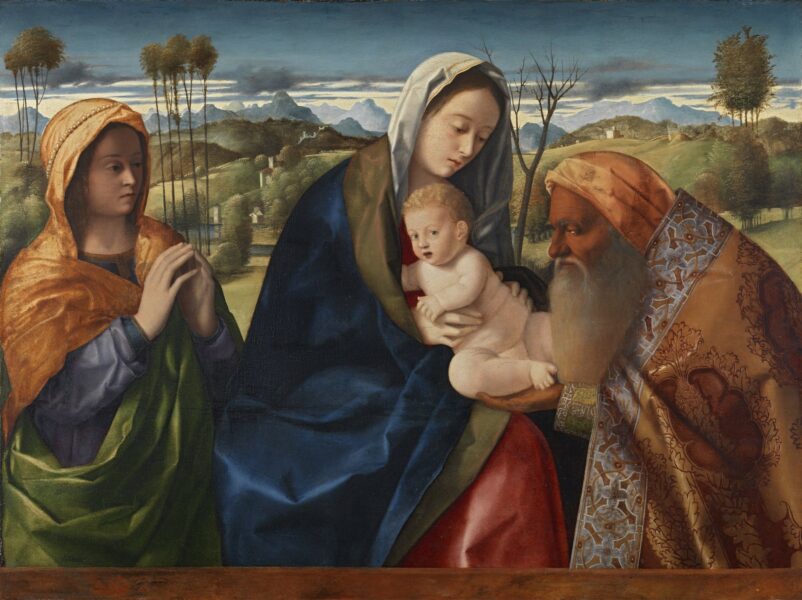
go in peace, according to your word:
your salvation,
before the face of all peoples:
and glory of your people Israel.»