


By Father Raymond J. de Souza
NOTE: We continue to make progress in our fundraising campaign, but we need more of you to move forward with us. With generosity. And now. You know how. – Robert Royal
I am grateful that Brad Miner, TCT film critic, recently wrote about America’s greatest Catholic filmmaker. He proposes Leo McCarey, whose Going My Way and The Bells of St. Mary’s were “culturally transformative,” in the sense that “they portrayed Catholic life in the United States in a way that diminished anti-Catholicism.”
This gives me occasion to note that this year marks the fortieth anniversary of The Mission (1986), the best Catholic film, in my opinion. Many instead award that distinction to A Man for All Seasons (1966), which premiered sixty years ago. Neither is by McCarey, and both, remarkably, were written by the same man. Robert Bolt, who also wrote Lawrence of Arabia (1962) and Doctor Zhivago (1965), was, even more remarkably, not a Christian believer; at most, perhaps an agnostic.
A Man for All Seasons won the Oscar for Best Picture. The Mission was nominated and, although it did not win, it did take the Palme d’Or at Cannes.
I prefer The Mission to McCarey’s good films because it better portrays the Church as the casta meretrix (“chaste harlot”) of which the Fathers spoke, long before cinema existed. Bing Crosby and McCarey’s films are more casta sponsa (“chaste bride”), and that has its merit. The casta sponsa is the aspiration, the final consummation; the casta meretrix is the present reality, and it makes for better drama.
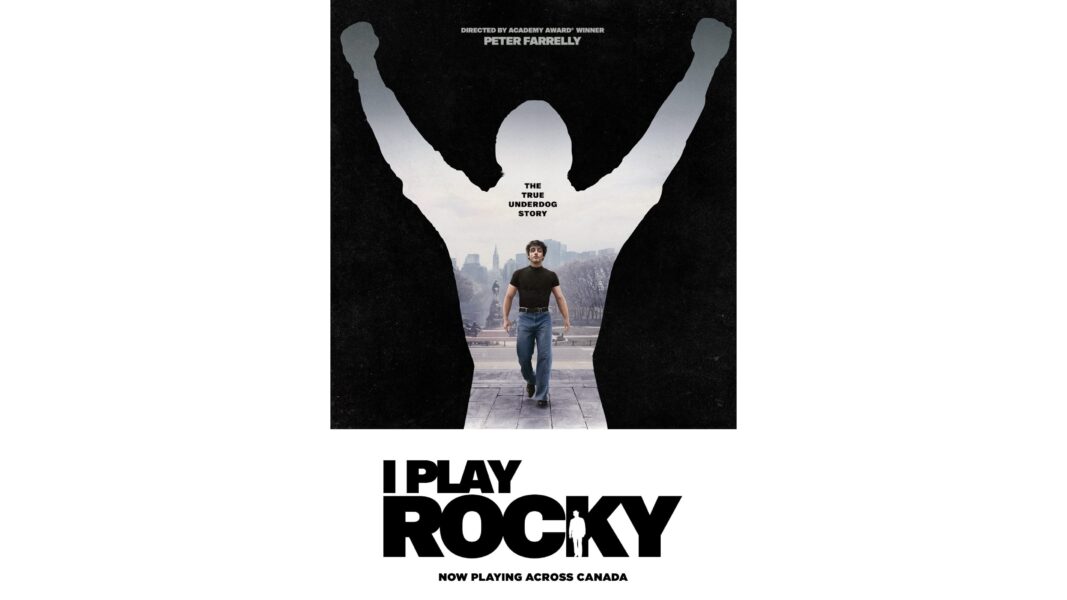
On the night the Miner column appeared, I watched I Play Rocky, released this month to coincide with the fiftieth anniversary of Rocky, the surprise hit that was the highest-grossing film of 1976 and, for good measure, won the award for Best Picture. No one proposes it as the best Catholic film, but it gave us an important Catholic moment.
I Play Rocky is a remarkable achievement: it tells how Stallone, poor and struggling to make his way, writes the screenplay for Rocky –in three and a half days– and, although the studio offers him more than $300,000, refuses to sell it unless he plays the lead role.
The studio wants to hire an established star. But Stallone insists, rejects the buyout offer, and finally gets to make the film on a tiny budget. Stallone explains that it is “my story”: like his character Rocky Balboa, Stallone is a loser in life who has one chance, one opportunity, one shot. And he takes it.
And for both Sly and Rocky, that changes everything. Anthony Ippolito, in the role of Stallone, brings it all to life with great vividness. He does not play Sylvester Stallone: he becomes him.
I Play Rocky reminded me of something I had long forgotten: that Rocky opens with a close-up of an icon of Jesus holding the Sacred Host over the chalice. The camera then descends from the mural to a boxing match at the less-than-reputable Resurrection Athletic Club. Perhaps it had once been a church. The mural with which Rocky begins is certainly Catholic. But is Rocky a Catholic film?
It is a story about how life, even a life filled with sadness and disillusionment, unfolds under the providence of God, even as Rocky fights Spider Rico beneath an image of Christ, Priest and Victim. On the thirtieth anniversary of Rocky, Stallone released the sixth installment of the saga, Rocky Balboa (2006), in which a sixty-year-old Rocky improbably returns to the ring. Rico is now in the locker room, reading Scripture to Rocky before the fight. No life is entirely outside God’s good design.
Rocky was an important Catholic moment because it offered an alternative image to the cinematic Catholic image of the seventies, the work of Francis Ford Coppola, not McCarey. There is no more famous representation of Italian-American Catholic culture than the baptism-and-murders sequence in The Godfather (1972). A cinematic masterpiece that portrays a culture that is in fact meretrix and only pretends to be casta.
In I Play Rocky, Stallone’s character mentions The Godfather, just as the studio executive does, again and again. Both films emerge from the same Italian neighborhoods that had churches on the corner and images of the Virgin in every home. The seventies gave us Coppola, and Martin Scorsese, and Al Pacino and Robert De Niro. Also Stallone.
Rocky was important for Italian Catholicism in the United States. Rocky was probably an altar boy –the parish priest speaks to him in Italian– but as an adult he ended up as a debt collector for a loan shark in the underworld. One who was sometimes kind, however, refusing to break a delinquent debtor’s thumb as he had been ordered.
Another piece of sacred art slips into Rocky. In his dingy apartment there is a reproduction of Caravaggio’s The Calling of Saint Matthew. If Christ could call a tax collector, why not a “second-rate cheap loan-shark leg-breaker,” as Mickey, Rocky’s old trainer, puts it? Matthew collected for the Romans; Rocky, for the mob.
The reproduction is not exactly the Caravaggio, but a poster in which the Beatles take the place of the characters. Sacred art reduced to the profane, just as Rocky’s Catholic faith has been degraded, only to be called to conversion.
The seventies closed with Rocky II, the first of a string of sequels. The Catholic Rocky comes to the fore. His wife, Adrian, has fallen into a coma after a difficult delivery of their first child. Rocky is overwhelmed and refuses even to see the child until he and Adrian can do so together.
With the title rematch already arranged, Rocky refuses to train. He spends his days by her bedside –in every shot of Adrian a crucifix appears– and his nights in the hospital chapel. Even Mickey comes to pray with him. In Rocky II there is more prayer than fighting. On the way to the bout, Rocky stops by the neighborhood parish to receive Father Carmine’s blessing. Later he kneels in his corner and makes the sign of the cross.
Italian-American Catholics are not corrupt. Like everyone else, they struggle to live worthily under the gaze of the Eucharistic Christ, to respond to his call to conversion. The Godfather needed a correction. Stallone gave it in Rocky.
About the Author
Father Raymond J. de Souza is a Canadian priest, Catholic commentator, and senior fellow of Cardus.