


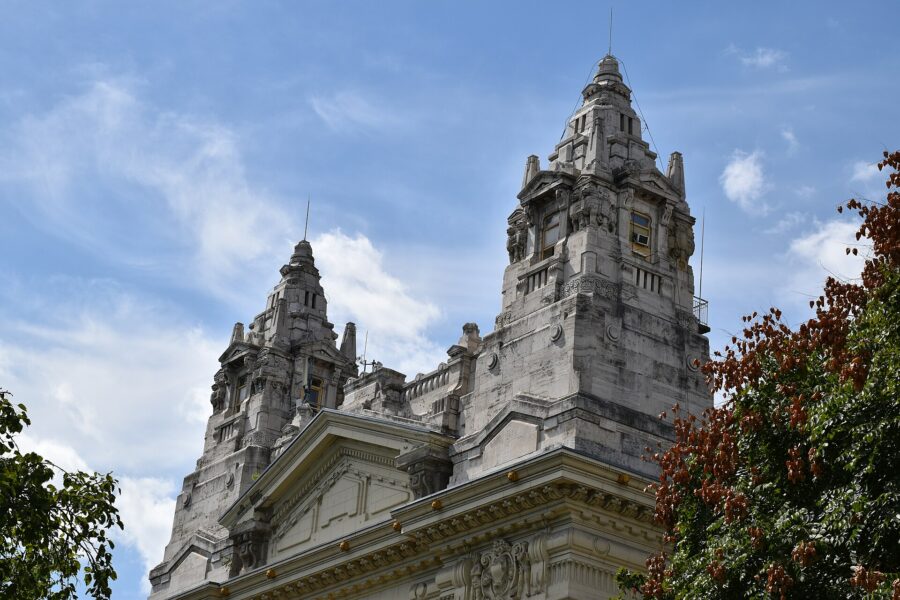
The Budapest Court has revoked, through a ruling dated November 25, the order of October 21 that required the Institute for the Works of Religion (IOR) to pay 20 million euros in connection with the investment in the Kappa Fund and the operation linked to the building of the former Stock Exchange in the Hungarian capital, according to Vatican News reports.
The October ruling, the Vatican media outlet specifies, was neither a first-instance decision nor a ruling on the merits of the dispute. By revoking it, the Hungarian court has also rejected the opposing party’s requests, which sought to dismiss the opposition filed by the IOR and to declare the previous order final. As a result, that order has ceased to have effect.
The new ruling is not subject to appeal
According to Vatican News, the November 25 decision is not appealable, so the first-instance proceedings may now begin, in which the merits of the case will indeed be examined. It is therefore a procedural step that returns the matter to its ordinary course, but which eliminates the payment obligation that had been set by the revoked order.
The IOR has welcomed the decision with satisfaction. In its statement, the institute says that it “prende atto con soddisfazione della decisione,” that is, that it takes note of the ruling with satisfaction, and reiterates its “piena fiducia nell’operato della magistratura,” that is, its full confidence in the actions of the judiciary.
Comes weeks after the Malta ruling
The revocation comes just weeks after the Civil Court of Malta ruled in favor of the IOR on the merits of the dispute over the Kappa Fund and the building of the former Budapest Stock Exchange. As InfoVaticana already reported, that court ordered Optimum Evolution Fund SIF, Optimum Asset Management S.A., Futura Investment Management Limited and Futura Funds SICAV plc to pay 24.1 million euros to the institute, and completely rejected the claims for damages that those companies had filed.
Thus, the IOR now has a favorable first-instance judgment in Malta and the annulment in Hungary of the order that required it to pay 20 million. The Hungarian litigation, however, will continue its course in the ordinary proceedings that the November 25 ruling has left open.