


Dear brother:
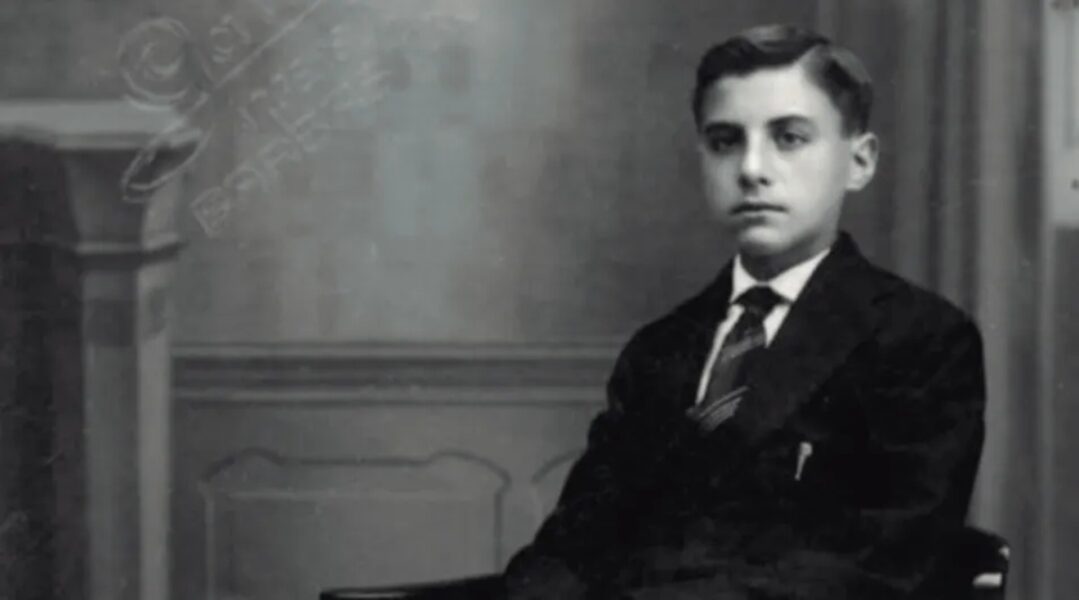
My name is Mariano Arrizabalaga Español. I was born in Barbastro on 11 March 1915, although my childhood cannot be confined to a single city. My father, Joaquín, was an infantry captain, and his postings took us with him to various places in Spain—my mother, María Teresa, and my seven siblings.
In Ceuta I discovered my priestly vocation, and there I saw my father teaching soldiers to read who had never had the chance to learn; that taught me to love intelligence placed at the service of others. When I told him I wished to enter the seminary, he asked me to finish my secondary education first. I was in a hurry, as a young man with a vocation usually is, but I obeyed him.
In 1929 I entered the Pontifical Seminary of Comillas as a student of the diocese of Barbastro. How beautiful it was to study with the Cantabrian Sea in the background! There they demanded serious work in literature, classical languages, philosophy and the sciences. Form yourself well: a priest must not fear the questions of his time, nor take refuge in pious phrases. But neither, because of your learning, should you look down on anyone. Intelligence that does not teach us to serve narrows the soul.
In February 1932, although the Seminary continued—because it belonged to the Holy See—the Jesuits had to leave Comillas on account of the Republic’s measures against the Society of Jesus. For us it was bitter.
In 1934 my family moved to Madrid so that my father could receive medical attention, but he died that same year. My mother was left in charge of a large family, and we learned that fortitude also has a woman’s face: the face of the one who continues to care for everyone when the person with whom she had shared her life is gone. I arrived in Madrid at home just a few days before the assault on the Montaña Barracks on 20 July 1936. My family was being harassed by the Popular Front supporters, especially because my brothers Joaquín and Rafael were among the first members of the Catholic Action youth in Barbastro. Already in Madrid, Joaquín remained hidden in the Chilean embassy, where he died from suffering and malnutrition. Rafael began to take part in the religious-political struggles for the salvation of Spain, as a member of Catholic Action Youth and of the Falange, for which he suffered numerous arrests and persecutions by the Marxists; as a result he left Madrid with my brother Joaquín for Alcázar (Tarragona), where they were arrested and taken to Barcelona, and from there to the Modelo Prison in Madrid, from which they managed to get out a few days later in June 1936. But when the war broke out he had to hide in various private homes and boarding houses, pursued by the red militias. He was arrested on 20 August by a communist from the Chamberí police station named Agapito Sanz. He spent one night in the Bellas Artes checa, and the next day they blindfolded him and took him by car to another checa, while he prayed: “My Virgin, take me where I can go to confession.” And so it was, for where they took him was Father Redemptorist José Mª Urruchi, with whom he was able to confess before they took him out to be killed in Getafe. With his eyes covered, my brother was put into a car and, after eight days, found himself free in Plaza de Olavide.
But on 5 October 1936 he was arrested again, together with a brother-in-law for having a Falangist brother in Reus, and with me for being a seminarian. We spent several days in the Fomento checa, from where we were transferred to the General Directorate of Security before being confined on 9 October in Gallery Five of the Modelo Prison, with the half-thousand prisoners admitted that day. There we shared a cell with Father José María Ibarrola, Redemptorist, who, arrested in the boarding house where he was staying, had changed his surname to Iturriaga. From dark cells they made us go up to another small room where they completed our files with our fingerprints. Then came the search, and finally the finance office where we had to leave every last cent.
A month later they took us out of the prison. My life ended on 8 November 1936, beside the castle of Aldovea in Torrejón de Ardoz. I was twenty-one years old. My fidelity did not begin that dawn, but much earlier, among the prayers of home, the years of study, obedience and the desire one day to ascend to the altar.
My mother had to wait years to have material certainty of my death. On 15 December 1939 they were able to identify my body by a military booklet I carried in my pocket; my sister also recognised the shirt. My remains were buried in the cemetery of the martyrs of Paracuellos. Also after the war, Catholic Action considered that my brother Rafael Arrizabalaga was a martyr. Even so, locked up with me in the same cell and killed in the same way, perhaps because he had been a Falangist, the process of beatification was never opened for him as it was for me…
Today I would like to ask you, brother seminarian: do not despise ordinary things. Learn to study when you do not feel like it, to keep your word, to listen to your mother, to treat everyone with respect and not to turn seminary life into a succession of projects about your future importance. To become a priest does not consist in attaining a position, but in letting Jesus Christ dispose of your whole person.
And do not confuse firmness with harshness. My father was a soldier and I grew up admiring courage and fortitude, but with Christian charity. Never surrender the dignity of your conscience nor the purity of your heart.
I never celebrated my first Mass. I was left with a youth full of hopes, studies unfinished and a mother I would have liked to spare so many tears. But nothing sincerely offered to God is ever lost. When you approach the altar, remember that the Lord will not measure your life by the years, but by love.
Your brother embraces you from heaven,
Mariano Arrizabalaga Español
Seminarian and martyr