


By David G. Bonagura, Jr.
NOTE: We are already well into our year-end fundraising campaign, but we cannot let up. As I have often said, even 35 or 50 dollars from each reader who can afford to help –or who can make up for one or more readers who cannot– will be enough to get us there. Will you? – Robert Royal
Achilles, swift-footed, indomitable son of the goddess Thetis, received a gift not offered to other mortals: he could choose his destiny, a long life without glory or a brief life, cut short on the plains of Troy, filled with immense glory. The Greek warrior, inflamed with wrath and tormented by guilt, chooses the brief life of glory.
Years later, the cunning Odysseus encounters the shade of Achilles, who had died from a poisoned arrow, when he enters the Underworld on his journey home. Odysseus declares: “No man has been happier than you, Achilles, nor will be in the time to come. . . . Do not grieve, then, Achilles, for your death.”
The renowned hero replies: “Glorious Odysseus: do not try to console me for my death. I would rather serve as a laborer for another man, like a poor landless peasant, and be alive upon the earth, than be lord of all the lifeless dead.”
Achilles is not reconsidering his choice: next he asks Odysseus about his son and about his own pursuit of glory. Later, in the final canto of the Odyssey, the shade of Achilles meets that of Agamemnon, treacherously slain, and laments that the king did not die on the battlefield with the honor due him. For the Greeks, death was terrible no matter how well, or poorly, men had lived. What mattered was to accumulate the greatest possible glory on earth. The dead could not take that glory with them; it had to remain behind as a lasting monument to their lives, so that they would not be forgotten and thus erased.
For me, one of the proofs of the truth of Christianity is that it reverses these natural human tendencies, so that they are denied and then transformed in a way that surpasses human imagination. Human beings seek glory by nature. The small child who demands attention, the teenager who hopes to win a prize, the adult eager for a promotion, anyone who has ever posted something on social media: all manifest, to a greater or lesser degree, the inexplicable inner need we have for glory, for recognition, for exaltation.
We often go to incredible extremes and make enormous sacrifices to receive glory. No pain, no gain. We want, all of us without exception, to win glory for ourselves, at any cost.
Then Jesus enters the scene and upends this basic instinct. The King of kings shuns all adornment and all pretense of earthly royalty: no palace, no riches, no gold, no fine garments, no army. He waits until shortly before his arrest to make a royal entry that no earthly king could or would devise: he enters Jerusalem “humble and mounted on a donkey” (Matthew 21:5).
He has not come to overthrow the Romans, nor to establish a new kingdom, nor to place himself above others in prestige. “His power is of another kind,” wrote Pope Benedict XVI. “It is in the poverty of God, in the peace of God, that [Jesus] recognizes the only power that can redeem.”
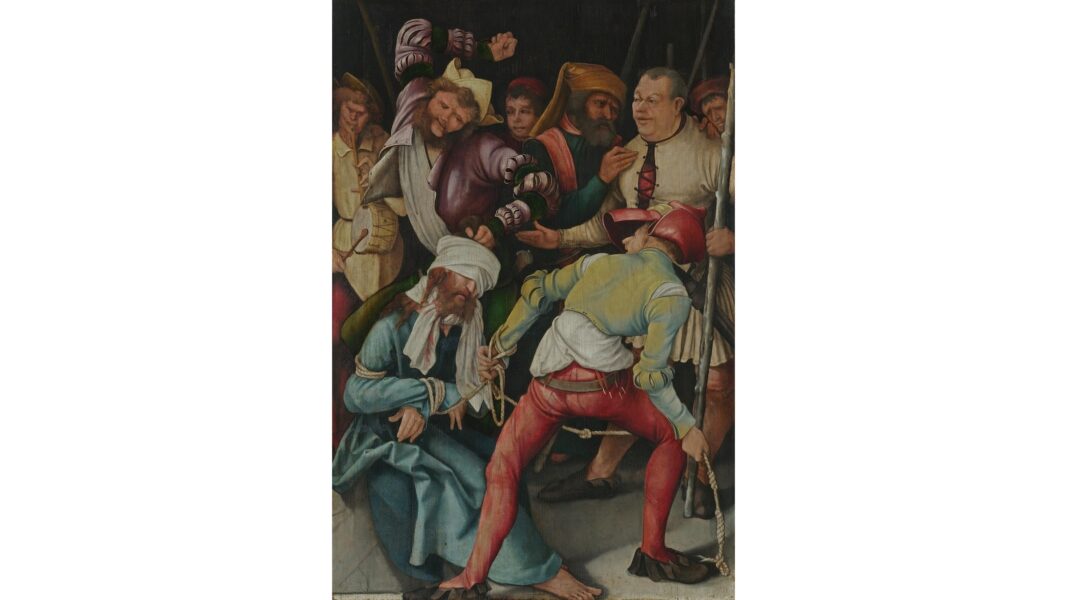
Days later, the King of kings ascends the most impossible of thrones: the Cross. Pilate, the representative of the Roman king, asks Jesus if he is a king. The beaten Prisoner does not deny it. “My kingdom is not of this world” (John 18:36). There exists for Him a kingship with its corresponding glory, one without legions or palaces, which no man could imagine. His cross proclaimed that bewildering reality in all the languages of the place: “Jesus of Nazareth, King of the Jews.”
The resurrection finally revealed the glory that Jesus had hidden before his death. Yet only those who had faith could see Him and see that glory. The paradox deepens: after inverting earthly expectations of glory with powerlessness and surrender, Jesus transforms glory from something felt physically and emotionally into a reality lived spiritually, on a completely different plane, alien to this world.
And this is the path He commands His followers to take: “The greatest among you will be your servant. Whoever exalts himself will be humbled, and whoever humbles himself will be exalted” (Matthew 23:12).
Where else in this world is humility the path to glory?
From Achilles and Odysseus to today’s stars and influencers, the self-emptying that Jesus practiced, and then demanded of His disciples, contradicts our natural instincts and seeks to transform them into works desired by God and worthy of Him.
The Church has preached this message throughout her history. Cardinal Merry del Val (1865-1930) expressed it more profoundly than anyone in his stirring Litany of Humility:
From the desire of being honored, deliver me, Jesus.
From the desire of being praised, deliver me, Jesus.
From the desire of being preferred to others, deliver me, Jesus.
From the desire of being consulted, deliver me, Jesus. . . .
That others may be praised and I unnoticed, Jesus, grant me the grace to desire it.
That others may be preferred to me in everything, Jesus, grant me the grace to desire it.
Some philosophies encourage us to give free rein to our instincts. Others call them evil and seek a way to escape them. All reveal our intellectual and imaginative weakness when contemplating fundamental realities. Only Christianity has the genius to turn them upside down and then raise them to a completely different plane. In the case of glory, we only find its true and lasting form when we renounce its earthly version and submit ourselves to the service of God and our fellow human beings.
This form of glory is so unique, so alien, so scandalous, that it can only come from God. To Him be all honor and all glory, now and forever.
About the author
David G. Bonagura, Jr. is the author, most recently, of 100 Tough Questions for Catholics: Common Obstacles to Faith Today, and translator of Jerome’s Tears: Letters to Friends in Mourning. Adjunct professor at St. Joseph’s Seminary and at Catholic International University, he is religion editor of The University Bookman, a book-review journal founded in 1960 by Russell Kirk. His personal website is here.