


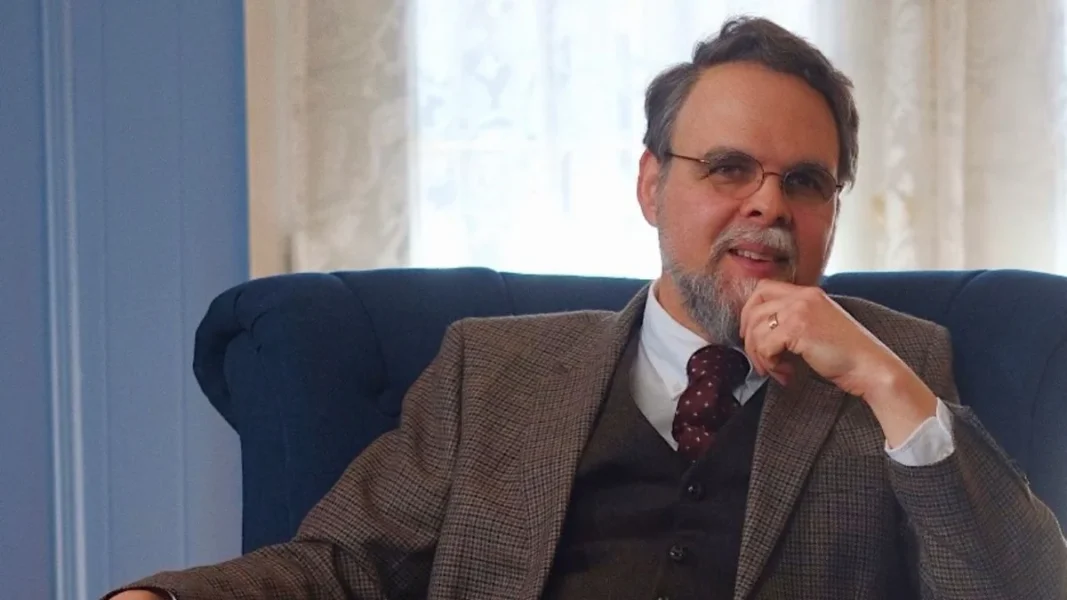
Kwasniewski makes these reflections in an exchange of letters with a reader, published on November 23 in his newsletter Tradition & Sanity. The first part of the correspondence revolves around the authority of the magisterium. In the last, the author turns to the present situation of the Church and the pontificate of Leo XIV, with criticisms directed at both conservatives and a part of the traditionalist world itself.
Neither Naivety nor Suspicion
Kwasniewski first describes what he calls the “hermeneutic of naivety.” It is the conviction, seemingly pious, that the Church was basically in order under John Paul II and Benedict XVI, that Francis was confused but not heretical, and that Leo XIV represents a bold course correction. The author considers all three ideas false and describes as alarming the mixture of ignorance, amnesia, and illusions he observes in many Catholics.
He maintains that the “hermeneutic of suspicion” was born as a reaction to that attitude, but that it is no truer and harms the Church in another way, because it becomes incapable of seeing anything good. As an example, he cites Leo XIV’s letter to the French bishops. Faced with such a text, he says, the suspicious mind focuses on weaknesses in the wording or imagines hidden motives and smokescreens, instead of recognizing that it marks the beginning of a retreat from the rigid application of Traditionis custodes.
That letter, dated March 18, 2026, was transmitted by Cardinal Pietro Parolin on the occasion of the Plenary Assembly of the French episcopate in Lourdes. In it the Pope called for seeking “concrete solutions” to “generously include” the faithful attached to the Vetus Ordo and spoke of a “painful wound” opened in the Church regarding the celebration of the Mass. The results have so far been scarce: in July, the president of Notre-Dame de Chrétienté, Philippe Darantière, lamented not perceiving a change of attitude in the French episcopate.
Liberation or “Francis 2.0”?
Kwasniewski does not consider the question settled. He wonders whether Leo XIV will delicately liberate the traditional Mass in the face of resistance from what he calls the “Bergoglian court” surrounding him, or whether he will be a “Francis 2.0” who consolidates the legacy of his predecessor. He says the answer does not overly concern him, because he knows what he must do in any case.
He is optimistic about the potential of tradition. In his view, if restrictions on the traditional Mass and the communal life surrounding it were lifted, the return to tradition would be relatively swift. He compares the living part of the Church to dry tinder ready to ignite. He reproaches catastrophist discourse for failing to take into account either the slowness with which the Church has historically reformed the papacy—citing the Renaissance, the Reformation, and the saeculum obscurum—or the rapid changes that are possible when better leadership arrives.
Against Hyperpapalism and Social-Media Noise
The author also criticizes commentators, the product, in his view, of hyperpapalism, who follow every move of Leo XIV and the hierarchy as if it were the measure of Catholicism. If one devoted a tenth of the time spent criticizing the Pope to praying for him, he writes, the situation would already be better. He also censures the exaggeration, sarcasm, and disdain fostered by social media, as contrary to charity and inner peace.
In response, he proposes a concrete program: seek holiness in one’s own state of life with the Rosary, the Divine Office, and fasting; attend the traditional Mass wherever it is celebrated in communion with Rome; and explain and defend the faith received. Drawing on the image of Denethor before the palantír in The Lord of the Rings, he warns against staring fixedly at bad news. Evils are overcome, he maintains, by growing the good that replaces them. He estimates that recovery may take years, decades, or even centuries, as occurred in previous crises in the Church’s history.