


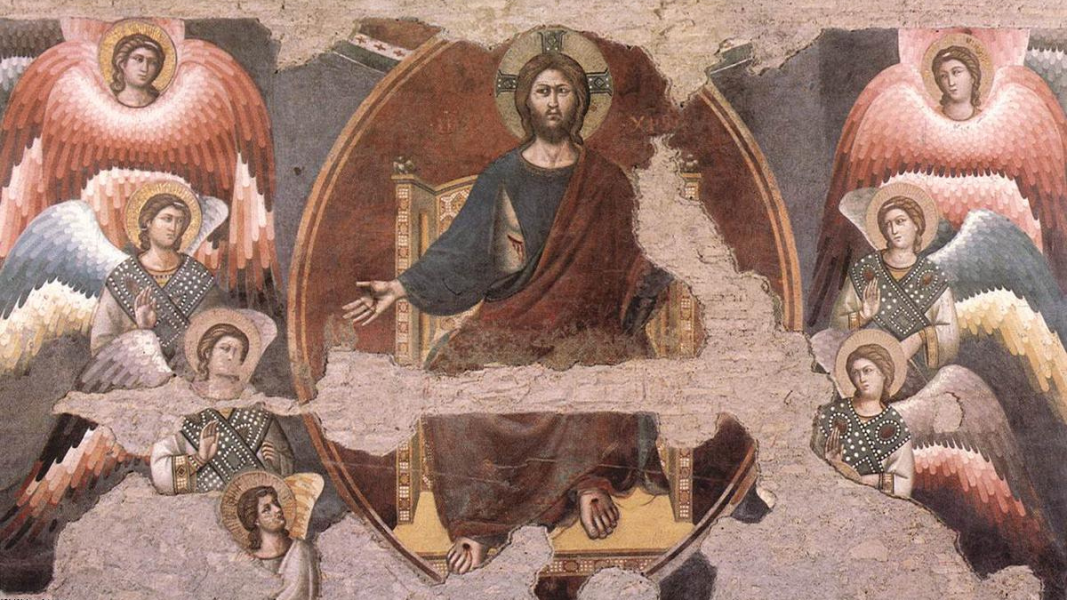
Sunday was the solemnity of Christ the King, the last of the liturgical year, and Ràdio Estel began it at midnight with «Paraula d’avui», its daily space on the Gospel, which was repeated at 7:25 a.m., after the rosary. The final judgment according to Saint Matthew was read: the Son of Man sits on his throne of glory, separates the sheep from the goats, and sends some to eternal punishment and others to eternal life. Then came the commentary, given by a priest of the archdiocese of Barcelona.
«The great Catalan bishop recognized internationally for his social work, Pere Casaldàliga, in addition to being a great pastor, was a great writer, and in his memoirs he explains that for a long time he imagined what it would be like to come face to face with God after the passage of death. And he said that we probably should not expect an interrogation, because God is not a judge. On the contrary, the God Jesus speaks to us about, with emphasis, is a good father, and moreover a very loving father, from whom we should only expect the question about love: Have you loved?»
The commentary did not hold up even to itself. A minute later, the same priest explained that the readings spoke «of the universal judgment and the particular judgment in which we present ourselves before God», and that this judgment will concern, as Saint John of the Cross said, love and charity. Nor does the poem by Casaldàliga usually recalled for that moment dispense with the questions: «At the end of the road they will say to me: Have you lived? Have you loved?»
What is striking is that the rest of the station said the opposite that same day. At 5:56 a.m., in the matins of the monastery of Poblet, the monks sang: «Acclaim the King, who is the Lord, for he comes to judge the earth». At 11:25 a.m., in the Mass of Montserrat, the homilist recalled that «Jesus Christ is the Son of Man who will come as a king to judge all peoples», and at 11:32 a.m. the faithful professed in the Creed that he will return in glory «to judge the living and the dead, and his kingdom will have no end»: judgment and kingdom, in the same sentence. At 1:05 p.m., in the space of the diocese of Terrassa, its bishop said that one day we will all have to present ourselves before Him as we are, «without masks or disguises», and that «that will be our definitive judgment». And at 11:31 p.m., in the Spanish-language news on Vatican Radio, the station broadcast Pope Leo XIV’s Angelus: the feast of Christ the King closes the liturgical year because it points to «the encounter with God, which takes place in the universal judgment», and «this same judgment is the condemnation of all iniquity».
Doctrine leaves no room. The Catechism teaches that «the full right to judge definitively the works and hearts of men belongs to Christ as Redeemer of the world», and recalls that the Father has handed over «all judgment to the Son». John Paul II explained it in a 1987 catechesis: it is «one of the fundamental truths of faith» that «God is the judge of all men in a definitive and universal way». The only verse that could be invoked in favor of the commentary, the one from Saint John according to which the Father judges no one, actually says that judgment has been given to the Son. And the Son is the King celebrated that Sunday.
It is not the first time this week that the archbishop’s radio has brought up Casaldàliga. On Wednesday it presented the Latin American Agenda 2027, «born in 1992 from the hands of Pere Casaldàliga and Josep Maria Vigil», and Vigil is the theologian whose book Teología del pluralismo religioso the Commission for the Doctrine of the Faith of the Episcopal Conference devoted a note of clarifications to in 2008.
The Pope does not want a despotic God either. «The one who speaks to us is not a despot who threatens, nor a tyrant who crushes with his power», he said that Sunday, and he did not need to deny judgment to say it. The archbishop’s radio began the day of Christ the King by saying that God is not a judge, and ended it by broadcasting the Pope: «This same judgment is the condemnation of all iniquity».
«Ràdio Estel, the archbishop’s radio» is a daily section of InfoVaticana. We listen attentively to the radio of the archbishop of Barcelona and tell you what we find: advertising, guests, language, what is said and what is left unsaid. Ràdio Estel belongs to the Fundació Missatge Humà i Cristià, linked to the Archdiocese of Barcelona and presided over by its archbishop.
The archbishop of Barcelona is responsible for what is broadcast on it.
Read also
- Leo XIV, on Christ the King: The King of the universe takes the side of the least to rescue them
- The archbishop’s radio and Foucauld: «Some call him God, others Allah, others the universal energy»
- The bishop of Bielsko-Żywiec says at the funeral of Lutheran bishop Anweiler that «he now enjoys eternal joy with the Lord»