


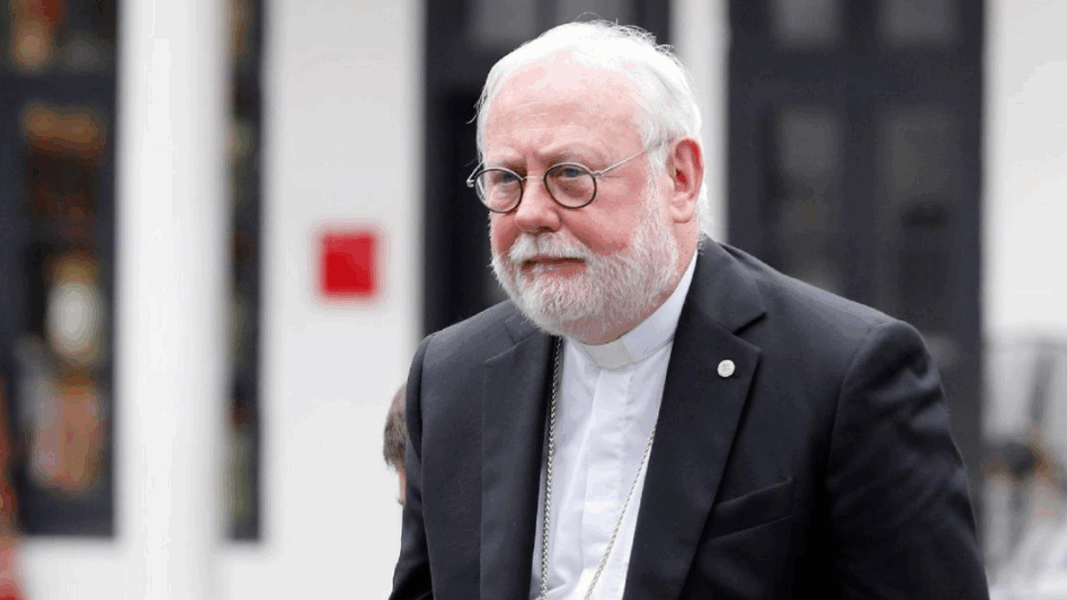
Archbishop Paul Richard Gallagher, Secretary for Relations with States and International Organizations of the Holy See, stated on Friday, November 20 in Naples that the Vatican considers Lebanon “fundamental for the entire region” and key both to the defense of democracy and to the continuity of the Christian presence in the Middle East. He made this statement at the XII edition of the MED Mediterranean Dialogues, the forum organized by the Italian Ministry of Foreign Affairs and the Institute for International Political Studies (ISPI), as reported by Vatican News.
Gallagher participated in the session “Beyond Fragmentation: Mending Lebanon’s Rifts,” alongside Staffan de Mistura of the United Nations, Fadi Nicholas Nassar of the Middle East Institute, and Maha Yahya of the Carnegie Middle East Center. In his remarks, he called for “the international community to devote greater attention to Lebanon” and warned of the risk of neglecting the country and its people, urging that “efforts be redoubled.”
Concern over the future of UNIFIL
The archbishop expressed his concern about the future of the UN mission in southern Lebanon, UNIFIL, whose mandate expires at the end of December 2026. According to Vatican News, he maintained that if the mission is not to continue, some form of international presence must be ensured to provide security, encourage, and support the existing goodwill. He also added that state and non-state actors seeking to weaken Lebanon must be deterred.
In the same forum, he referred to the difficulties of disarming Hezbollah and defended the state’s monopoly on security and weapons, as established by the Lebanese Constitution. This position aligns with the Holy See’s concern for the country’s stability, an issue that has already reached its diplomacy in recent months.
Pluralism and the Beirut port explosion
Gallagher also urged that Lebanon’s religious and ethnic diversity not be viewed as a weakness. In his view, it is a rich and complex society that can serve as the foundation of a strong country, rather than an inherently fragile reality.
Finally, the Secretary for Relations with States called for accountability regarding the Beirut port explosion, a case that remains unresolved. A “just and equitable” outcome, he stated, would send a strong message to the Lebanese people and the international community.
Background: Lebanon’s request for protection of Christians in the south
The Naples intervention comes months after Lebanon’s Minister of Foreign Affairs, Youssef Raji, requested Vatican diplomatic mediation to protect Christian communities in the border areas, as reported by InfoVaticana in March. Gallagher’s words confirm that Lebanon continues to occupy a central place in the Holy See’s foreign policy under Leo XIV, who received the Lebanese Prime Minister, Nawaf Salam, in October 2025, as this outlet reported.