


By Father Paul D. Scalia
Over the past year, the Gospel of Matthew has offered us a long series of parables about the Kingdom of God. Almost all of them, in various ways, had an element of concealment: the seed sown in the earth, the treasure hidden in the field, the pearl in the shell, the fish hidden beneath the waves, and so on. Today we hear not only about the Kingdom, but about the King himself, hidden in what Mother Teresa called “the distressing disguise of the poor.”
There is something about a hidden king or leader that attracts us. Odysseus disguises himself as an old beggar when he returns home. Shakespeare’s Henry V walks among his troops as one of them. Chesterton’s King Albert moves among the peasants as just another peasant. Aragorn, King of Gondor, hides under the name Strider, one of the mysterious Dúnedain.
Unfortunately, our culture’s contribution to this literary canon is a reality show, Undercover Boss, in which a company’s CEO shows up in disguise at the workplace to get to know his company and employees better.
Now, there are several differences between our stories and the presence of Christ the King in the least of our brothers. The first is that this is not fiction. Jesus Christ truly was hungry and thirsty, naked, homeless, exiled, and imprisoned.
The eternal Son of God truly experienced these things. He is one with the poor not merely by a moral unity—because he feels pity for them—but by a true personal unity, because he has shared in what they suffer.
Above all, he embraced the poverty of death. And one cannot be poorer than a dead man. He became one of them and remains so. He has not renounced his poverty or rejected it.
A second difference is that Christ the King did not become poor for his own sake (to know us or his Kingdom better), but for our sake. He brings us the consolation of knowing that he understands our suffering. He knows it not only as omniscient God, but also with human knowledge, as one of us, as a man who has encountered our suffering and experienced it.
Another difference is that, unlike the other hidden kings, Christ’s concealment teaches us. His disguise, rather than concealing, reveals. It reveals the reality of God’s humility. He does not despise us in our need. He draws so close to those who suffer that he becomes one with them.
It also reveals the dignity of the poor. Poverty itself can obscure human dignity. Sometimes the attitude of the poor can obscure it even further. But by identifying with the poor, Jesus warns us of this truth: that poverty never ultimately strips a man of his human dignity. The person—however much his dignity may be obscured—must always be respected, loved, and served.
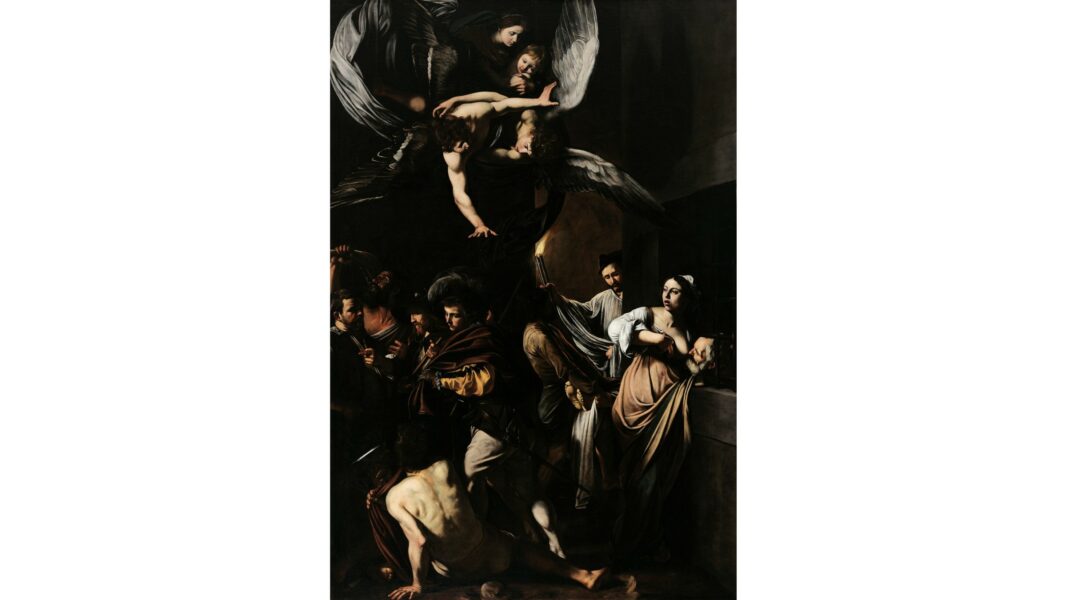
He does this for us also in the sense that he becomes one with the poor so that we may love and serve him in them. Notice how strong this identification is: “You did it to me” is a better translation than “You did it for me.” What we do to the poor, we do to Christ: not only in his name or for love of him, but to him himself.
This emphasis on the personal is inspiring, and also unsettling. We can and should contribute to charitable causes. But ultimately, we cannot delegate our works of charity to others. We must respond personally to the poor who are among us. Unlike the severity of Hinduism, which abandons the poor to their karma, or the mercilessness of socialism, which merely resents poverty, we are called to care for the poor personally.
This revelation has changed history. We take it for granted that it is good to help those in need. In reality, that idea came into the world as something new with Christianity. It was unknown in the pagan cultures of the ancient and modern world. It is the Church, following the logic of this Gospel, that speaks of the corporal and spiritual works of mercy, that has given us hospitals, orphanages, and schools.
And as Christianity recedes, so too will charity. Our culture has retained a vague notion of doing good to help others. But it has emptied it of the personal meaning this Gospel teaches. There is an enormous difference between loving the poor and hating poverty, between loving the sick and hating sickness, between loving unborn children and hating difficult pregnancies.
The former requires personally investing one’s own time, resources, and love to assist the poor, the sick, and the unborn. The latter only requires getting rid of them.
There is a truth that accompanies the hidden presence of the King in the poor: the Eucharist, in which he is latens Deitas, the hidden God. With our eyes we look at the Host and see only bread. But by faith we see Christ himself. Likewise, with our eyes we look at the poor and see only brokenness, wounds, and ugliness. But by faith we see Christ asking for our love and help.
These two modes of Christ’s hidden presence explain why the saints known for serving the poor also had a deep devotion to the Eucharist. Their ability to look at the Host and confess that what appears to be only bread is in reality Jesus Christ also enabled them to look at the poor and see Christ in them. By loving him in his simple eucharistic presence, they could love him present in the poor.
Saint Pier Giorgio Frassati said: “Jesus comes to me every day in Holy Communion. I repay him, in my poor way, by visiting the poor.”
The Catechism teaches that “the Eucharist commits us to the poor” (CCC 1397). In our next Communion, when we receive the poor and hidden King, let us ask him for two things. First, that he make us aware of the poor among us, because we often overlook them. Second, that he grant us to see and love him in them.
About the author
Father Paul Scalia is a priest of the Diocese of Arlington (Virginia), where he serves as episcopal vicar for the clergy and pastor of Saint James in Falls Church. He is the author of That Nothing May Be Lost: Reflections on Catholic Doctrine and Devotion and editor of Sermons in Times of Crisis: Twelve Homilies to Stir Your Soul.