


Dear brother:
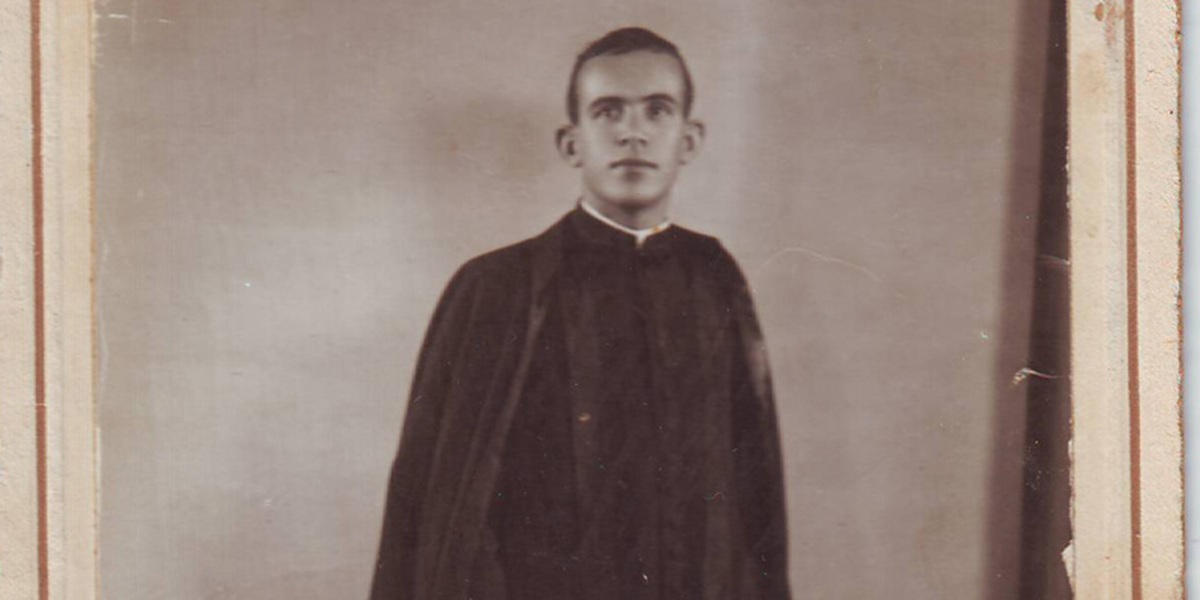
I write to you from the eternity of God, where there are no longer calendars, only the truth of the “yes” spoken before the altar. My name is Cástor Zarco García. I was born in Socuéllamos (Ciudad Real) on 20 February 1913, the second son of Timoteo and Carmen, day-labourers with calloused hands and Christian hearts. My father belonged to the Nocturnal Adoration: my first priestly school was the silence of a man kneeling before the Tabernacle. Then came Don Pedro José del Amo, my teacher, also an adorer. He looked after my vocation until he obtained a scholarship and someone to pay what was still needed. I wanted to be a priest; others made it possible for me to begin. Never forget those whom God places on your path. It is not enough to thank them with words: you must make their help fruitful.
I passed through the Seminary of Ciudad Real and the Conciliar Seminary of Madrid. I enjoyed studying and won prizes in Latin and Dogmatic Theology. We also played football, laughed, and teased one another in a healthy way between philosophers and theologians. We were young men with projects, friendships and dreams of a first Mass.
In October 1934, during the clashes in Madrid, we watched barricades and gunfire from the windows. A bullet pierced the glass and wood of a cell. I wrote to my parents that we were already hearing shots “as one hears the rain.” That phrase was not bravado; it was the portrait of a normality that had begun to break. When hatred enters the streets, the Christian must prevent it from entering his heart as well.
On 6 June 1936 I received the subdiaconate in the chapel of the episcopal palace. How close I felt to the altar! The Church was entrusting me with the Epistle, the service of the chalice, the care of the sacred vessels, the Divine Office and perpetual celibacy. I was not yet a deacon, yet my life had crossed a threshold. I no longer belonged to myself as before. To be a man of the breviary meant that my entire day became a debt of praise. The subdiaconate disappeared from the ordinary discipline of the Latin Church in the reform after the Council. If I were not living in Heaven, eternally Happy, it would sadden me: in the ancient liturgy, so expressive and beautiful, each step of ascent to the altar taught irrevocability; the silver of the young man who was preparing, to use Berceo’s image, turned to gold when he received the mission to sing the Epistle. Today the eclipse of that wonderful pedagogy for preparing the ministry is a loss. I am glad that seminaries of some Institutes still preserve that rite: not to remain in the past, but to learn what is permanent in it.
When the war began, I returned to Socuéllamos, where I saw our church profaned and threats multiply. My parents managed to hide me in Villaescusa de Haro, in Cuenca; I travelled there concealed in a cart and was taken in by an acquaintance of left-wing ideas, because goodness has unexpected faces and a man must never be confused with a label. Later I was mobilised. I was incorporated into “El Campesino’s” brigade. Uncertainty closed in around me. Even then I wrote to some young men: “Trust in God. He above all; and each one will remain at his post, if not in this life, in the next. Hope and optimism are Christian. Gloom and sadness are not.” Then, silence. My family stopped receiving letters. I was murdered in Alcalá de Henares on 18 September 1937. The exact circumstances were never known. I was left in a grave without individual identification. My Christian mother summed up my whole story thus: “The consolation I have is that I lost him for being good.”
Now listen, brother: our Lord does not require you to know what will happen to you in twenty years; He asks you to be a true seminarian today. Study when it is time to study, pray when it is time to pray, learn to obey without servility and to think without pride. Do not stifle friendship beneath clerical affectation, nor confuse joy with frivolity. Visit the Tabernacle before seeking easier consolations.
The priesthood is not improvised on ordination day: it is built in those fidelities that no one photographs: a psalm prayed with attention, a truth studied in depth, a temptation overcome, a smile offered at the right moment. If the greater trial comes tomorrow, it will rest on all those small victories.
I never reached the point of singing the Gospel as a deacon nor of celebrating the Mass I had dreamed of, yet Christ accepted my entire youth. Do not worry so much about doing great things: strive to be good, with that vigorous goodness my mother recognised through her tears.
Your brother embraces you from heaven,
Cástor Zarco García
Subdeacon and martyr