


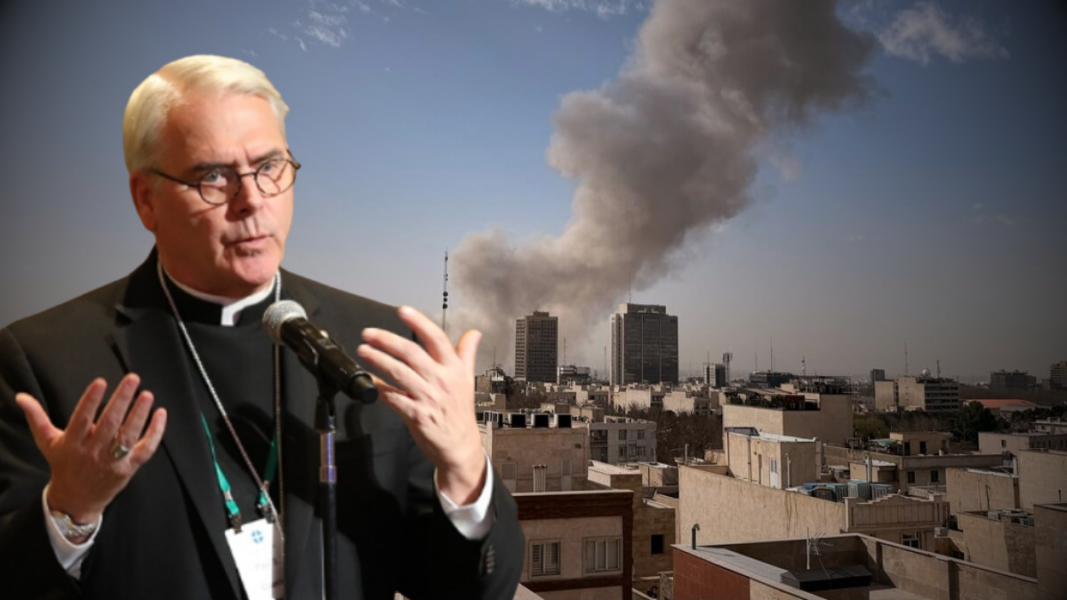
The Archbishop of Oklahoma City and president of the United States Conference of Catholic Bishops (USCCB), Paul Coakley, opened the fall plenary assembly on Tuesday, November 17 in Baltimore, which runs through the 19th, with a speech in which he assured that the bishops are willing to work both with the Donald Trump Administration and with the Democratic majority that emerged from the congressional legislative elections. The meeting comes days after an election that, in Coakley’s own words, “produced results that, if not surprising, are undeniably momentous.”
In the Baltimore assembly, whose public sessions are livestreamed, the conference president described the electoral cycle as “difficult and often contentious” and urged those elected to collaborate for the common good. He also warned against the tendency, in his view present among some bishops, commentators, and social-media influencers, to interpret the life of the Church through political or ideological lenses. “The world thinks in terms of power; the Church thinks in terms of mission,” he stated, adding that when the focus is on winning and maneuvering for power “what is lost is the sense of communion and shared purpose.”
Four “works of hope”: family, worship, dialogue, and civic life
Coakley drew from Pope Leo XIV’s encyclical Magnifica humanitas the image of “works under construction” and identified four areas on which, in his judgment, the bishops should concentrate: the family, worship, synodal dialogue and discernment, and civic life. Regarding the family, which he called “the basic structure of society,” he called for a “new vision” of accompaniment for engaged couples that goes beyond premarital courses: “If we wait until immediate preparation for marriage, it is too late.”
In the area of worship, he asked for greater attention to liturgical formation and recalled the fruits of the National Eucharistic Revival. Concerning civic life, he maintained that polarization, isolation, and anger “can only be overcome when a shared hope is rediscovered,” grounded in the recognition of the dignity of human life and of every person, and he linked this to the challenges of artificial intelligence. He concluded that the state of the conference and of the Church is good, although “we have much work to do.”
Immigration and abortion on the committees’ agenda
The assembly agenda includes reports from the committees on migration and on pro-life activities, as well as the first conclusions of the new working group on human dignity in the age of artificial intelligence, which InfoVaticana already reported when the Administrative Committee approved it. The bishops will also vote on the update of their pastoral plan in favor of life.
On immigration, Coakley assured that the bishops will continue to “advocate and negotiate” for the rights of immigrants and recalled the letter in which he asked Trump to halt the deportation of a large number of Haitians. For his part, Bishop Daniel Flores of Brownsville considered that the new political scenario could open an opportunity for immigration reform that has long been blocked. Auxiliary Bishop Robert Boxie III of Washington acknowledged that they are still trying to “assimilate what just happened.”
The assembly also approved a special message to Pope Leo XIV, thanking him for his recovery after lung surgery and addressing peace, artificial intelligence, immigration, and the family, and elected Bishop Kevin Rhoades as USCCB secretary by a vote of 157 to 59. The apostolic nuncio to the United States, Gabriele Caccia, also spoke, stressing unity with the Pope.