


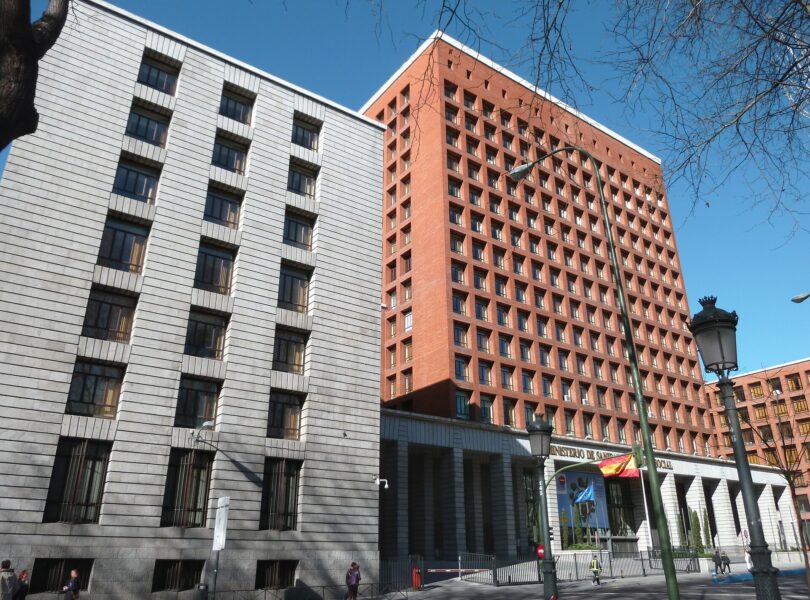
The Ministry of Health published its Annual Report 2025 on the Provision of Aid in Dying this Wednesday, according to which 574 people received euthanasia in Spain last year, compared to 423 in 2024. The increase is 35.7 %, bringing the total number of procedures performed since the law came into force in June 2021 to 1,698 as of 31 December 2025.
Requests also rose: 1,284 were recorded, 30.6 % more than the 983 the previous year, and since 2021 the total stands at 3,896. The 2025 rate was 31.2 procedures per million inhabitants over 18 years of age. The report also notes 1,219 procedures completed in 2025, of which only 47.1 % ended in euthanasia.
Nearly a third of applicants died before receiving it
According to the Ministry, 31.3 % of completed procedures ended with the applicant’s death during processing, 13.5 % with a denial and 8 % with withdrawal of the request. There were 188 unfavourable rulings, which led to 72 appeals before the Guarantee and Evaluation Commissions, 20 of which were upheld.
The average time between the first request and the provision was 72.4 days, with a median of 57. Among the 683 approved cases, 76 people, 11.1 %, postponed the procedure after receiving a favourable resolution.
Profile of applicants and place of provision
Health data show that 50.5 % of applicants were women and 49.5 % men, with an average age of 70.6 years; 79.8 % were 60 or older. Neurological diseases accounted for 45.8 % of procedures (263 cases) and oncological diseases for 30 % (172 cases). Administration was carried out directly by healthcare professionals in 98.1 % of cases.
By location, 50.9 % of euthanasias were performed in hospitals, 35 % at home and 14.1 % in social-health centres. In addition, 73 people were effective organ donors (12.7 % of procedures), enabling 205 transplants.
A figure released in the middle of the election campaign
The figure comes eleven days before the general election on 29 November. El Debate headlines it as “the culture of death, on the rise”.
The euthanasia law has featured in the campaign. InfoVaticana reported that Alberto Núñez Feijóo stated on El Hormiguero that he would reform the law because “it can produce undesirable effects”.