


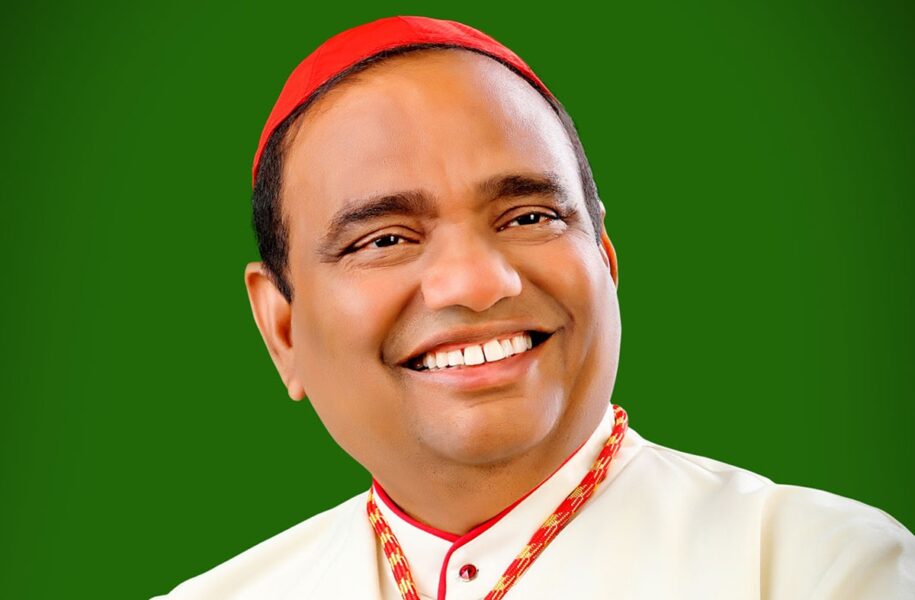
Cardinal Anthony Poola, Archbishop of Hyderabad, President of the Conference of Catholic Bishops of India (CBCI) and the first Dalit elevated to the cardinalate, has stated that “poverty does not change with baptism.” He made the remark in an exclusive interview with Thomas Edwards, published this Monday by AdVaticanum, in which he reviews caste discrimination, violence against Christians and the growth of the Church in the country.
The caste mentality persists even among Christians
Poola explained that untouchability is abolished by law, but that its mentality remains alive in Indian society and even reaches Christian communities. According to the cardinal, Dalits who receive baptism lose the state benefits enjoyed by those of other religions, such as reservations in education and employment or scholarships, so their material situation does not improve when they become Christians. Hence the phrase that gives the interview its title. The publication recalls that Dalits could represent up to 75 % of Christians in India.
The prelate was born into a Dalit family in Poluru, in the Kurnool district, and his father was a catechist for the Mill Hill missionaries. He was ordained a priest in 1992 for the diocese of Cuddapah, Benedict XVI appointed him bishop of Kurnool in 2008, Francis designated him archbishop of Hyderabad in 2020 and created him cardinal in 2022. InfoVaticana already reported in February on his election as president of the Indian episcopate.
Violence, anti-conversion laws and uneven development
Asked about persecution, the cardinal cited Manipur and Andhra Pradesh and described the Church’s response, which combines aid to victims, legal channels and interreligious dialogue. He added that many incidents go unreported, especially in villages. He condemned violence against women as a serious crime and warned against the temptation to blame entire communities for the acts of some.
Regarding anti-conversion laws, he recalled that the Constitution protects the freedom to propagate religion and that the Church rejects conversion by force or inducement. His concern, he said, is that these norms are used to harass ordinary believers.
Poola acknowledged the country’s economic progress, but maintained that growth has not reached everyone and that progress must be measured by the situation of the weakest.
A Church of parishes, schools and hostels
Speaking about the growth of the Church, he avoided comparing one community with another and described Indian parishes as spaces of family and community, where service to the poor through schools, dispensaries and hostels occupies a central place. He asked Catholics in other countries for prayer, solidarity and informed support, especially for the education of poor children, and recalled that Christianity in India dates back to the apostle Saint Thomas.