


By Sister Renée Mirkes, OSF
NOTE: In the months and years ahead, many radical challenges to faith, morality, and the public good are likely to emerge. But Sister Renée Mirkes offers us today a crucial reminder for our time and for all times: the way to face such challenges is always the same—prayer, the cultivation of virtue, the recognition of truth, the effort to follow it, and trust in God. That is the entire program we will follow here at TCT, no matter who holds power in the Church or in the world. We believe you should do the same. And we ask for your help in our year-end fundraising campaign, so that all of us may remain steadfast and faithful, whatever the times may bring. – Robert Royal
After the 2026 midterm elections, restoring constitutional stability and economic vitality in 2028 requires voters to recover the classical virtue of prudence: looking beyond immediate frustration over everyday prices to confront the lessons of history and the long-term structural dangers of progressive government.
In classical philosophy, Aristotle and Thomas Aquinas crowned prudence as the “charioteer of the virtues.” Far from the common misunderstandings that reduce it to mere timidity or caution, prudence is right reason applied to action: the intellectual discipline that enables citizens and statesmen to align immediate decisions with enduring truth.
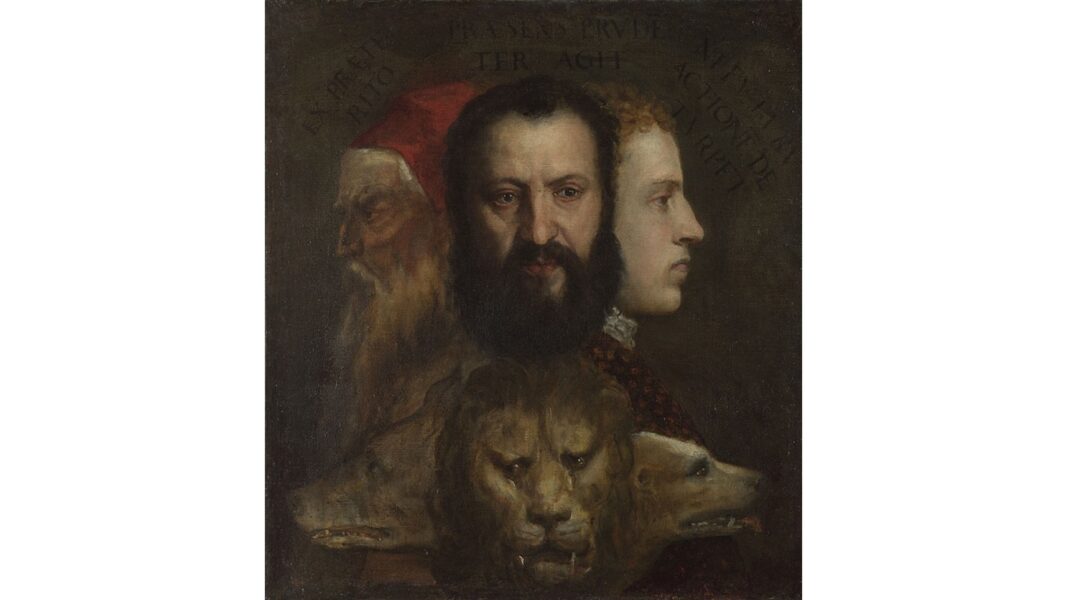
Renaissance artists, particularly Titian in his Allegory of Prudence (see below), depicted this virtue as a figure with three faces: one looking back to memory, another looking straight ahead at the present, and another looking forward with foresight. Beneath Titian’s canvas runs a warning that sounds like a civic mandate for contemporary North America: “From the experience of the past, the present acts with prudence, so as not to spoil future action.”
Earlier this month, millions of American voters cast their ballots in the midterm elections looking in only one of those directions: the present. Frustrated by the persistent sting of high grocery bills, housing costs, and everyday expenses, the electorate handed Democrats large majorities in both the House of Representatives and the Senate for the incoming 120th Congress.
Yet as the dust settles, a sober look through the three faces of prudence reveals why 2028 represents a decisive crossroads for the American republic.
To exercise prudence today, we must first see the current political landscape clearly, with intelligentia—that is, without panic or complacency. When the 120th Congress convenes in January, the newly strengthened Democratic majority will immediately push an ambitious progressive agenda.
Congressional leaders have already announced plans to advance sweeping labor reforms such as the PRO Act, aggressive climate and regulatory mandates, higher taxes on investment and job creators, and partisan budget-reconciliation packages. Meanwhile, committee chairs are preparing a wave of subpoenas and oversight battles aimed at paralyzing the executive branch.
Over the next two years, however, the most radical elements of that legislative project will collide with an immovable constitutional wall: President Donald Trump’s veto pen.
Because Democrats fell far short of the two-thirds supermajorities needed to override a presidential veto—and lack the 60 votes in the Senate required to break a filibuster on non-budgetary measures—their sweeping proposals on policing, border control, and the expansion of entitlement programs will remain largely messaging bills rather than enacted law.
Here lies the subtle trap for the imprudent voter. Because the presidential veto will block the sharpest edges of the progressive agenda for the next twenty-four months, voters may be lulled into believing that a Democratic Congress is harmless or, worse, that the resulting legislative gridlock is the White House’s fault.
In reality, the next two years will serve as a dress rehearsal: a preview of what a unified progressive government intends to enact the moment the presidential veto disappears.
St. Thomas taught that the first foundation of prudence is memory: an honest, unvarnished recollection of history. A nation that forgets what happens when collectivist and democratic-socialist theories are carried to their logical conclusions is defenseless against attractive slogans.
Throughout the twentieth and twenty-first centuries, whenever nations— Cuba, Nicaragua, Venezuela—have traded economic freedom and constitutional limits for promises of state-guaranteed affordability, the pattern has been remarkably consistent.
Central planning and runaway entitlement spending do not produce abundance; they produce stagnation, currency devaluation, and rationing. When governments attempt to subsidize every human need—from “free” universal healthcare to state-set wages—they inevitably block the formation of private capital that funds those very promises.
History shows that when collectivism fails to generate prosperity, its architects rarely admit error. Instead, they demand even greater centralized control over the courts, elections, free speech, religion, gun ownership, and local police forces to silence dissent and entrench their power.
This brings us to providentia—foresight—which St. Thomas considered the principal part of prudence, because every political choice points toward the future. Voters, then, must ask a simple question: what will happen if the progressive majorities in Congress elected in 2026 are sustained and joined by a Democratic president in 2028?
A unified progressive government in 2029 would possess unchecked power to permanently alter the American constitutional order. Consider the consequences:
-
Fiscal insolvency through entitlement expansion. Implementing a single-payer healthcare system (“Medicare for All”) and massive green-energy subsidies atop an already historic national debt would require unprecedented tax increases on both middle-class families and job creators, risking a sovereign-debt crisis and inflation that lasts for generations.
-
The disappearance of national borders and public safety. Abolishing or defunding Immigration and Customs Enforcement (ICE), together with efforts to federalize and “reimagine” local police departments, would strip communities of the rule of law while fueling mass illegal immigration that overloads public schools, hospitals, and municipal budgets.
-
Institutional distortion and self-interested Court-packing. Perhaps most dangerous of all is the willingness to rewrite the very rules of the republic. Proposals to expand the Supreme Court to pack its membership, federalize state election laws to eliminate basic safeguards such as voter ID, and transfer legislative authority to unaccountable administrative agencies would sever the link between the governed and their government. Once judicial independence and the integrity of the vote are compromised, peaceful course correction becomes nearly impossible.
Families feel the pain of higher costs at the gas pump and the grocery store. Affordability matters. But prudence requires that we measure the cost of a policy not only by next month’s utility bill, but by the kind of country we leave to our children.
Between now and November 2028, Americans will watch a Democratic Congress pass bill after bill aimed at expanding the state, weakening border control, and centralizing power—checked only by a signature in the White House.
We cannot afford to treat those vetoed measures as empty political theater. They are a clear warning of what lies ahead. We must recover the three faces of prudence: remembering the hard lessons of history, recognizing the ideological ambition now on display in Congress, and having the foresight to protect our nation before the constitutional guardrails disappear.
About the Author
Sister Renée Mirkes, OSF, Ph.D., is a Franciscan Sister of Christian Charity and director of the Center for NaProEthics, the ethics division of the Saint Paul VI Institute, in Omaha, Nebraska.