


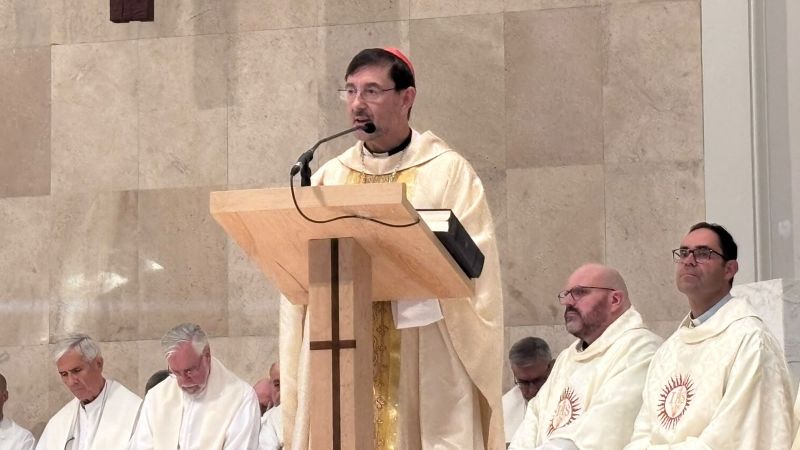
Cardinal José Cobo, Archbishop of Madrid, closed the Pro+Tejer congress, organized by the chair of the same name at the Complutense University in the Main Lecture Hall of the Faculty of Education in Madrid. According to the note published by the Archdiocese of Madrid, the prelate expressed the diocesan Church’s willingness to “extend a hand to civil society to learn together how to repair” and proposed building “a healthy culture against abuse”.
The congress, held on November 12 and 13, addressed the prevention and treatment of abuse from an interdisciplinary perspective that included law, psychology, theology, pedagogy, and art, with special attention to spiritual abuse and without neglecting the workplace or the ecclesial sphere. The closing ceremony also featured Rosario González Martín, director of the chair; Miguel Ángel Martín-Hervás, academic secretary of the Faculty, on behalf of the dean; academic Miguel García Baró; and Jesús Rodríguez Torrente, coordinator of the Office for the Protection of Minors of the Spanish Episcopal Conference.
Cobo acknowledges that the Church “did not know how to listen before”
Cobo expressly thanked those who have suffered abuse and those who have spent years seeking ways to rebuild their lives. According to the Archdiocese’s text, the cardinal stated that the victims “have taught us to recognize our resistances and have helped us to ask ourselves very uncomfortable questions,” and admitted that “we did not know how to listen before to what mechanisms failed.”
The archbishop also warned that norms alone are not enough: “a protocol can be followed and still not listen.” Along these lines, he referred to abuse that is cloaked in “religious language, perverse mysticism, or control over conscience,” one of the ways in which spiritual abuse manifests itself, the focus of the university meeting.
Alliances, research, and the Repara program
Looking ahead, Cobo called for synergies to build a Church and a society that attend to and better protect victims, and urged translating what has been learned into new alliances, shared research, and training, prevention, and reparation projects. He maintained that “the Church is called to be where there is a wound.”
The cardinal cited the Repara program of the Church of Madrid as an example of work in good treatment and care.