


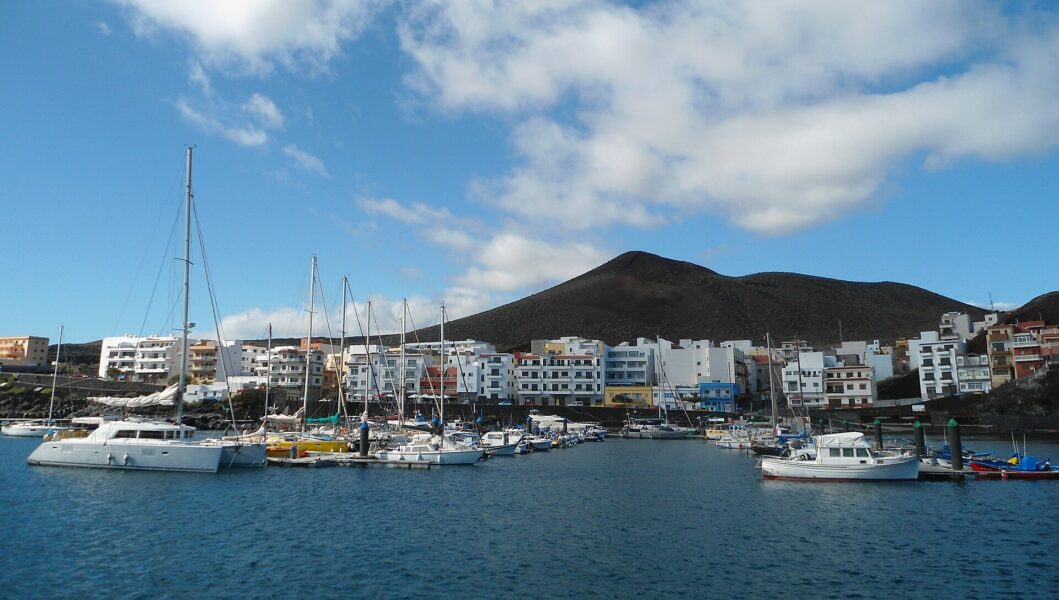
Priest Juan Antonio Rodríguez, who carries out his ministry in El Hierro, has warned on COPE that the arrival of more than 4,000 migrants to the island so far in November is not a local problem. “It is a crisis that truly affects all of Spain, not only the Canary Islands,” he stated this Saturday in the interview broadcast on La Mañana Fin de Semana, where he described the situation experienced by the residents of an island of about 11,000 inhabitants.
Rodríguez explained that, after seven or eight days at sea, the cayucos arrive at the dock of La Restinga, a fishing village of about 400 inhabitants where the Red Cross provides the first assistance to the newcomers. Afterwards, the migrants are transferred to the Temporary Foreigners’ Reception Centre (CATE) in San Andrés, where they remain for two or three days for evaluation, and most are then sent to Tenerife, Gran Canaria or Lanzarote, islands that, according to the priest himself, are also at their limit. “The Canary Islands are overwhelmed,” he summarised.
A village of 400 residents that asks to be seen
The priest stressed that El Hierro is not prepared to receive in just a few weeks a flow of people that approaches the island’s own population. The residents of La Restinga, he added, ask to be seen: “see us, see us, we are 400 inhabitants.” Rodríguez described the reaction of the people of El Hierro as logical and reasonable, and recalled that El Hierro has historically been a land of emigrants. He also insisted that “each cayuco is a story,” since the people arriving in each boat come from very different situations.
The data supporting his diagnosis are provided by the COPE report itself: the island has accumulated more than 4,000 arrivals this month and the authorities have formally requested help from the mainland. The mayor of Frontera, Pablo Rodríguez, warned of the strain on the Island Hospital and called for the competent ministry to take charge of the situation. For his part, Marcos Díez, spokesperson for the CGT in Maritime Rescue, denounced that the same crew is now handling the bulk of arrivals that would normally occur in a month.
The Church, present from the dock
The priests of El Hierro have been accompanying migrants since they disembark, as COPE already reported in 2024 when recounting how three priests from the island joined the Red Cross to help at the docks. Rodríguez’s voice now joins that of other local actors calling for a national-level response to a migratory pressure that, according to the report’s own data, overwhelms the islands’ resources.
The migration issue in the Canary Islands has also resonated in recent magisterial teaching. Leo XIV visited the port of Arguineguín in Gran Canaria in June, where he stated that “there is the right to seek refuge, but also the right not to have to migrate,” as InfoVaticana reported. The testimony of the priest from El Hierro, who attends to those who arrive and lives alongside the residents who receive them, now provides the perspective of someone who knows both realities first-hand.
The full interview can be heard on the COPE website.