


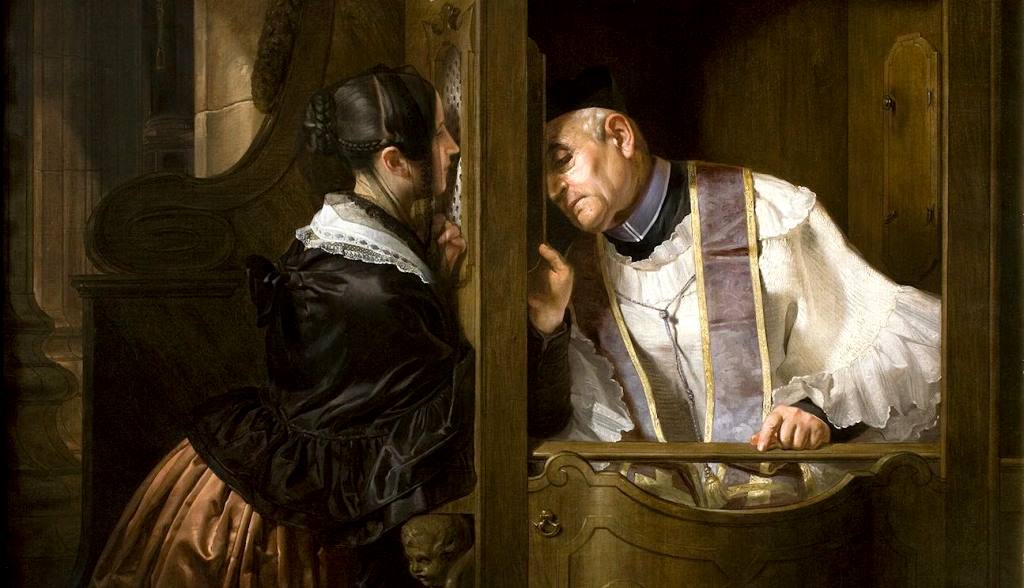
Every August 4th the Church celebrates the memorial of Saint John Mary Vianney (1786-1859), universally known as the Curé of Ars and proclaimed patron of all priests. His life constitutes one of the most eloquent examples of priestly holiness in the contemporary era: a parish priest of a small French village who, without standing out for his intellectual qualities or holding great ecclesial responsibilities, ended up becoming one of the most sought-after confessors in Europe.
A priest forged in difficult times
John Mary Vianney was born on May 8, 1786, in Dardilly, near Lyon, into a deeply Catholic peasant family. His childhood was marked by the French Revolution, when religious persecution forced many priests to celebrate Mass clandestinely and put the transmission of the faith at risk.
His vocation encountered numerous obstacles. Academic difficulties, especially with the study of Latin, led some superiors to think he would never reach the priesthood. However, his perseverance and his profound spiritual life finally convinced his formators. He was ordained a priest in 1815.
Three years later he received the assignment that would mark his existence: the small parish of Ars, a village of barely a few hundred inhabitants where religious practice had declined considerably after the revolutionary years.
The conversion of a village
Upon arrival, the new parish priest understood that the renewal of the parish had to begin with his own holiness. He intensified prayer, penance, and Eucharistic adoration, convinced that the conversion of souls was, above all, the work of grace.
His preaching constantly revolved around the mercy of God, the necessity of conversion, and the beauty of the Christian life. Little by little, religious practice began to revive in Ars.
The priest restored the parish church, promoted works of charity, founded the orphanage known as La Providence and devoted constant attention to the poor and needy.
The great confessor of France
The fame of the Curé of Ars spread above all through his ministry in the confessional. Thousands of people began to travel from all corners of France to confess with him, convinced they would find a priest capable of guiding consciences with extraordinary discernment.
During the last years of his life he came to dedicate up to sixteen hours a day to the sacrament of Penance. Those long days were barely interrupted to celebrate the Eucharist, pray the Divine Office, or attend to pilgrims.
His ministry was accompanied by an intense life of penance. He slept few hours, ate very frugally, and offered constant mortifications for the conversion of sinners. He himself spoke on numerous occasions of the temptations and attacks of the devil, which he interpreted as a consequence of the spiritual fruitfulness of his ministry.
A permanent model for the priesthood
Saint John Mary Vianney died on August 4, 1859. More than a thousand people attended his funeral, including the bishop and numerous priests, already convinced then of the holiness of the man who had transformed a small parish into a center of pilgrimage.
He was canonized by Pius XI in 1925, who proclaimed him patron of parish priests. Later, the same Pontiff declared him patron of all the priests of the world.
On the occasion of the 150th anniversary of his death, Benedict XVI convoked the Year for Priests in 2009 and addressed a letter to all presbyters inviting them to look to the Curé of Ars as an example of fidelity to the ministry received.
The relevance of the Curé of Ars
More than a century and a half after his death, Ars continues to be one of the great places of priestly pilgrimage. Each year hundreds of thousands of faithful come to the small French town to pray before the saint who showed that the renewal of the Church does not necessarily begin with great reforms, but with the holiness of its priests.
In an age marked by the scarcity of vocations in much of the West and by the challenge of the new evangelization, the figure of the Curé of Ars continues to recall a constant conviction of Catholic tradition: that a priest dedicated to prayer, to the Eucharist, and to the confessional can profoundly transform the life of an entire community.