


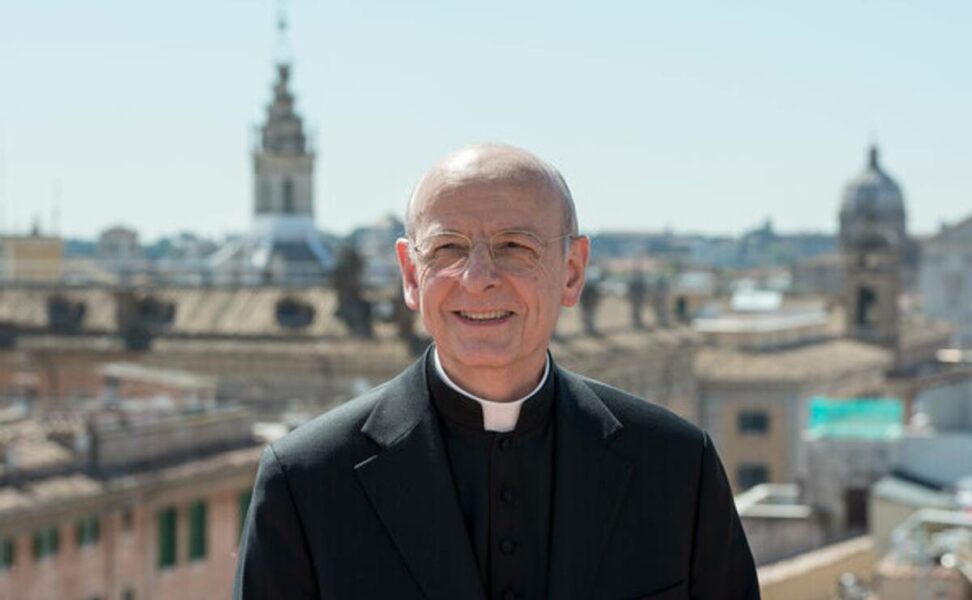
The Prelate of Opus Dei, Mons. Fernando Ocáriz, has encouraged Christians to live their vocation in the midst of the world with the confidence of God’s children, transforming everyday work into a place of encounter with Christ and becoming sowers of peace and unity in an increasingly polarized society.
In the homily delivered on the occasion of the feast of St. Josemaría Escrivá, published by the Opus Dei, Ocáriz recalled the Gospel call to “put out into the deep” and linked his reflections to some recent teachings of Pope Leo XIV on concord, fraternity, and the rebuilding of the social fabric.
Homily of the Prelate of Opus Dei, Mons. Fernando Ocáriz
Feast of St. Josemaría, 26 June 2026
“Put out into the deep, and let down your nets for a catch” (Lk 5:4). We have heard these words that the Lord addressed to some fishermen of Galilee, and which marked the beginning of their life as apostles. Jesus called them in the exercise of their work, and not on just any day. It was the end of a day marked by failure: they had spent the whole night working, but had caught nothing.
We can imagine how those fishermen must have felt. And it was precisely at that moment that Jesus asked them to put out into the deep. He did not wait until they were rested, self-assured, or full of enthusiasm. He entered their boat, their weariness, and their work, and from there called them to a divine adventure.
St. Josemaría, whose feast we celebrate today, taught that the weariness and fatigue inherent in work can also be a place of encounter with God. Not because the tiredness disappears, but because we have the certainty that the Lord looks upon us, accompanies us, and is at our side. “If at any moment anxiety, restlessness, or unease should appear,” he said, “we draw near to the Lord and tell him that we place ourselves in his hands, like a little child in his father’s arms” (Letter 2, no. 59). The awareness of divine filiation profoundly marked his relationship with God.
“For all who are led by the Spirit of God are children of God” (Rom 8:14), we read in the second reading. The certainty that we have a God who is Father, who cares for us and sustains us, fills our daily struggles with hope. Even when we feel that the weariness of work weakens us, as happened to the apostles.
It is there, in the midst of the world, in our daily tasks and struggles, with their successes and failures, that we are called to bring Christ’s message. In the good performance of our work. In the service of those around us. In the care of our family and those who live with us. In the way we face ordinary difficulties. By doing all this with the love of God, we are sowing the good news of the Gospel in every environment. We are fulfilling, as we heard in the first reading, the divine command to cultivate and keep the earth (cf. Gn 2:15).
A particularly important way, and very proper to those who know themselves to be children of God, of contributing to the transformation of the world is to be sowers of peace and joy. Differences of opinion and sensibility can sometimes become an almost insurmountable barrier between people. The Pope, during his visit to the cathedral of Barcelona, invited us to be “witnesses and prophets of unity, welcome, concord, and peace, even at the cost of sacrifices and renunciations” (homily at the recitation of Terce). Let us never feel ourselves to be enemies of anyone. Whoever knows himself to be a child of God cannot look upon others as adversaries, because he sees them as brothers and recognizes the love the Lord has for them.
In the encyclical Magnifica humanitas, Pope Leo XIV recalls the figure of Nehemiah and the rebuilding of Jerusalem. The city is reborn “when each one assumes his part and the whole people recognizes that its strength comes from the Lord” (no. 8). This image also helps us today. In a world often fragmented, every Christian is called to rebuild bonds with his brothers and sisters, beginning with those closest to him. And he can do so by recognizing, first of all, that what unites us is far more decisive than what can separate us.
The life of the first Christians, for which St. Josemaría felt such affection, can serve us as an example. They were mistreated, persecuted, and people wanted to put them to death. Nevertheless, there are countless testimonies of love not only among themselves, but also toward their very persecutors. And it was thus, through charity, through that love capable of reaching even the enemy, that they contributed to changing the structures of society.
Let us ask the Virgin Mary to help us let Jesus enter our boat. May she teach us to live with the confidence of God’s children, to put out into the deep when the Lord asks it of us, and to sow in the midst of the world the peace, joy, and charity of Jesus Christ.