


The solemn blessing of the Christ Tower of the Sagrada Família by Pope Leo XIV was nearly disrupted by an organized attempt to introduce pro-independence slogans during the liturgical acts. The initiative was detected and neutralized in the minutes prior to the ceremony, preventing it from taking place publicly.
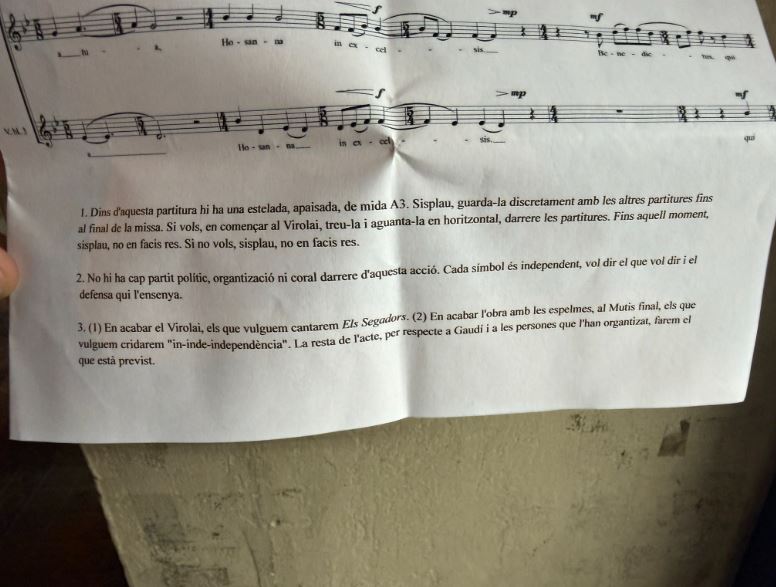
According to an exclusive report by RAC1, several participants received printed instructions hidden among the sheet music distributed for the celebration. The document, written in Catalan, called for a coordinated action during some of the most significant moments of the event.
The instructions were precise. First, participants were asked to discreetly keep an A3-sized estelada among the sheet music until the moment of performing the Virolai, at which point it was to be unfolded horizontally. The text stressed that the action was not officially linked to any political organization, entity, or specific choir, stating that each participant would act individually.
The plan also included, at the end of the Virolai, those who wished to perform Els Segadors, the official anthem of Catalonia usually associated with independence. As a second phase, once the final musical piece of the event had concluded, it was proposed to chant slogans of “independence.”
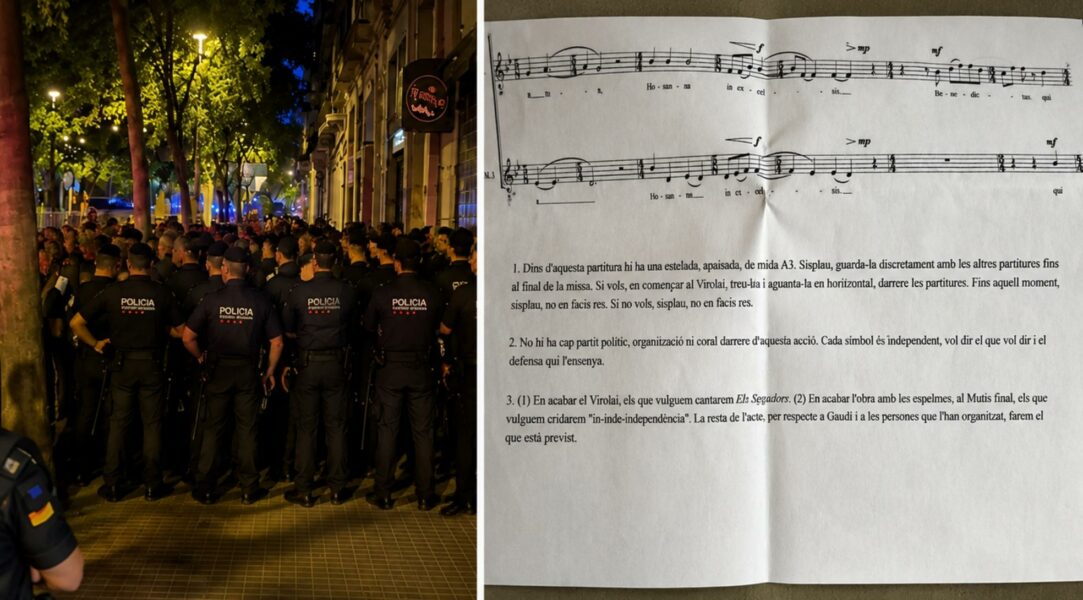
However, the initiative did not materialize. As RAC1 also reported, security forces acted before the ceremony ended and isolated the alleged organizers for approximately fifteen minutes once they left the interior of the basilica. According to images released by the Catalan broadcaster, several officers surrounded the group to prevent any coordinated action outside.
The intervention prevented the blessing ceremony of the Christ Tower—one of the central moments of Leo XIV’s visit to Spain and coinciding with the centenary of Antoni Gaudí’s death—from being overshadowed by a political claim unrelated to the religious nature of the event.
The celebration was ultimately able to proceed as planned. Thousands of faithful took part in a day marked by prayer, sacred music, and the symbolic completion of one of the most emblematic works of contemporary Christian architecture, without the attempt at political instrumentalization altering the course of the events.