


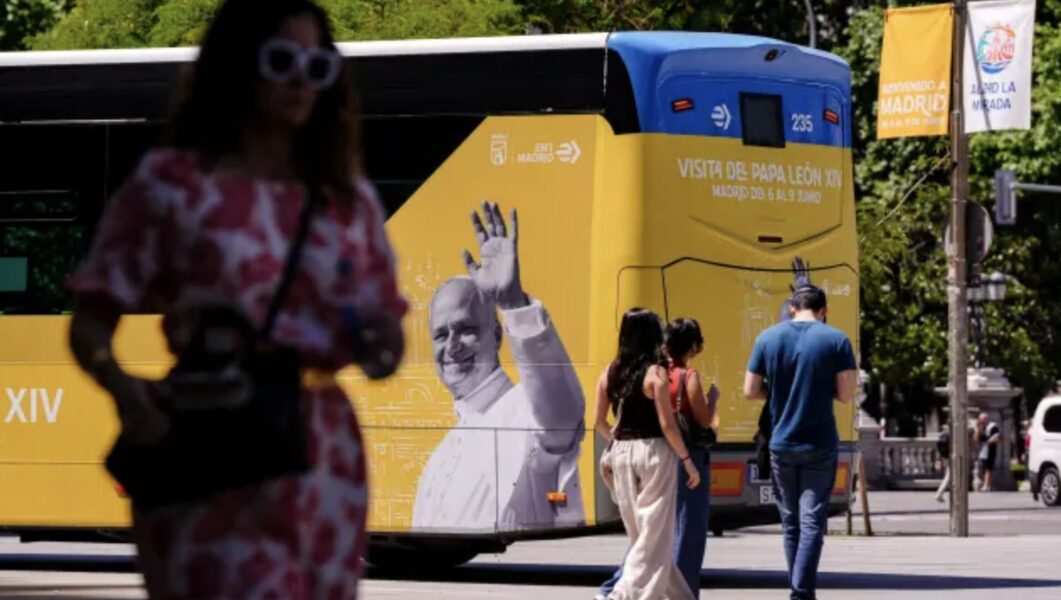
Papal visits are never neutral events. In them converge, almost inseparably, the spiritual dimension, media impact, political reading, and social mobilization. They are moments of high symbolic intensity where faith is exposed to the world and the world attempts to appropriate the symbol. Pope Leo XIV’s trip to Spain fully participates in this logic: it may leave deep fruits of conversion, hope, and ecclesial revitalization, but it also runs the risk of becoming trapped in ideological noise, political instrumentalization, and certain emotional excesses that should be observed with serenity and critical sense.
Positive aspects
An open door to faith
The papal visit operates as a symbolic threshold: many who approach out of initial curiosity end up touching something that had lain dormant within them. Grace also acts in the margins, and an event of this magnitude may be the first link in a return to the sacraments for those who had been away for years.
The distant one, challenged
The lukewarm practitioner, the baptized person living with their back to the Church, finds in this moment a presence that is difficult to ignore. It is not media proselytism, but the very weight of the sacred breaking into everyday life. That contact can be a seed.
Ecclesial dynamism in the dioceses
The organized pilgrimages, parallel events, and interdiocesan encounters generate a fabric of community that is rarely activated in ordinary times. The Church moves, sees itself, and is seen. That movement has its own value beyond the central event.
Seed of vocations
It is not anecdotal: a significant proportion of those who are priests, religious, or committed laypeople today point to a World Youth Day, a beatification, or a papal visit as a pivotal moment in their discernment. The mass mobilization may, for many young people, be the start of something definitive.
Risk aspects
The political context poisons the atmosphere
The visit arrives at one of the moments of greatest institutional tension in Spanish democracy. With the government on the ropes, President Sánchez in a performative nemesis position against Trump, and an entire presidential family under judicial scrutiny, any image of rapprochement between the Pope and the power may be instrumentalized in both directions.
Faith should not be an electoral bargaining chip, but the risk is real.
The discourse that overlooks the moral drama
There is a growing distance between the episcopal palaces and the real anguish of the faithful: insecurity, crime, deteriorated access to public services, and uncontrolled immigration that generates social tensions that no one in the ecclesial leadership seems to want to name.
If the papal discourse before the Congress tiptoes around abortion, euthanasia, and the destruction of the family to focus on more politically agenda-driven narratives, the message will arrive fractured —interpreted as alignment with the progressive woke migration vision— and the more lucid faithful will not overlook it.
The call effect in the Canary Islands
The announced visit to a port receiving small boats and cayucos is not a simple gesture. With the eyes of the world focused on that specific point, human trafficking mafias and the desperate from the other shore may read the moment as a window of impunity.
An increase in departures could lead to a human drama of enormous magnitude —deaths at sea, devastating images— and to an unprecedented image crisis for the visit itself. The risk, unfortunately, is not hypothetical.
Papolatry and its dangers
Expressions of the caliber of «Jesus on earth», «I saw the Pope and saw God», or «I am going to breathe the same air as the Pope» are already circulating in podcasts of the Archdiocese of Madrid. This is theological confusion with the potential to cause real harm.
We live in an era of permanent digital footprint: future popes will drag digital footprints that humanize them both in virtues and in defects and that will surely demystify their figure. The divinization of a person of flesh and blood is always a trap. The center is Christ and the Church, not the media or emotional phenomenon of the moment. The Petrine See has immense value per se, independently of who occupies it at any given time. Great care must be taken with the focus and the narrative to avoid confusion.