


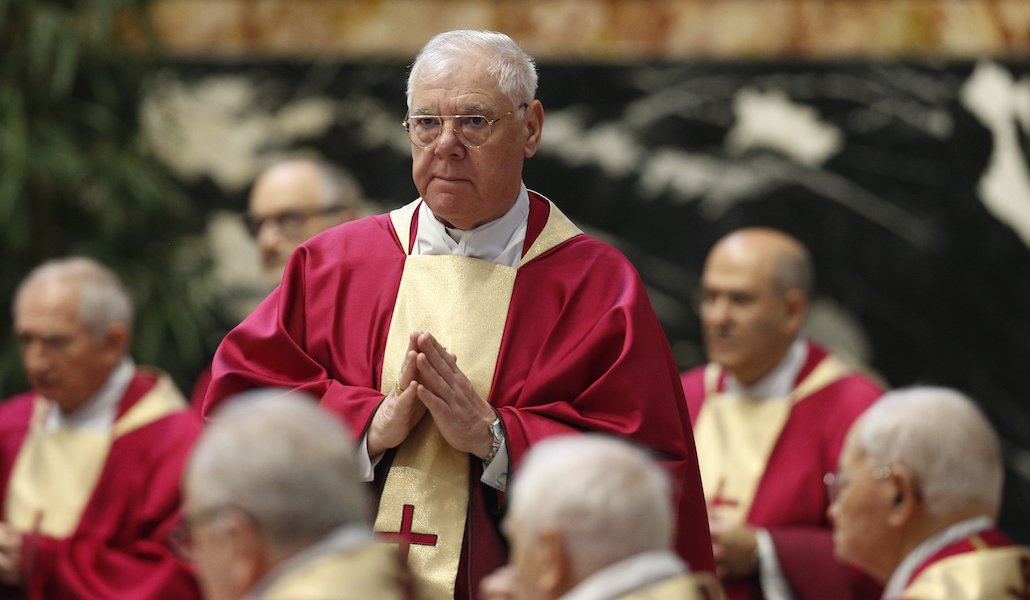
Cardinal Gerhard Ludwig Müller has rejected that the election of Pope Leo XIV was influenced by economic motives, in response to interpretations that have linked the outcome of the last conclave with the financial situation of the Holy See.
These interpretations are framed within the interest that usually surrounds conclaves, processes that, due to their reserved nature, have historically given rise to analyses on possible internal balances, supports among cardinals, and factors of influence. In the case of Leo XIV, the first American Pope, some comments have pointed out that his election might be related to the economic weight of Catholicism in the United States and the financial difficulties of the Vatican.
Müller dismisses the influence of finances in the conclave
The statements of the German cardinal took place in Rome during the presentation of the book Papi, Dollari e Guerre, by Vaticanist Massimo Franco —journalist and political analyst at Corriere della Sera—, which analyzes the historical relationship between the Vatican and the United States, with special attention to their financial and diplomatic ties.
According to AdVaticanum, Müller responded directly to the idea that economic factors had conditioned the election of the Pontiff: “Although Cardinal Reinhard Marx dedicated a full day to addressing the finances of the Holy See in the pre-conclave, this did not influence the final decision,” he stated. The cardinal added that the election of a Pope “is based on different criteria.”
The role of the pre-conclave and economic discussions
Before the start of a conclave, the cardinals participate in general congregations in which they analyze the situation of the Church and its main challenges. In that framework, the financial issue occupied a relevant place, with a specific day dedicated to this matter under the coordination of Cardinal Marx, linked to Vatican economic oversight.
Nevertheless, Müller emphasized that these discussions are part of the prior exchange of opinions, but do not determine the direction of the cardinals’ vote.
A debate reactivated by the current context
The interpretations about a possible economic influence have gained strength due to the coincidence of several factors: the election of the first American Pope, the weight of Catholic institutions in the United States in the economic sustenance of the Church, and the financial difficulties that the Holy See is going through in recent years.
In this context, Müller’s words seek to clarify that, despite the relevance of these elements, they did not form part of the decisive criteria in the conclave.