


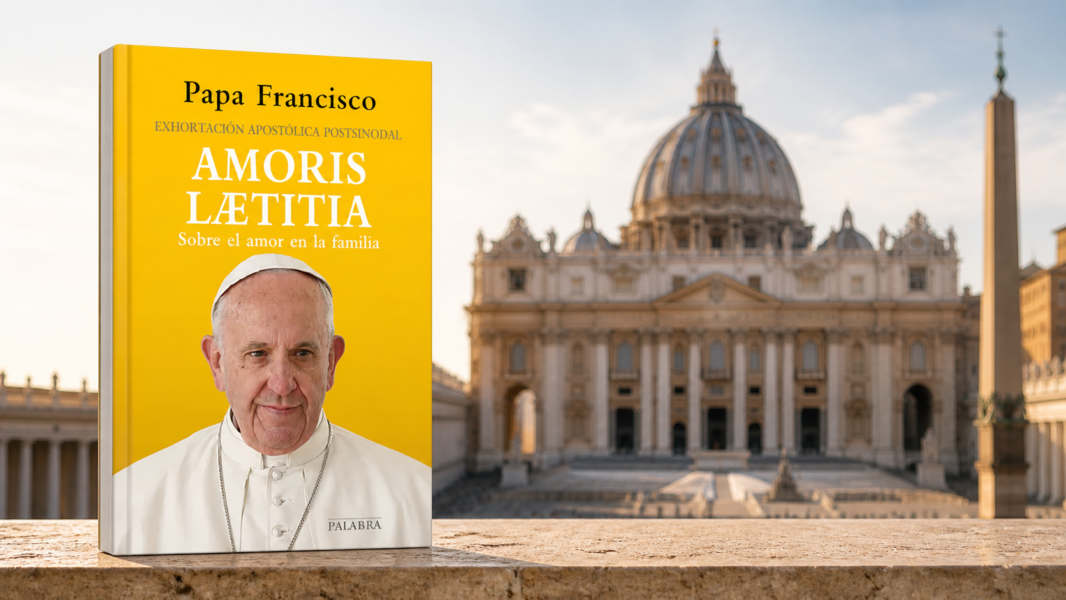
The meeting of bishops convened by Pope Leo XIV to address Amoris Laetitia, already announced in March on the occasion of the document’s tenth anniversary, will finally hold its gathering from October 7 to 14, amid persistent doctrinal tensions and doubts about the approach the Vatican will adopt.
The Vatican sets dates for the meeting on Amoris Laetitia
A few weeks ago, Leo XIV summoned the presidents of the episcopal conferences from around the world to evaluate family pastoral care in light of Francis’s exhortation, in a context of profound cultural and ecclesial changes.
According to the outlet Per Mariam, the bishops will now begin to organize their participation after the meeting’s calendar has been officially confirmed, which will coincide with the tenth anniversary of the publication of Amoris Laetitia.
The key role of the Synod Secretariat
Although the Dicastery for the Laity, Family, and Life has the primary responsibility for the organization, the General Secretariat of the Synod will play a determining role by providing “organizational and methodological” support.
This body was already in charge of the recent Synod on synodality, whose format—marked by group work dynamics—generated reservations among numerous cardinals. The extraordinary consistory of January similarly showed traits of that organizational style, practically limiting the time for free interventions.
Consultative meeting or new synodal model?
From the Vatican, it has been insisted that the October meeting will not be a formal synod, but a consultative gathering between the Pope and the bishops. However, its configuration has raised questions, especially due to the influence of the Synod Secretariat.
Unlike the recent synodal process—in which laypeople participated with voting rights—this meeting initially represents a return to the traditional scheme of episcopal encounters. Nevertheless, it remains to be seen whether open debate will be allowed or if the more directed methods that have drawn criticism will be reproduced.
The background: a decade of doctrinal controversy
The stated objective of the meeting is to discern how to announce the Gospel to families in the current context, in light of Amoris Laetitia. In the words of Pope Leo XIV, it is about responding to the profound changes affecting the family and its role in the Church’s mission.
However, neither in the official announcement nor in the subsequent details has reference been made to the doctrinal controversy surrounding the document, especially regarding the access to Communion for divorced and remarried persons.
Pope Francis stated at the time that there was no other valid interpretation than that offered by the bishops of Buenos Aires, which allowed this practice, an interpretation that was later elevated to magisterial status through a rescript in 2017.
Criticisms and calls for correction persist
Over these years, voices calling for clarification or formal correction of the document have not been lacking. Among them is that of Cardinal Walter Brandmüller, one of the signers of the dubia, who already in 2015 warned of possible interpretations contrary to doctrine.
More recently, a group of faithful sent an open letter to Pope Leo XIV requesting the annulment of the 2017 rescript that granted magisterial value to the most controversial interpretation of the text.
In the intellectual sphere, figures such as the American philosopher Edward Feser have described this point as one of the most problematic of the previous pontificate, considering that it directly affects Christ’s teaching on marriage.
Expectation regarding the course Leo XIV will take
The official silence on these issues has increased expectation around the October meeting. The underlying question is whether Pope Leo XIV will directly address the contentious points or opt to keep them on the sidelines.
His decision will largely determine whether this meeting becomes an opportunity to clarify and strengthen doctrinal unity, or if, on the contrary, it is perceived as a missed opportunity at a particularly delicate moment for the life of the Church.