


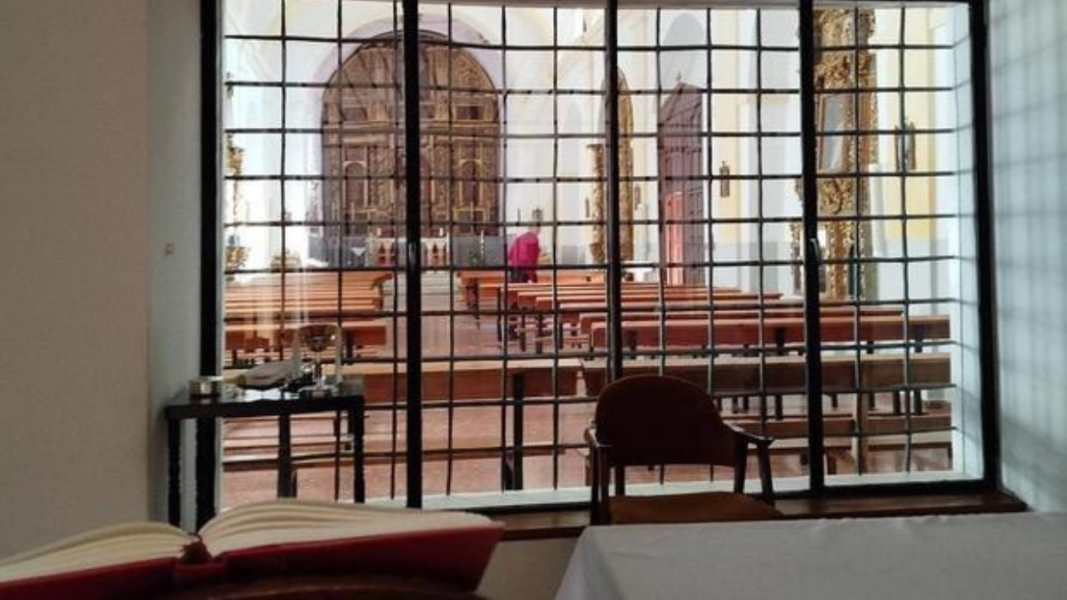
On April 4th, the last nun left the Monastery of Our Lady of the Assumption of Villalobos. With her departure, not only is a house closing: an uninterrupted presence of more than six hundred years of contemplative life in the Diocese of Zamora is extinguished.
The scene, sober and without ceremony, contrasts with the magnitude of what is lost. There was no solemn farewell or diocesan act. Only the discreet end of a community that lived, prayed, and died in the silence proper to the Poor Clares.
A history that begins in the Middle Ages
The convent was founded in 1346 by a bull from Clement VI, under the patronage of the lords of Villalobos. Since then, generation after generation, the sisters kept a flame alive that spanned centuries of wars, political changes, and social transformations.
It was not a visible presence in media or institutional terms. Its influence was measured on another plane: that of constant prayer, silent intercession, and spiritual stability in a rural environment that today suffers more than ever from depopulation and wear.
For centuries, the monastery was a fixed point in the midst of a changing world.
The announced end: age and lack of vocations
The closure has not been sudden. The advanced age of the nuns and the absence of new vocations have progressively reduced the community until making its continuation unviable.
The Diocese of Zamora has acknowledged that it has not been able to intervene, as it is an internal decision of the order. A legal limitation that, however, does not hide the underlying reality: contemplative life is going through a deep crisis in Spain.
Much more than a building
With the departure of the Poor Clares, not only a community disappears, but a way of life that has spiritually sustained entire generations.
The monastery was not merely an architectural complex or an element of historical heritage. It was a place inhabited by a specific vocation: total dedication to God in enclosure.
What remains
The diocese has thanked the nuns for their witness, emphasizing their fidelity over the centuries. Parish life will continue in Villalobos, but without the presence of the Poor Clares who for generations marked the spiritual pulse of the place.
The building, owned by the congregation, now awaits an uncertain future.
In the meantime, what remains is not visible: the memory of a community that lived apart from the world, but that sustained, from silence, an essential part of the Church’s life for more than six centuries.