


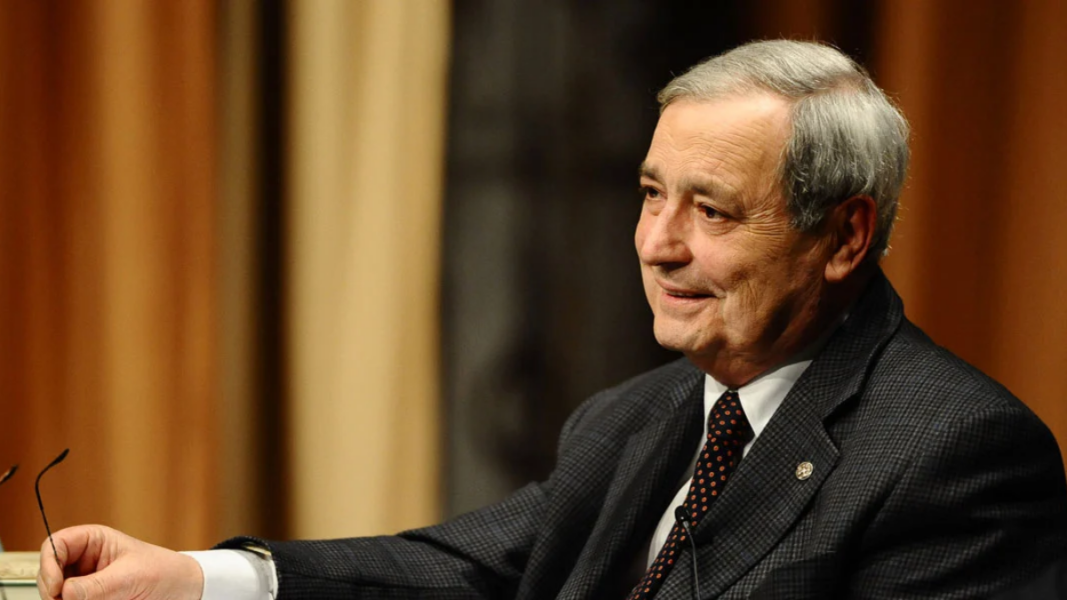
The Italian journalist and writer Vittorio Messori, one of the most influential figures in contemporary Catholic thought, has passed away at the age of 84 on the night of Good Friday, leaving behind a body of work that marked several generations and a style that did not shy away from controversy when the truth was at stake.
Messori died in Desenzano, in northern Italy, at 21:10 on April 3. The news became known a few hours later in Rome, in the early morning of the 4th, through the Italian blog Messa in Latino, which defined him as “a great apologist and writer whose works have formed generations of Catholics and, in many cases, brought them back to the faith”.
A key figure in 20th-century Catholicism
His death marks the end of an era in European religious journalism. Messori was not a mere observer: he was an intellectual protagonist in one of the most turbulent moments of the Church after Vatican II.
Faithful to the Church and the papacy—“but without servility and without staying silent,” as those who knew him have emphasized—his work was characterized by an argued defense of the faith against secularizing currents and internal drifts that questioned tradition.
Among his most well-known books are Hipótesis sobre Jesús, Apuesta sobre la muerte or ¿Padeció bajo Poncio Pilato?, titles that marked several generations of readers.
The “Ratzinger Report” that shook the Church
But if there is one work that defined his trajectory, it was Informe sobre la fe (The Ratzinger Report), the result of an extensive interview conducted in 1984 with then-Cardinal Joseph Ratzinger, prefect of the Congregation for the Doctrine of the Faith.
Published in 1985, the book had an immediate impact inside and outside the Church. In its pages, Ratzinger addressed the ecclesial situation without mincing words, warning about “dangers” and “difficulties” after the Council, and openly questioning currents such as liberation theology.
The effect was immediate. The book provoked a strong reaction from progressive sectors, who did not accept either the content of the responses or the fact that Messori did not contradict the cardinal.
Criticism, pressures, and threats
The very success of the book turned Messori into a target of intense criticism. His “fault,” according to his detractors, was not only having interviewed someone whom some disparagingly called the “Grand Inquisitor,” but having allowed his words to be exposed without filter or correction.
The tensions did not remain on the intellectual plane. According to later testimonies from his circle, the controversy reached the point of receiving death threats, in a climate that reflected the deep internal division of the Church in those years.
An open legacy
Messori’s figure now remains open to a broader rereading. His death, on a date laden with meaning like Good Friday, invites a review of his contribution at a time when doctrinal and pastoral tensions continue to mark the life of the Church.
His work, marked by clarity, courage, and a non-complacent fidelity, will continue to be a point of reference in a debate that, far from closing, remains fully relevant.