


A few weeks ago, InfoVaticana explained that the Spanish Episcopal Conference attempted to condition the editorial line of this media outlet by offering funding in exchange for withdrawing critical content. The proposal was rejected. That experience made it possible to confirm that, at least in this case, money did not buy silence. But the episode forces us to look more closely at what happens when that same money does circulate with apparent normality toward other media in the ecclesial ecosystem, even when those media openly despise those who finance them.
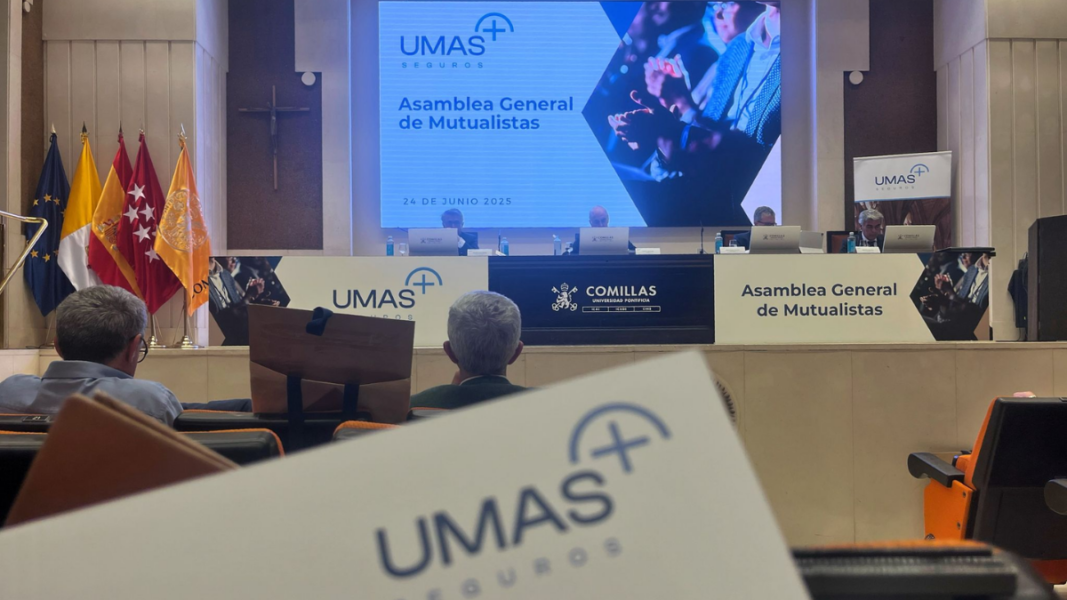
The problem is not the existence of institutional advertising, but who it is paid to, how much is paid, and with what criteria, because it is worth remembering something basic: the money and the business structures handled by the ecclesiastical hierarchy are not their personal assets. They respond, directly or indirectly, to the effort of the faithful and to the sustenance of Church institutions. In that context, the case of UMAS Seguros arises, a mutual founded on the initiative of the Spanish Episcopal Conference and de facto controlled by ecclesial institutions, whose communication policy raises questions that can no longer be dodged.
An ecclesial mutual and a reinforced obligation of transparency
UMAS is not just any private company. It is a mutual created to serve dioceses, religious congregations, educational centers, and entities linked to the Church. Its resources come, directly or indirectly, from institutions sustained by the faithful. For that reason, in its case, transparency is not a decorative option or a word suitable for corporate reports: it is a moral imperative.
In 2025, UMAS closed the best year in its history, exceeding 30 million euros in premiums, figures disseminated by the entity itself. Precisely because of that good economic moment, it is even more legitimate to ask how the resources allocated to communication and advertising are being used, and why part of those resources ends up strengthening Religión Digital, a medium that not only shows no institutional respect toward the Church, but also allows itself to treat the Episcopal Conference itself with an unheard-of mixture of arrogance, contempt, and punitive zeal.

From advertorial to insult: paying to be humiliated
In recent months, Religión Digital has repeatedly published content favorable to UMAS presented as news of general interest. Between October 2025 and January 2026, sponsored pieces appear such as “UMAS achieves its goal in the best year of its history”, “UMAS Seguros will cover the celebrations of the VIII Centenary of the Toledo Cathedral” or “UMAS celebrates in Zaragoza its III Commercial Network Meeting after closing the best year in its history and with its sights set on 2026”.
These reports are joined by others of a strictly internal profile, such as “UMAS Seguros strengthens its Management Committee with the incorporation of María Vega Francés”, “UMAS Seguros strengthens its Board of Directors with new directors” or interviews with a clearly laudatory tone such as “Eduardo Basagoiti: ‘At UMAS we insure by accompanying’”. Even protocolary content, such as Christmas greetings, finds space as news, always in Religión Digital.
These are pieces whose informational interest outside the internal scope of the mutual is, at best, debatable. In practice, they function as institutional advertising presented in journalistic format. But the problem is no longer just that. What is truly grotesque is that the director of the benefited medium, José Manuel Vidal, then allows himself to publish tweets in which he scolds the Spanish Episcopal Conference as if he were reprimanding a useless subordinate. He does not inform, does not analyze, does not discuss: he scolds, demands, points out, and suggests purges with that bargain-basement Bergoglian mercy that calls for dismissals with a sorrowful gesture. The spectacle is shameful: they finance them and on top of that they allow themselves to be treated like trash.
The chosen medium and its editorial line
The choice of Religión Digital is not neutral. It is a medium that has built its identity on a very specific ideological agenda: enthusiastic coverage of supposed ordinations of women bishops, permanent resurrection of an exhausted liberation theology, and an obsessive discourse against a supposed “ecclesial neofascism” with which priests, faithful, and media are labeled who, in reality, do nothing more than adhere to Catholic doctrine.
At the same time, Religión Digital repeatedly attacks InfoVaticana, presenting it as an extremist or dangerous medium for not assuming that ideological framework. The paradox is already too obscene to continue ignoring it: an ecclesial mutual founded by the Episcopal Conference finances visibility in a medium that questions the magisterium, discredits those who defend it, and publicly humiliates the very hierarchy that, in one way or another, sustains the ecosystem from which it lives.
The episcopal syndrome of the battered woman
The most striking thing of all is not even the aggressiveness of Religión Digital, but the docility with which it seems to be assumed. Here a sickly pattern begins to take shape that in many Spanish bishops can no longer be described as simple tactical weakness. It looks too much like the battered woman syndrome: the more they despise them, the more need they seem to feel to please; the more they hit them publicly, the more money they end up allocating to those who hit them; the more they insult them, the more they seek to buy tranquility, coverage, or false legitimation.
Audience figures: the data that doesn’t fit
The analysis becomes even more uncomfortable when looking at the audience data. According to the 2025 accumulated visit statistics prepared by SimilarWeb, Religión Digital records approximately 6.5 million annual visits.
In comparison, InfoVaticana exceeds 18.5 million visits, InfoCatólica is around 16.5 million, and Religión en Libertad exceeds 12 million. The difference is not circumstantial, but structural. From a strictly professional point of view, it is difficult to justify a preferential investment in a medium with a clearly lower reach.
If, in addition, that medium maintains an editorial line aggressive against Catholic doctrine, hostile toward media faithful to the magisterium, and contemptuous toward the very hierarchy, the question stops being merely commercial. It becomes institutional, moral, and even psychological. What exactly is being bought there? Audience? No. Prestige? Nor. Peace? Even less. The only visible thing is a perfectly useless submission.
How much is paid and what CPM results?
Here lies the core of the problem. UMAS mutual members have requested information on the amounts paid for these placements, the real number of visits generated by these pieces, and the resulting effective CPM. To date, they have not received a response.
Without this data, it is impossible to evaluate whether the money is being used efficiently or if prices are being paid well above market value. In an ecclesial mutual, this opacity is not a minor detail, but a serious anomaly that could be indicative of inadequate and misadjusted agreements to the real market value.
And it is worth emphasizing something else: UMAS is just the beginning. There is much more institutional advertising circulating through similar channels, toward media favored not by their objective effectiveness but by their ideological alignment or their capacity for pressure. The UMAS case does not exhaust the problem. It barely makes it visible.
Church money, unanswered questions
The debate is not only technical or advertising. It is moral and ecclesial. UMAS manages resources that come from Church institutions and, ultimately, from the sacrifice of the faithful. That demands explaining why a specific medium is chosen, why others with greater audience are excluded, what real return is obtained from that investment, and why those who, far from showing minimum institutional respect, dedicate themselves to insulting, pressuring, and setting the agenda for the same bishops who then seem incapable of cutting that degrading dependence are financed.