


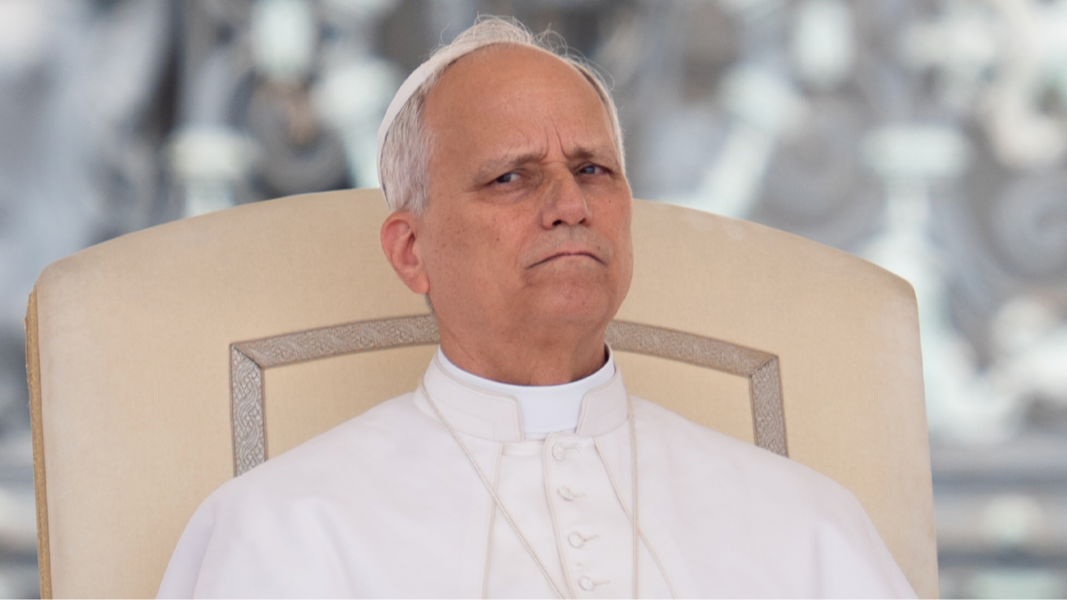
Since last summer, a sequence of audiences has been taking shape in the Vatican that can hardly be considered casual. Since August 2025, Pope Leo XIV has received several of the most representative figures of the traditional wing of the Church: Cardinals Raymond Burke, Robert Sarah, and Gerhard Müller; Bishop Athanasius Schneider; Cardinal Joseph Zen; and Monsignor Fernando Rifan, administrator of the Personal Apostolic Administration of Campos (Brazil), one of the canonical structures that maintains the traditional liturgy in full communion with Rome.
The record in the Holy See’s bulletin shows almost one audience per month:
- 22.08.2025 — His Em. Cardinal Raymond Leo Burke
- 02.09.2025 — His Em. Cardinal Robert Sarah
- 15.11.2025 — His Excellency Msgr. Fernando Arêas Rifan, Titular Bishop of Cedamusa, Apostolic Administrator of the Personal Apostolic Administration of São João Maria Vianney (Brazil)
- 18.12.2025 — His Excellency Msgr. Athanasius Schneider, Titular Bishop of Celerina, Auxiliary of Most Holy Mary in Astana (Kazakhstan)
- 07.01.2026 — His Em. Cardinal Joseph Zen Ze-kiun, S.D.B., Emeritus Bishop of Hong Kong (China)
- 29.01.2026 — His Em. Cardinal Gerhard Ludwig Müller
Taken separately, these encounters might seem like a normal part of any pontiff’s agenda. But considered together—and in the context of the liturgical crisis the Church has been experiencing since Traditionis custodes—they at least invite reflection: Is Leo XIV seeking a stable solution for communities linked to the Vetus Ordo?
Perhaps we can be naive in raising the question again.
A debate that the consistory did not resolve
The January consistory had raised great expectations in this regard. For weeks, there was speculation about the possibility that the liturgical issue would find a space for collegial reflection among the cardenales there. Even Father Louis-Marie de Blignières, founder of the Fraternity of Saint Vincent Ferrer (France), sent a letter to several purpurates proposing to explore concrete canonical solutions for communities linked to the ancient rite.
None of that ultimately happened. The consistory—which decided to focus on issues such as synodality and evangelization—did not publicly address the problem. The atmosphere grew even more tense after the publication of the document by Cardinal Arthur Roche, interpreted by many as a reaffirmation of the restrictive line established by Traditionis custodes.
Read also: Roche’s document on the liturgy is revealed
Time is running toward Écone 01-07
To this situation was added a new element of pressure. In early February, the Priestly Fraternity of Saint Pius X (FSSPX) announced its intention to proceed with new episcopal consecrations on the upcoming July 1 in Écone, with or without authorization from Rome.
As the Fraternity itself explained, the decision was taken «after a long process of reflection, prayer, and internal consultations, and after having explicitly requested from the Holy See a solution that would guarantee the continuity of the episcopal ministry within the Fraternity.»
The announcement has inevitably rekindled the memory of the 1988 crisis. No one desires a repetition of that episode, but neither can it be ignored that the liturgical issue remains open and that thousands of faithful today live this situation with uncertainty: both within the FSSPX and in the traditional communities that are in full communion with Rome.
Since then, the debate has continued through letters, statements, and comments exchanged among various protagonists in the ecclesial world.
A proposal on the table
In this context, proposals have begun to emerge that seek to overcome the confrontation that has marked the liturgical debate for decades. In a recent interview granted to Famille Chrétienne, Father Louis-Marie de Blignières has insisted on the need to abandon radical approaches.
«Given the importance and duration of the crisis, we must be reasonable and abandon totalitarian logics,» he states. The priest rejects both the idea of suppressing the traditional liturgy and that of universally imposing a return to the ancient rite: «I do not wish that what was done to us since 1969 be done to others.»
His proposal—which he had already presented before the January consistory—consists of exploring the creation of a ordinariate for the faithful linked to the traditional liturgy, inspired by structures already existing in the Church. According to Blignières, this framework would allow for guaranteeing stable access to the ancient rite and the spiritual pedagogy associated with it, while maintaining full communion with the dioceses and the universal Church.
The ordinariate—according to his approach—would offer a flexible juridical instrument to respond to the pastoral needs of many faithful who today live this issue with uncertainty.
But why might this proposal be one of those considered by Leo XIV?
Audiences that invite reflection
The audiences held in the first days of March add new elements to this situation.
- 02.03.2026 — His Excellency Msgr. David Arthur Waller, Ordinary of the Personal Ordinariate of Our Lady of Walsingham; His Excellency Msgr. Steven Joseph Lopes, Ordinary of the Personal Ordinariate of the Chair of Saint Peter.
- 05.03.2026 — Professor Stephen Bullivant, with Professor Stephen Cranney.
On Monday, March 2, Leo XIV received the leaders of two of the personal ordinariates established for faithful coming from Anglicanism: that of Our Lady of Walsingham in the United Kingdom and that of the Chair of Saint Peter in the United States and Canada.
These structures, created by Benedict XVI through the apostolic constitution Anglicanorum coetibus, show how the Church can integrate particular liturgical traditions within full ecclesial communion.
After the audience with the Pope, the leaders of the ordinariates also held a meeting with the Dicastery for the Doctrine of the Faith, headed by Cardinal Víctor Manuel Fernández, where they shared information about the life of their communities and reflected on various aspects of the transmission of the faith.

This Thursday, March 5, the Pope also received the researchers Stephen Bullivant and Stephen Cranney, known for their sociological studies on contemporary Catholicism and on the attitudes of the faithful toward the different forms of the Roman rite.
The audience is particularly significant because both are preparing a research study dedicated specifically to Catholics who attend the Traditional Mass. The study, titled Trads: Latin Mass Catholics in the United States, will be published in November 2026.
In a preview published in 2023, their preliminary results show that 98% of the participants—faithful who attend the Traditional Mass—affirmed belief in the real presence of Christ in the Eucharist, compared to 69% of Catholics in general who consider it a symbol. Likewise, a large majority expressed acceptance of the authority of the Pope, and many also expressed their acceptance of the teachings of the Second Vatican Council, although distinguishing between the conciliar texts and some subsequent interpretations.
The authors conclude that the reality of these communities is richer and more fully ecclesial than what certain stereotypes often suggest, and that the data do not support the idea that they are areas marked by schismatic attitudes or a systematic rejection of the Magisterium.