


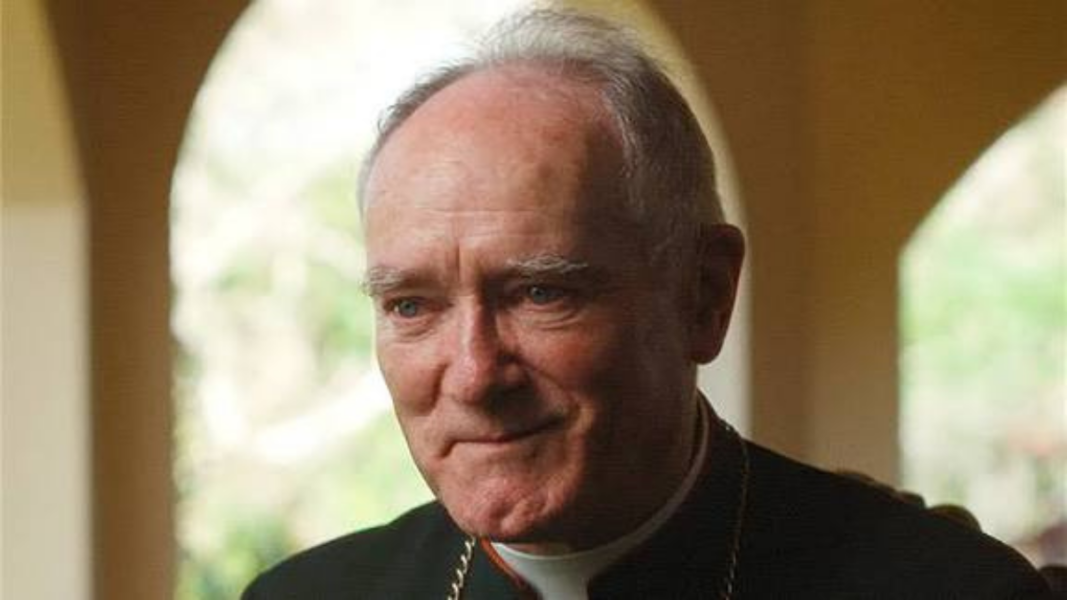
The Priestly Fraternity of Saint Pius X (FSSPX) is living decisive days following the announcement made by its Superior General, Father Davide Pagliarani, regarding the request for new episcopal consecrations. In this context, Monsignor Bernard Fellay—Swiss bishop of the FSSPX—delivered on February 8, the Sunday of Sexagesima, a homily in which he directly addressed the issue and justified the decision by appealing to the “state of necessity” in the Church.
Read also: The FSSPX announces that it will consecrate new bishops on July 1, 2026
From the beginning of his sermon, Fellay acknowledged the gravity of the announcement and the mixed reactions it has provoked among the faithful. “It is not difficult to understand, given the seriousness of the matter, that this has caused contradictory feelings,” he stated, alluding to both the relief and the fear that the news has aroused.
A “very serious” decision
Fellay emphasized that the consecration of bishops without a pontifical mandate is not a minor act. “This matter is, in fact, very serious. And such an act can only be justified by a proportionate situation,” he noted. He insisted that it is not a decision taken for pleasure or on a whim, but rather responds—according to his explanation—to an analysis of the current situation in the Church.
He acknowledged that serious accusations immediately arise, such as those of schism or excommunication, but maintained that the measure can only be understood if one starts from the diagnosis that the Fraternity has held for decades: the existence of a deep crisis in the Church.
The notion of “crisis” and “state of necessity”
The bishop explained that when the FSSPX speaks of “crisis,” “state of emergency,” or “state of necessity,” it does not deny the authority of the Pope or the hierarchical structure of the Church. “We do not deny, in any way, that our mother, the Catholic Church, needs authorities and has authorities,” he affirmed. And he added that the Pope possesses “the supreme authority on earth.”
However, he recalled that the proper end of the Church is the salvation of souls, a mission entrusted by Christ. “The goal of the Church has been given by its founder, Our Lord Himself, and it is the salvation of souls,” he declared. In his view, the current situation must be evaluated in light of that end.
Doctrinal crisis and loss of faith
A large part of the homily was dedicated to describing what he considers a widespread doctrinal crisis. Fellay evoked statements by St. John Paul II on the spread of errors in Catholic universities and cited the analysis by then-Cardinal Ratzinger regarding certain theological currents that, as he said, dilute the doctrine on God, the divinity of Christ, and ultimate truths.
To illustrate the deterioration in catechesis, he recounted specific cases of young people who are unaware of fundamental prayers or basic aspects of the faith, as well as situations of ignorance regarding the real presence of Christ in the Eucharist. He did not attribute these shortcomings to bad intentions, but to a deficient transmission of the faith in broad sectors of the Church.
Likewise, he criticized recent approaches to religious pluralism, stating that such assertions affect the traditional dogma on the necessity of the Church for salvation.
Authority and limits
Fellay addressed the relationship between authority and conscience. He acknowledged that the Pope possesses supreme power, but maintained that this power is not arbitrary. “Authority is always related to truth and to the good,” he affirmed, insisting that its purpose is the salvation of souls.
According to his explanation, when the exercise of authority deviates from that end, an abuse occurs that cannot bind in conscience. In this context, he mentioned current moral and pastoral issues that, in his opinion, generate confusion among the faithful.
“Survival operation”
In the final part of the homily, the bishop evoked the episcopal consecrations carried out in 1988 by Monsignor Marcel Lefebvre, describing them—as he did then—as a “survival operation.” He reiterated that the intention is not to break with Rome or to establish a parallel structure, but to preserve the faith and the sacraments as the Fraternity understands them.
“It is not rebellion. It is not that we are leaving. It is not building a parallel Church. Not at all. We are Catholics and we simply want to remain Catholic,” he affirmed.
Fellay concluded by calling for calm and trust in Providence. He invited the faithful not to give in to panic and to intensify prayer in this delicate moment.
A decisive moment
Fellay’s words come days before the meeting with Cardinal Fernández, prefect of the Dicastery for the Doctrine of the Faith. A meeting that inevitably recalls 1988.
Read also: “Tucho” sets the date with the FSSPX: they will meet on February 12
The historical precedent is evident. At that time, the Holy See declared the consecrations illicit and applied canonical sanctions. Decades later, part of those sanctions were lifted, but the canonical situation of the FSSPX remains irregular.
The underlying issue remains intact: does a state of necessity truly exist that justifies acting without a pontifical mandate?
What is clear is that the FSSPX has decided to make a move at a time when doctrinal confusion, the crisis of vocations, and internal tensions in the Church remain open. The meeting on February 12 will mark a new chapter in a relationship that has been tense for years.
The coming weeks will be decisive in determining whether the Holy See opts for a new confrontation or for an attempt at diplomatic containment on the part of the pontificate of Leo XIV.