


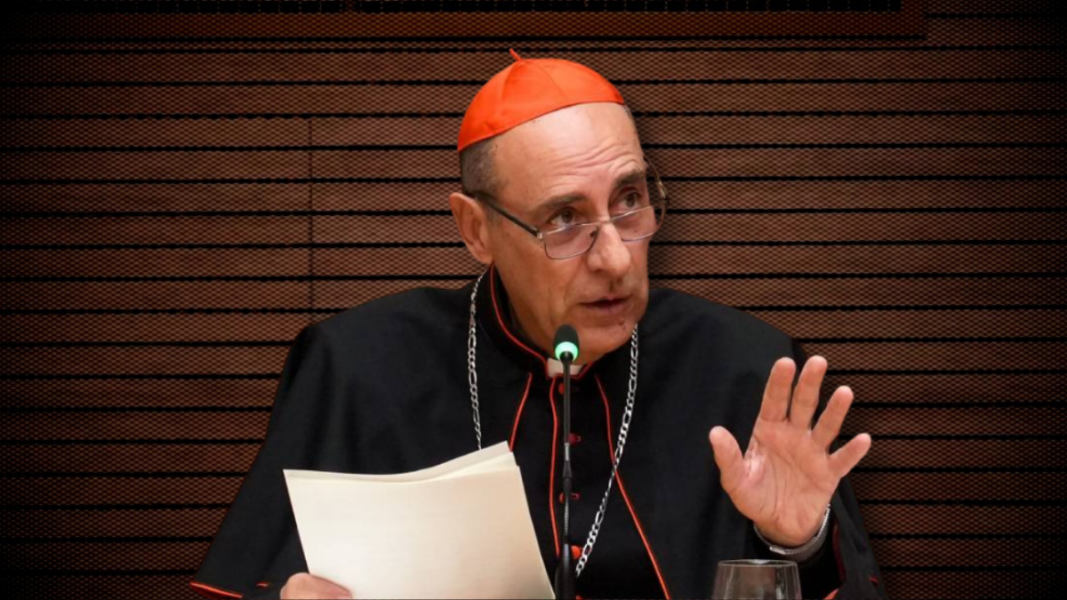
There are appointments that explain on their own the concept of “unity” that Rome handles. Leo XIV has decided to entrust the dialogue with the Society of Saint Pius X to Cardinal Víctor Manuel Fernández, universally known as “Tucho”. And no, it’s not a joke or an ironic provocation: it’s the official decision at the most delicate moment in relations with the FSSPX in decades.
Read also: Leo XIV entrusts “Tucho” with direct dialogue with the FSSPX
It is worth pausing for a second and looking at the full picture. The Society announces episcopal consecrations considering sacramental continuity blocked. Rome responds by appointing as the sole interlocutor the prefect of the Dicastery for the Doctrine of the Faith who has gone down in recent history for his creative theology, his markedly Lutheran sensitivity in moral matters, and his signature on one of the most disfigured Marian documents in recent times, that Mater populi fidelis that managed to turn devotion to the Virgin into a sociological exercise.
If anyone in the FSSPX feels offended, it won’t be for lack of a sense of humor. Because if the goal was to reassure, generate doctrinal trust, and show respect for the Society’s theological sensitivity, it’s hard to imagine a worse choice. It’s like sending a vegan activist to negotiate with a butchers’ guild and then being surprised that there’s no chemistry.
Rome insists on the word “dialogue,” but once again confuses dialogue with unilateral pedagogy. The appointment of Fernández does not suggest a willingness to understand, but a willingness to redirect. It doesn’t sound like “let’s listen,” but like “let’s explain to them, once again, why they are wrong.” And all of this, moreover, without haste. Thirty years negotiating and now it’s best to go slowly. The irony writes itself.
It is particularly striking that this dialogue is entrusted to the same figure who embodies, for a good part of the traditional world, exactly what they want to be protected from: doctrinal ambiguity, pastoral sentimentalism, and an almost pathological allergy to clear definitions. Then they talk about unity, as if unity were built by placing at the head of the negotiation the one who symbolizes the rupture.
That said, it is advisable not to absolutize anything. Ecclesial history is full of improbable agreements, unexpected turns, and reconciliations that seemed impossible the day before. Stranger things have been seen. It wouldn’t be the first time that a poorly planned process ends up leading, out of sheer necessity, to a reasonable solution. Hope, though fatigued, is not formally prohibited.
But if this is the method, it would be good to apply it consistently in other fronts. To negotiate with the Chinese Communist Party, nothing more logical than putting Cardinal Joseph Zen at the head of the table. And to negotiate with Pedro Sánchez about the Valley of the Fallen, we hope that Rome sends the sacristy priests from the Vendée, the same ones who know what happens when power decides to reeducate the Church.
Then let’s not talk about misunderstanding. Sometimes it’s not that the message doesn’t arrive. It’s that the messenger makes it impossible.