


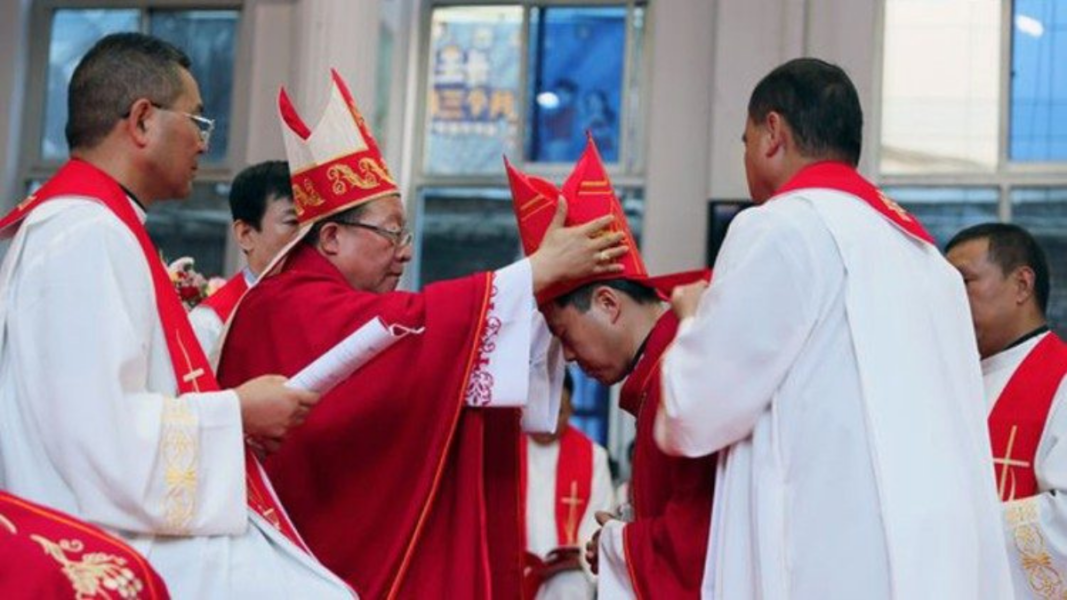
While lamenting that a Catholic priestly fraternity consecrates bishops to ensure sacraments for Catholic faithful, the Chinese Communist Party—athest, materialistic, and officially hostile to faith—has been ordaining bishops at its convenience for years, even bypassing the already lamentable agreement signed with Rome. And nothing happens. Or, better said, exactly the opposite happens: smiles are exchanged, dialogue continues, trust is renewed, and the margin of tolerance is expanded.
Read also: The FSSPX announces that it will consecrate new bishops on July 1, 2026
The question is not rhetorical; it is legal and moral. If the communist regime can impose bishops without a pontifical mandate and still be treated as a valid interlocutor, with what logic will a stricter criterion be applied to a fraternity that does not deny dogmas, does not preach sedevacantism, and does not answer to a Marxist central committee, but rather to a conception—debatable, yes—of objective sacramental necessity?
Contemporary Church has developed a curious practical theology: disobedience is tolerated when accompanied by political power and sanctioned when it comes from an uncomfortable ecclesial structure. The problem is not consecration without a mandate; the problem is who does it. When the one ordaining is the Communist Party, it is spoken of as a “complex context.” When the one ordaining is the FSSPX, it is spoken of as a “rupture.” The difference is not theological: it is geopolitical.
It is difficult to explain to a faithful why Beijing can produce bishops functional to the regime and remain in privileged dialogue with Rome, while a fraternity born precisely from the doctrinal and liturgical collapse after the Council is treated as a threat to ecclesial order. Even more difficult when those faithful see traditional parishes closing, confirmations prohibited, ordinations blocked, and entire apostolates suspended by simple administrative decision.
The Fraternity has not acted in a vacuum. It has acted in a context where Rome listens a lot, promises little, and guarantees almost nothing. And when stable access to the sacraments depends on the mood of the bishop in charge, decisions cease to be ideological and become decisions of pastoral survival. It is not pretty. It is not ideal. But neither is it incomprehensible.
If the ultimate criterion is pragmatic tolerance to avoid greater evils, then it is advisable to apply it consistently. If it is accepted that the Chinese Communist Party appoints bishops to not lose a channel of dialogue, it is intellectually dishonest to be scandalized because a Catholic fraternity consecrates bishops to not leave its faithful without confirmations or ordinations. The measuring rod cannot depend on the color of the flag.
Perhaps the problem is not the FSSPX. Perhaps the problem is having taught, with repeated facts, that authority is no longer exercised by governing, but by administering exceptions. And when exceptions become the norm, others learn the lesson. Some with a Party card. Others with a cassock.