


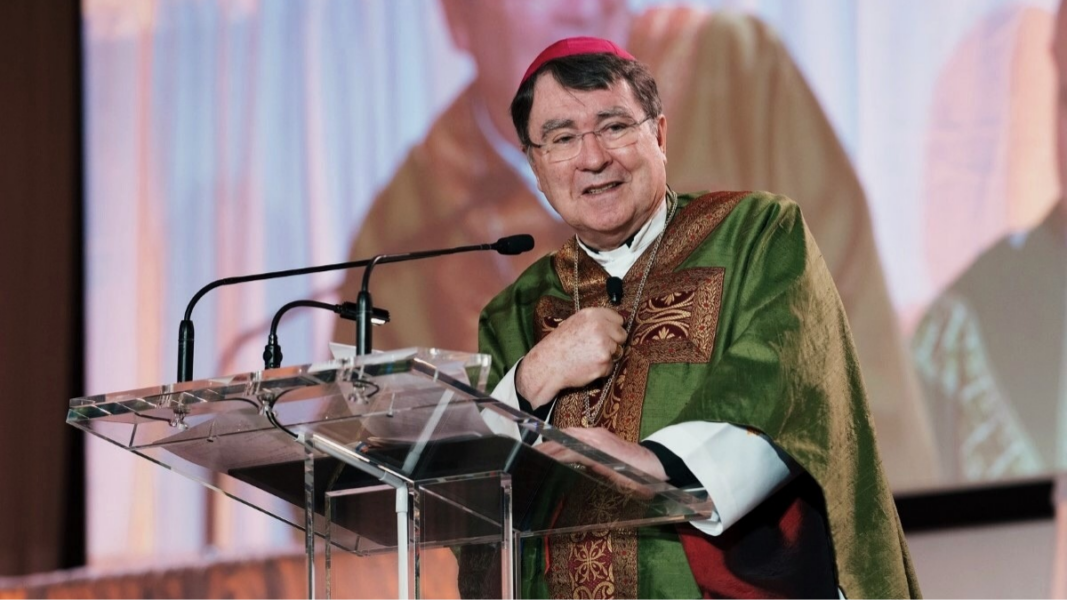
Cardinal Christophe Pierre —Apostolic Nuncio in the United States since 2016— has reached the age limit on January 30, a date that marks the end of his diplomatic mission, opening a new scenario in one of the world’s most influential nunciatures.
Considered for years as “the Pope’s man in Washington,” Pierre has been the main link between the Holy See and the U.S. Church during a particularly complex period, marked by internal tensions, doctrinal debates, and a not always straightforward relationship between Rome and the American episcopate.
A key nunciature in a delicate context
The Apostolic Nunciature in Washington is no minor posting within Vatican diplomacy. From it, not only relations with the U.S. Government are managed, but also much of the dialogue with one of the world’s most influential, structured, and diverse episcopal conferences.
During his tenure, Christophe Pierre had to navigate a particularly delicate ecclesial context, characterized by strong internal differences among bishops, high-profile public controversies, and a growing distance between certain sectors of U.S. Catholicism and some orientations coming from Rome.
His role was that of a constant mediator, trying to keep Vatican guidelines aligned with a local Church marked by a strong own identity and significant cultural, political, and economic weight.
The handover as a signal of direction
The withdrawal of Cardinal Pierre is not a mere administrative formality. The choice of his successor will inevitably be read as a signal of orientation for the pontificate.
The United States remains a central actor on the international board and also a key stage in decisive debates for the Church, such as bioethics, religious freedom, gender ideology, or the relationship between faith and politics. The profile of the next nuncio will indicate whether Rome opts for a continuity line or to introduce a change in tone and priorities.
The names that have begun to circulate as possible successors point, at least for now, to career diplomats with extensive international experience, suggesting a preference for technical and legal profiles rather than figures with a marked pastoral profile.
More than an ambassador
It is worth remembering that the Apostolic Nuncio is not solely an ambassador to a State. His influence extends to decisive aspects of the Church’s internal life: from the evaluation of episcopal candidates to the supervision of seminaries, the relationship with the episcopal conference, and the transmission to Rome of doctrinal and disciplinary concerns.
In the United States, these competencies have been especially sensitive in recent years, in a context of vocational crisis, loss of religious practice, public controversies, and debates about the doctrinal fidelity of certain pastoral initiatives.
Therefore, the handover at the Washington nunciature is not a secondary matter. It is a strategic piece in the relationship between Rome and a local Church called to play a key role in the future of Western Catholicism.
Source: FSSPX News