


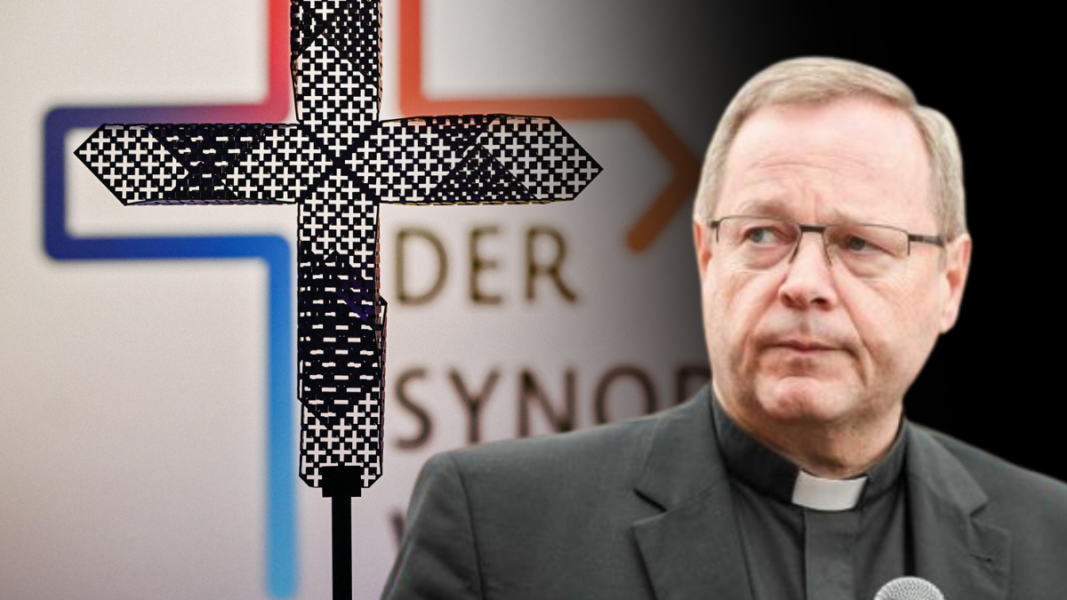
The Catholic Church in Germany has concluded the main phase of the so-called “Synodal Way” between January 29 and 31 after six years of deliberations, debates, and controversies, but the process leaves behind unresolved tensions and raises questions about its future, its conformity with universal doctrine, and its relationship with Rome.
The so-called Synodaler Weg was launched in December 2019 as a structured response to the crisis of sexual abuses and the loss of trust among many faithful. Its stated purpose was to engage in open dialogue among bishops, clergy, and laity on issues of power in the Church, sexual morality, ministries, and lay participation, with the intention of proposing organizational and pastoral reforms.
A final statement with consensus and tensions
The sixth and final synodal assembly, held recently in Stuttgart, approved a closing statement that claims the German Church’s commitment to transparency, abuse prevention, and the participation of the faithful in ecclesial life. The statement was agreed upon by the majority of participants, recognizing «advances» in the discussion of controversial topics, such as gender equality and the coexistence of laity and clergy in consultative structures.
However, the process has also reflected deep internal divisions. Some voices in the assembly pointed out that certain issues, especially those related to sexual morality and the proposed structural changes, still lack sufficient maturity for a definitive resolution. These differences in approach have highlighted that the German dialogue has not overcome all the tensions it has carried since its inception.
The ghost of “synodality” and universal doctrine
The concept of “synodality” has been one of the most debated and also most controversial points. From Rome, and particularly through previous letters from Pope Francis and the Secretariat of State, it was emphasized that certain proposed structures, such as a permanent synodal council with deliberative powers, do not fit with the constitution and unity of the universal Church.
The Archbishop of Cologne himself, Cardinal Rainer Maria Woelki, one of the most critical members of the German episcopate regarding the process, recently declared that, for him, the Synodal Way “has ended” and that he will not participate in the final assembly or in the subsequent steps of what is intended to become a permanent synodal body.
Read also: Woelki: «For me, the Synodal Way is closed»
Bätzing: without Rome’s approval there will be no new synodal conference
In this context, the president of the German Episcopal Conference, Mons. Georg Bätzing, has sought to ease the tension by assuring that the new planned structure, the so-called Conferencia Sinodal, will not begin to function without the express approval of Rome.
Bätzing stated that starting this new phase without the consent of the Holy See would be an “unnecessary provocation” and emphasized that the Church in Germany has no intention of acting outside the universal Church. As he explained, the goal is for this conference to begin its work in the fall of 2026, provided that Roman authorization arrives in time.
The Bishop of Limburg also expressed his confidence that such approval will come, insisting that the synodality proposed in Germany does not intend to replace the responsibility of the bishops, but to “accompany” and strengthen it, an assertion that has not fully dispelled the reservations of the most critical sectors.
A closed process, but not resolved
With the formal closure of the Synodal Way, the Church in Germany now enters a transitional phase. The shift from a temporary debate forum to a permanent structure raises both legal and doctrinal questions, and keeps open the issue of to what extent the synodal proposals can be integrated into the life of the Church without breaking communion with Rome.
After six years of debates, the balance is ambiguous: on the one hand, it claims to have addressed sensitive topics; on the other, the concern persists about a drift that many consider more political than ecclesial. The immediate future will depend, to a large extent, on the response from the Holy See and the real willingness of the German episcopate to accept its limits.