


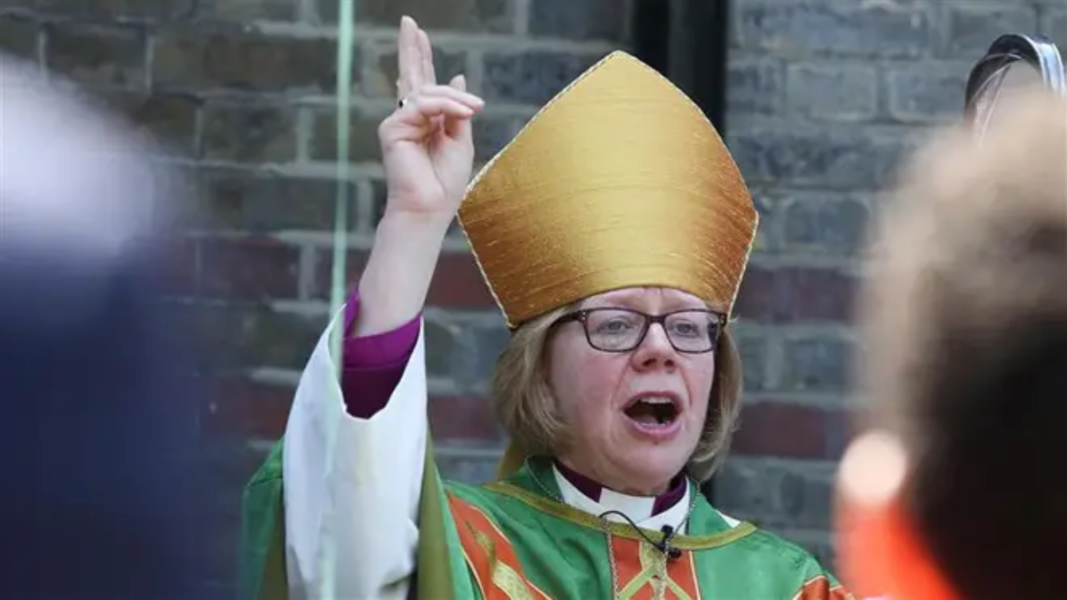
The appointment of Sarah Mullally as future Archbishop of Canterbury—which is to be formalized at the end of January—sinks even before reaching port. And not due to a simple communication error or a minor controversy, but because it once again exposes the deep moral and institutional decomposition of the Church of England.
It is worth recalling the context: Mullally was presented as the great “renewing” response to the sexual scandals that shook British Anglicanism, many of them starring or tolerated by male clergy. Her election as the first woman to occupy the See of Canterbury was sold as a symbol of break with the past and as a guarantee of a new culture of transparency. Today, that narrative crumbles.
From Symbolic Solution to New Problem
The future Primate of the Church of England must provide explanations for the way she handled a complaint of abuse when she was Bishop of London, a position she has held since 2018. The case affects a victim—publicly identified only as “the survivor”—who filed a formal complaint in 2020 and who, as has now been acknowledged, did not receive the due attention or accompaniment from the ecclesiastical institution.
The core of the problem is not merely administrative. The accusation points to a possible violation of the Anglican clergy’s disciplinary code, as there was direct and confidential contact between Mullally and the denounced priest, outside the formal channels provided for this type of case. A procedure that, if confirmed, completely discredits the official discourse on best practices and zero tolerance.
That Mullally herself has ended up admitting that the complainant was neglected by the Church’s mechanisms resolves nothing: it aggravates it. Because it confirms that the system she came to reform not only continues to fail, but does so under her own responsibility.
A Church Marked by Cover-Ups
This new episode is particularly embarrassing for an institution that is still processing the case that in 2024 forced the resignation of the previous Archbishop of Canterbury, Justin Welby. That scandal uncovered years of silences and protections around John Smyth, a lawyer linked to the Church of England and organizer of youth camps in Africa, who ended up being unmasked as a sexual predator of more than a hundred young people.
In that context, the Mullally case does not appear as an anomaly, but as a continuity. Faces change, slogans change, but the structural failures remain.
A Crisis That Does Not Stop
That all this happens even before the appointment takes effect is revealing. Anglican leadership is not only questioned: it is exhausted. The Anglican Communion continues to fragment, emptying itself of faithful and losing moral authority, while insisting on formulas that have already proven their failure.
The Anglican crisis does not close. It spreads. And the Mullally case is, today, one of its clearest manifestations.