


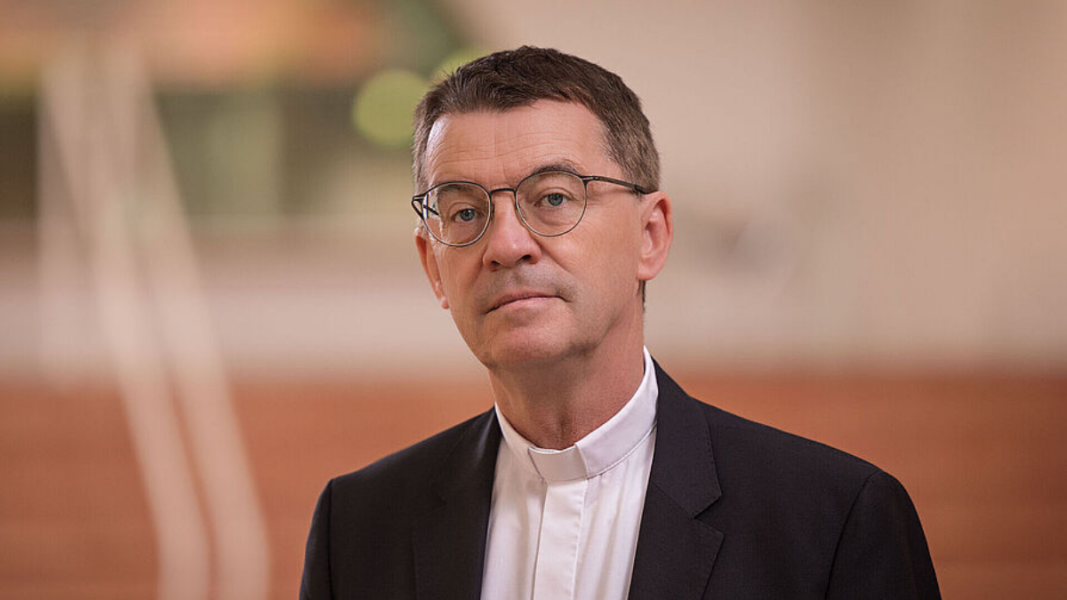
The Bishop of Rottenburg-Stuttgart, Klaus Krämer, has described the future Synodal Conference as a “historic step”, the new national body in which the 27 diocesan bishops of Germany will deliberate together with lay representatives. In an interview published by Katholisch.de, the bishop reflects on this new body, the possible female diaconate, the ordination of married men, the pastoral reform in his diocese, and the abuse investigation process.
“There has been a notable evolution and a growing consensus”
Krämer explained that the Synodal Conference is the fruit of the work of the current Synodal Committee, which unanimously approved the statutes of the new body during the assembly held in Fulda. In his view, this consensus reflects a significant maturation in the cooperation between bishops and laity. The bishop trusts that Rome will grant the recognitio, a recognition that is not a mere formal approval, but an act that reinforces the authority of the regulation in the universal Church.
According to Krämer, the new body will allow the Church in Germany to speak out with greater weight in relevant social debates, especially on bioethical issues, the protection of life in all its phases, democratic culture, and various pastoral areas.
Expectations regarding Rome and continuity of the synodal process
Asked about the recent statements of Pope Leo XIV—who pointed out differences between the development of the German Synodal Way and the synodal processes of the universal Church—Krämer stated that it is not a setback. In his opinion, the Pope desires convergence and hopes that a stable consensus will be reached with Rome regarding ecclesial structures.
The bishop also showed himself favorable to opening the way toward the female diaconate, although he insisted that it is a decision that must be assumed by the universal Church. He explained that, despite the caution expressed in the most recent Roman document, he perceives a growing openness in the worldwide Church to this possibility.
Pastoral reform: the future “territorial units” or “pastoral areas”
Krämer reported that the diocese is advancing in the restructuring of its communities. The more than one thousand existing autonomous parishes will be reorganized into between 50 and 80 new pastoral units provisionally called “areas” or “pastoral spaces”. These spaces will integrate the current parishes, which will continue to function as places of community life.
The planned calendar establishes that in 2026 their concrete delimitation will be determined, with a view to starting the implementation of the reform in 2027 and completing the transition in 2030. The bishop emphasized that in these new structures, the service of priests and the participation of qualified laity in pastoral leadership tasks will be combined, always within the limits of canon law.
Krämer calls for studying the path of the “viri probati”
In relation to the decrease in the number of priests—the diocese calculates that in ten years it will have one third less and in fifteen years half of the current pastoral personnel—Krämer considers that the model of viri probati (married men of proven maturity and Christian life) could be a viable option for the priestly ministry. On the other hand, he was less convinced about the idea of a “temporary vow of celibacy”, recently suggested by the Bishop of Speyer.
Advances in the abuse investigation in the diocese
Regarding the abuse investigation process committed between 1946 and 2024, the bishop confirmed that the final report will be presented in 2027. Although some lines of investigation raise the possibility of links between certain aggressors, so far no clear indications of organized networks have been found.