


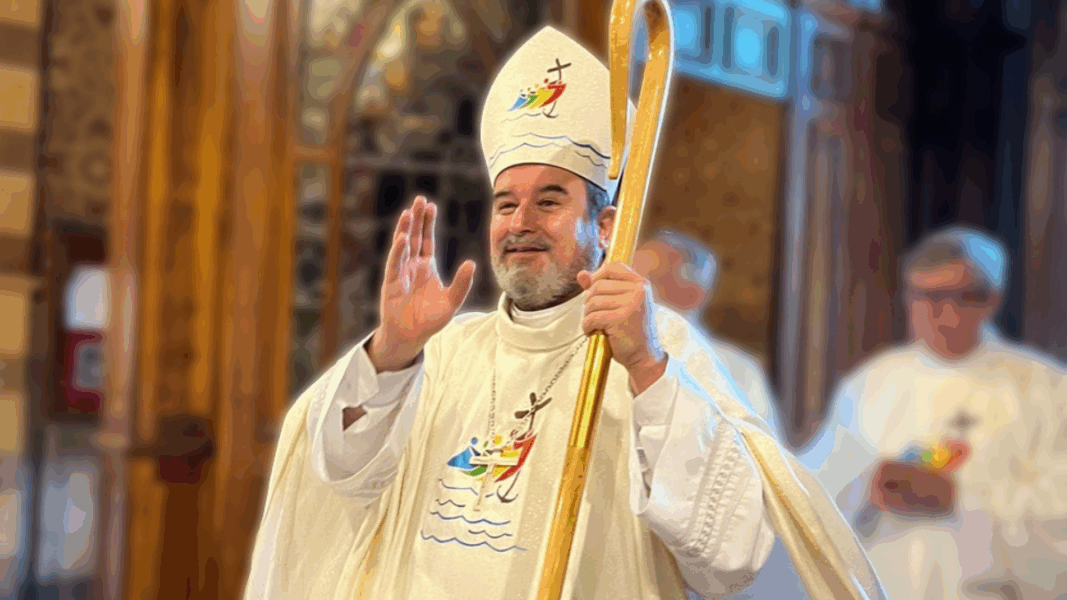
The National Conference of Brazilian Bishops (CNBB) has appointed Mons. Arnaldo Carvalheiro Neto, bishop of Jundiaí (São Paulo), as the referential bishop for the pastoral accompaniment of Catholic LGBT+ groups, according to the Brazilian newspaper Correio Braziliense.
The designation was adopted on October 17, 2025 and officially published in mid-November, although without any detailed statement from the CNBB. According to Brazilian media, with this appointment Brazil joins Germany and Belgium, countries whose episcopal conferences already have pastoral initiatives specifically directed at the LGBT+ community.
Celebration of LGBT Activism: a “Historic Conquest”
The one who reacted immediately was the National Network of Catholic LGBT+ Groups, which published a statement on social media celebrating the designation of Mons. Carvalheiro as an achievement reached after years of internal articulation.
“We praise God for the signs of communion that illuminate the path of the Church in Brazil.”
The movement stated that the nomination—valid for the period 2025-2028—was received with “deep gratitude”, presenting it as the fruit of a faithful, mature, and committed path traveled by LGBT laity over more than a decade. It also pointed out that this “conquest” is the result of coordinated work with the National Council of the Laity of Brazil (CNLB) and the creation of groups in cities like Rio de Janeiro, São Paulo, and Brasília.
The Network—which is part of the Global Network of Rainbow Catholics—framed the announcement within the synodal language promoted by the CNBB, ensuring that synodality is expressed when “the People of God walks united”, discerning “new paths of pastoral care and evangelizing presence”. It concluded that the appointment opens a “different light” for the LGBT theme within the Church, interpreting it as a step toward an ecclesial community “increasingly open to human realities”.
Bishop Carvalheiro: a Controversial Profile
The designation of Mons. Arnaldo Carvalheiro for this pastoral mission has generated concern due to his recent history in the diocese of Jundiaí, marked by decisions that caused deep discomfort among the faithful and priests. As reported by Infovaticana in September 2024, when he had barely two years of episcopal governance he had already exhausted the patience of a good part of the clergy, who denounced an authoritarian, distant, and difficult-to-understand style.
One of the most controversial episodes was his order to remove the cross from the center of the altars and move it to the side, a measure that many considered a devaluation of the sacrifice of the Mass. Weeks later, new liturgical guidelines limited traditional elements of the altar and reinforced the obligation to comply with his decisions “to ensure communion”, increasing the bewilderment even more.
Added to this are the complaints from priests who assured that the bishop had become practically inaccessible, delegating communication to intermediaries and staying away from the ordinary life of the diocese.
It also caused concern the pressure—attributed to the bishop and his vicar general—to allow sacramental marriages outside of churches, despite the firm opposition of the clergy, who warn of the risk of banalizing the sacredness of the sacrament.
Finally, it generated scandal the prelate’s behavior in frequenting a city bar and inviting seminarians there to participate in a “roda de samba”, an environment clearly inappropriate for priestly formation and which many interpreted as a gesture incompatible with the dignity of the episcopal ministry.
A Bewildering Silence
Despite the novelty and doctrinal sensitivity of this appointment, the CNBB has not issued any official explanation to date. The criteria of the assignment, the pastoral limits of the position, nor the reason for choosing a bishop with a history of internal tensions and public controversies have been clarified.
This institutional silence contrasts with the explicit celebration of LGBT activism and has generated concern among the faithful and priests, who await clear guidance and a pastoral approach faithful to the Magisterium.