


By Robert Royal
One of the best ways to try to understand a writer or speaker is to imagine what audience he believes he is addressing and what he considers that audience needs to hear most urgently. In the case of the Popes of the last half century, I think I understood quite well what St. John Paul II and Benedict XVI were seeking, and whom they intended to reach. With Francis —and now with Leo— I am much less sure. Because the world to which they seem to believe they are addressing is not the world in which I believe I live.
One element: Leo’s recent homily to the “Synodal Teams and Participatory Bodies,” in which he said: “The supreme rule in the Church is love. No one is called to dominate; we are all called to serve. No one should impose their own ideas; we must listen to one another. No one is excluded; we are all called to participate. No one possesses all the truth; we must seek it humbly, and seek it together.”
This caused a stir because some interpreted those words as a denial of the revealed truths of the faith in favor of the amorphous “walking together” and “dialogue” with which Pope Francis hoped to synodalize the entire Church. That interpretation does not seem entirely wrong, since Fr. James Martin, S.J., immediately highlighted those words for his usual causes.
But it also does not seem entirely correct, at least in Leo’s case. In fact, when he addressed the members of the diplomatic corps accredited to the Holy See in May, he stated quite clearly that:
the Church can never cease to speak the truth about humanity and the world, resorting when necessary to direct language that may initially cause misunderstanding. However, truth can never be separated from charity, which always has at its root concern for the life and well-being of every man and woman. Moreover, from the Christian perspective, truth is not the assertion of abstract and disembodied principles, but an encounter with the person of Christ himself, alive in the midst of the community of believers.
However, whenever “synodality” is spoken of, the substantial affirmation of truth seems to become an uncomfortable topic, even an obstacle. It has been said lately that Leo continues to use Francis’s speechwriting team. Perhaps. And maybe, once the whirlwind of the Jubilee has passed, we will receive more thoughtful words from him. But if he had asked me to draft that controversial speech about none of us possessing the full truth, I would have emphasized that, especially in our days, the vast majority already believes that no one —no person, no Church, no institution— possesses the truth.
It is much more urgent that they hear something like: “Go therefore and make disciples of all nations, baptizing them in the name of the Father and of the Son and of the Holy Spirit, teaching them to observe all that I have commanded you.” (Matthew 28:19-20)
All Christians are, of course, “on the way,” since none has yet reached their final destination; however, we walk accompanied by revealed truths that guide us, even as we strive to live them more fully.
But now we have a second Pope who, at times, seems to assume that those who really pay attention to what a Pope says need to be warned about not being too sure of understanding Catholic truth. When I look at the staggering postmodern world of anno Domini 2025, I see that both Catholics and non-Catholics need much more assurance in the truth of the Word of God and in the historical teachings of the Church.
In fact, this whole episode reminded me of some discussions I was involved in decades ago. At that time, two Protestant theologians —if memory serves— Stanley Hauerwas and George Lindbeck were talking about how Christian currents had changed in recent centuries.
I simplify and perhaps distort a bit their central ideas, given the temporal distance. But the historical part was more or less like this. Christianity had gone from a basically authoritarian stance (Churches simply proclaimed doctrines with an authority granted by Christ) to a period of individualism and lack of confidence. Then, after passing through the burning stream (that is, Feuerbach) of modernist criticism, faith was now on the other side, trying to recover an authoritative character.
I presented this scheme once in an ecumenical debate in a Methodist church in Washington, D.C. Afterward, the young pastor —very kind— told me that she totally agreed. Her church, she explained, had renounced claiming authority and allowed people to basically do whatever they wanted. And she wondered how a sense of authority could now be recovered.
Catholics, of course, are familiar with the narrative that the Church, before the Second Vatican Council, was (supposedly) authoritarian; then it went through a period of chaos and experimentation; and afterward, with St. John Paul II and Benedict, there was a certain restoration of what is authoritative.
But what has changed since then? Because here we are again, at a point where synodality seems to aim to foster perpetual discussions —about what and for what is not clear—. If it is about conversing on how to do things to promote what God has revealed to us, that is simply prudent. But synodality has gone —despite the denials— advancing toward changes in doctrine itself, in a sideways, formless, almost imperceptible way… LGBT, women deacons, governance of the Church by people without ordained authority.
Whether that is the intention of Francis or Leo, it is certainly what has been transmitted to the world.
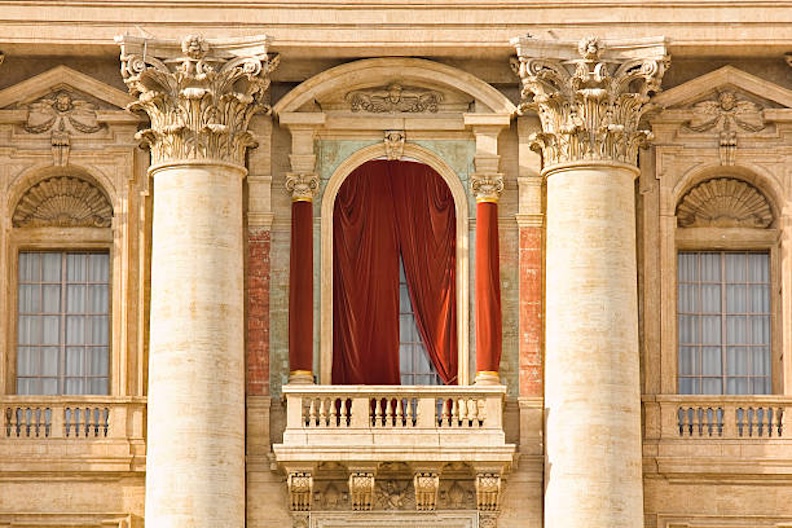
So, what time are we in? Is this a time when Catholics are too closed to the truth and need to open themselves to dialogue and to leave behind what is familiar and comfortable (another synodal theme)? Or are we rather failing again to claim what is authoritative? I know how it seems to me. But I wonder how it looks from the windows of the Vatican.
About the author
Robert Royal is editor-in-chief of The Catholic Thing and president of the Faith & Reason Institute in Washington, D.C. His most recent books are The Martyrs of the New Millennium: The Global Persecution of Christians in the Twenty-First Century, Columbus and the Crisis of the West y A Deeper Vision: The Catholic Intellectual Tradition in the Twentieth Century.