


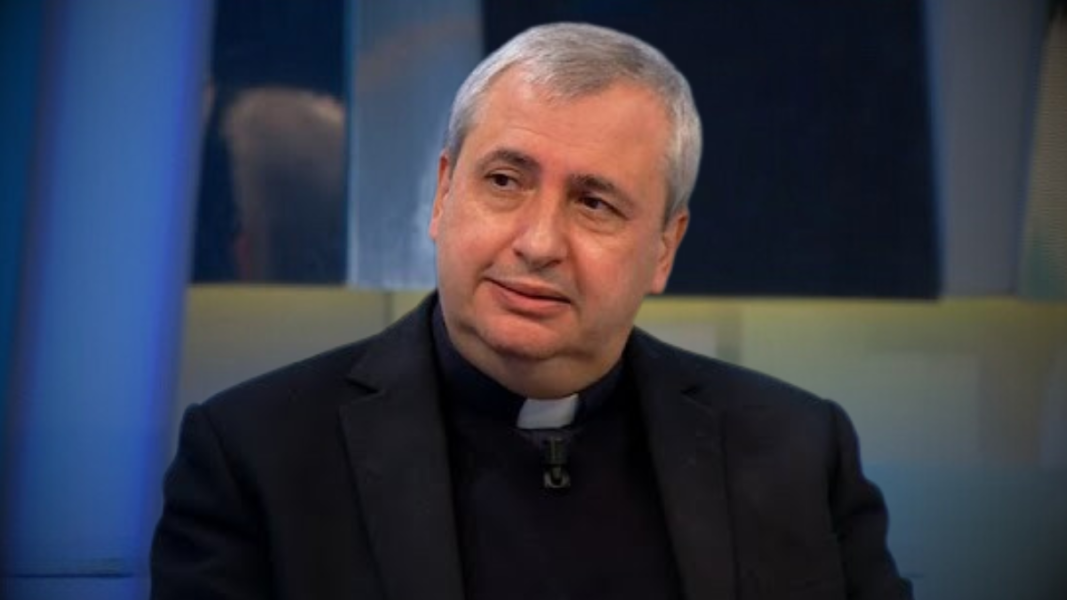
The recent doctrinal Note Mater Populi Fidelis, published by the Dicastery for the Doctrine of the Faith, continues to generate analysis within the Church. In an interview granted to Acistampa, Fr. Gian Matteo Roggio, a member of the Pontifical International Marian Academy, emphasizes that the document seeks to guide Marian theology and piety so that they remain faithful to the perennial doctrine and free from excesses foreign to tradition. As he explains, the Holy See is trying to respond to a concern expressed by the recent popas regarding certain risks present in contemporary practices or discourses about the Virgin.
“The document brings no novelties, but clarity”
The priest states that the Note does not introduce new doctrine, but rather reaffirms what the Church has already taught: all authentic Marian devotion must be supported by the Word of God and the constant Magisterium. He specified that the issue is not only to avoid doctrinal alterations, but also to prevent a lack of clarity that can confuse the faithful. Welcoming Mary into Christian life—he points out—requires receiving her according to what Revelation shows of her, without adding ambiguous elements that obscure her true mission.
Co-Redemptrix and Mediatrix: why the Church avoids these titles
Roggio recalls that the Church rejects applying the title of “Co-Redemptrix” because it could place Mary on a level comparable to that of Christ, which contradicts the faith: Mary is not the cause of salvation, but the first redeemed. Something similar occurs with the expression “Mediatrix of all graces,” which could suggest that God would be obliged to act always through a creature. God communicates his grace by the paths He wants, and the only divine “obligation”—the priest explains—is the humanity of Christ. Mary participates in this mystery, but as a consequence of the Incarnation, not as a cause.
Marian titles: what to preserve and what to avoid
Regarding litanies and traditional titles, Fr. Roggio distinguishes between the devotional value of the past and the discernment necessary for the present. The Note, he states, does not ask to erase ancient titles, but to avoid the future use of terms that today generate doctrinal confusion. He emphasizes that the past must be properly understood, and from there arises the need for new formulations more faithful to the Church’s language and to current theological sensitivity.
The Marian experience does not arise from surveys, but from the life of faith
The priest rejects the idea of “listening to the base” in a sociological sense. The Church—he said—does not define doctrine by majorities. However, he recognizes that the Pope listens to the Marian piety of the people through their sacramental life, participation in the liturgy, works of mercy, pilgrimages, and daily prayer. There the living faith of the people of God is manifested, and there too the Virgin guides and accompanies according to the Lord’s will.
Returning to Scripture: the authentic origin of devotion to Mary
For Fr. Roggio, the central issue is to recover the Marian experience rooted in the Word of God. Marian titles only have value when they express the revealed mystery. The clearest example—he explains—is the title of Mother of God, which contains the entire doctrine of the Incarnation. He insists that this return to Scripture is urgent, because many faithful have lost awareness of fundamental truths, such as Mary’s virginity and its theological meaning. Her example of faith, her response to the Angel’s announcement, and her availability to God’s plan remain the core of all authentic Mariology.
No need for new documents, but to assimilate what has already been taught
Asked about the convenience of a new document that responds to the question “Who is Mary?”, the priest maintains that it is not necessary. The Church has already offered an abundant doctrinal heritage: chapter VIII of Lumen Gentium, the exhortations Signum Magnum and Marialis Cultus, the encyclical Redemptoris Mater, as well as the teachings of recent popes. The current challenge, he states, is to make this treasure known, make it accessible, and unite it with a true life of prayer. Remembering that Mary is Virgin and Mother, that she said a decisive “fiat” for the salvation of the world, is sufficient to guide piety toward its center: Christ, the only Savior. Mary—he concludes—is there to lead us toward Him, not toward herself.