


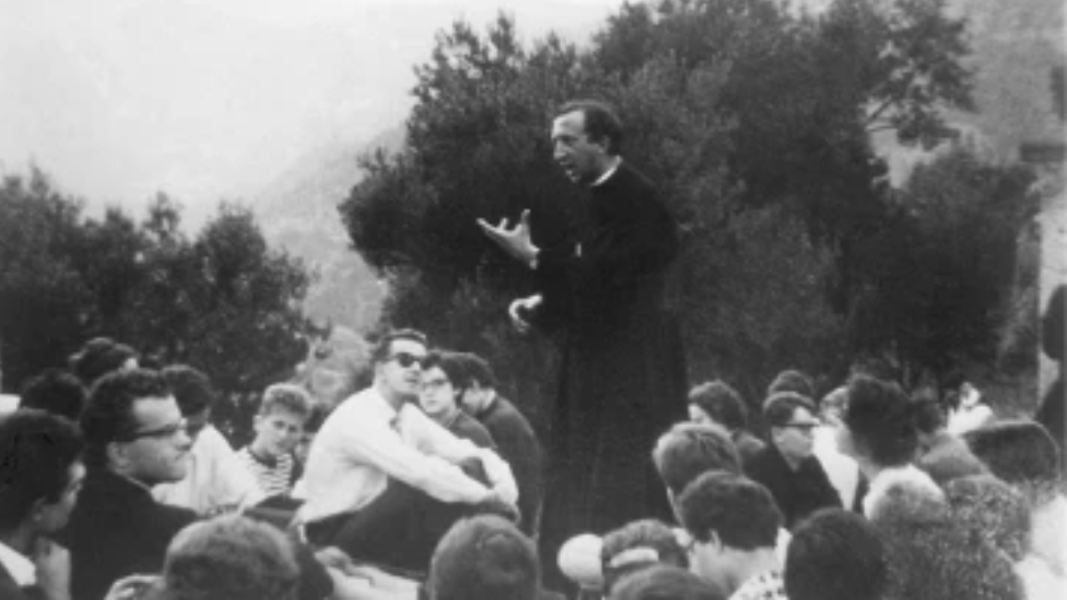
The Dicastery for the Laity, Family and Life has approved the new Statutes of the Communion and Liberation Fraternity (CL), dated September 8, 2025. The document, signed by the undersecretary Linda Ghisoni, marks a turning point in the history of the movement founded by Father Luigi Giussani.
Although the spiritual aims of the Fraternity remain the same—fraternal communion and Christian witness in public life—the changes introduced in the internal governance have generated unease among some of its members. Many observe that, with this reform, the Fraternity would enter a more institutional than charismatic era.
From Giussani to Carrón: from charisma to institutionalization
The 2017 Statute still reflected the founding spirit of Father Giussani, centered on the personal experience of faith and the freedom of the laity to live their vocation in the world. With the new regulations, the emphasis seems to shift toward a structure of obedience and direct supervision from the Vatican Dicastery; the structure is redefined to prioritize central direction: a General Assembly appears that meets every five years, the elected territorial bodies are suppressed, and the “territorial referents” are appointed directly by the «Central Diaconia.»
The approval of the new Statutes coincides with an open confrontation within Communion and Liberation. Father Pierluigi Banna, designated as the successor to Father Carrón but blocked by the Holy See, has denounced the current leaders of the movement to the Curia of Milan, as revealed by Specola. This is an offensive that has not culminated in a formal canonical complaint—for the moment—but that has already been the subject of warnings and potential appeals to ecclesiastical courts.
A letter breaks the silence
A significant element in this juncture is the appearance of a letter addressed to the president of the Fraternity, Davide Prosperi, in which formal objections are raised to the method followed and the content of the reform. According to Silere Non Possum, the signatories criticize that the process did not include an open or participatory consultation, contravening the recommendations of the Vatican Decree of June 11, 2021, on associations of the faithful.
The letter raises profound questions: has the nature of the charism changed when guidance passes from election to appointment? Where does the internal synodality that was distinctive of the movement stand? Can it continue to be an evangelical movement if it is reduced to a structure that manages the charism rather than fostering it?
An inevitable fracture?
The conflict, which dates back to the first months of 2025, had been kept silent until now. However, the signs point to the division within CL being already irreparable. Several members of the movement argue that this reality should be openly acknowledged, rather than insisting on a unity that seems increasingly impossible.
With this reform, Communion and Liberation enters a transitional stage marked by the loss of autonomy and tighter control from Vatican authorities. Far from healing wounds, the approval of the new Statutes seems to have opened a new crisis in one of the most influential realities in contemporary Catholicism.