


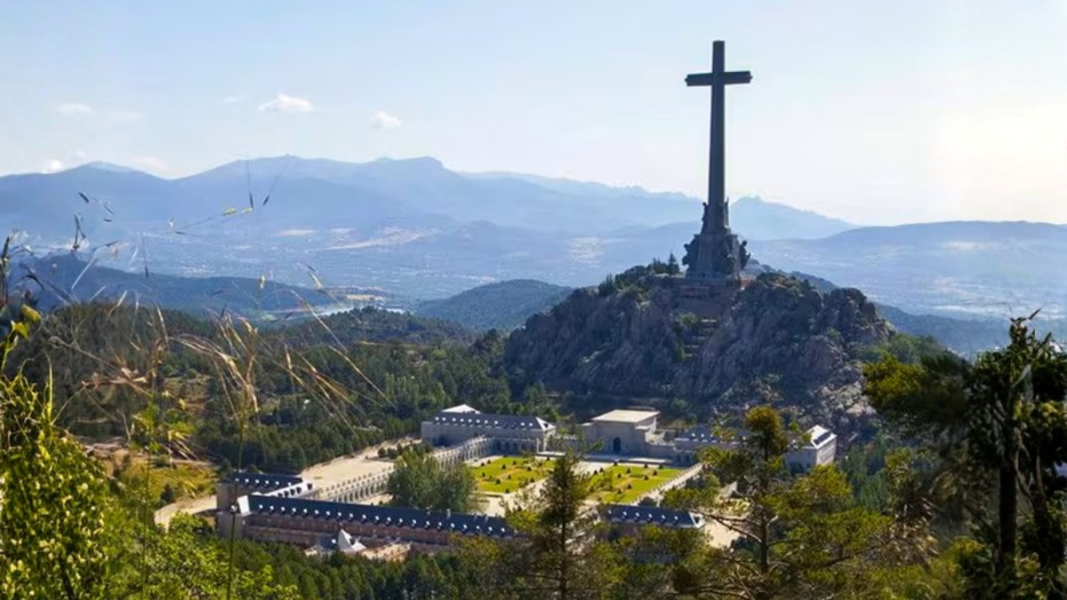
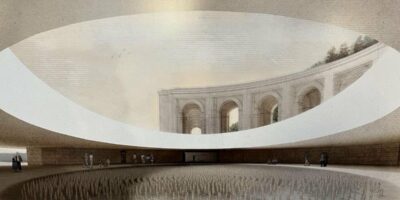
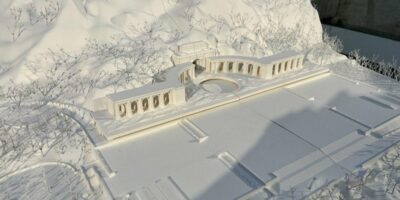
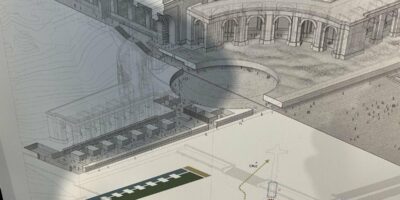
The Government of Pedro Sánchez has approved a plan that provides for the removal of the sculptures of “The Pietà”, the figures of the cardinal virtues and the four evangelists that crown the great cross of the Valley of the Fallen, as part of the international competition of ideas for the “re-signification” of the monument.
According to what La Gaceta revealed, the Executive will allocate 30 million euros to this operation, with the stated objective of endowing the site with a “more plural and democratic” vision, which in practice means eliminating its main Christian references.
A monument without its spiritual center
“The Pietà” —the masterpiece of Juan de Ávalos— and the sculptures representing fortitude, prudence, justice and temperance, along with the evangelists, are not mere architectural ornaments: they form part of the catechetical composition that elevates the gaze from human suffering to redemption. Their suppression implies an emptying of the spiritual and liturgical message of the monument, transforming it into a merely cultural or museistic space.
Read also: The crack in the Valley: a Taliban project against faith and art
The Church, in silence
The operation is unfolding in the face of the silence of the Spanish Episcopal Conference (CEE). The absence of a pronouncement by the episcopate becomes complicity, given that the Valley of the Fallen retains the status of a pontifical basilica. In this context, the ecclesial silence can be interpreted as a form of tacit consent.
“Re-signify” or strip
The Government presents “re-signification” as a gesture of pluralism and openness, but the visible result is the elimination of everything that recalls its religious nature. Instead of reconciling memory, an ideological reading is imposed that strips the monument of its foundational purpose: to unite Spaniards under the sign of the cross and Christian hope.
Turning the Valley into a “neutral” museum is not an act of reconciliation, but of rupture with the faith that inspired it. By erasing its sacred symbols, the State imposes a vision that seeks to close off the transcendent dimension of history, replacing it with a political reading of the past.