


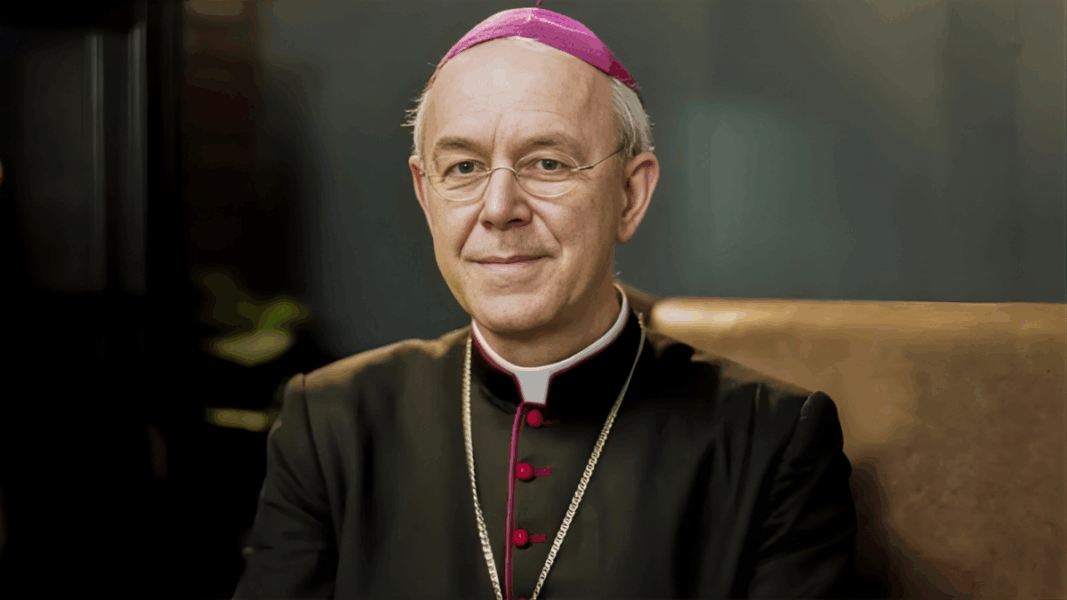
Bishop Athanasius Schneider has reacted firmly to the new doctrinal note from the Dicastery for the Doctrine of the Faith, titled Mater Populi Fidelis (November 4, 2025), in which the Vatican declares that “it is always inappropriate to use the title of Co-Redemptrix to define Mary’s cooperation in the work of Redemption”.
The document, which seeks to clarify the Virgin’s subordinate role with respect to Christ, maintains that said title “may create confusion” and “eclipse Christ’s unique and salvific mediation.” However, Bishop Schneider warns that this position contradicts centuries of teaching from saints, doctors, and pontiffs who have recognized in Mary a singular and participatory role in man’s redemption.
“It cannot be maintained that the ordinary Magisterium, along with the saints and doctors of the Church, has led the faithful into error for centuries through an ‘inappropriate’ use of these Marian titles,” Schneider states.
A living tradition in the Church’s teaching
The prelate recalls that from the early centuries, St. Irenaeus of Lyon taught that “Mary, by her obedience, became a cause of salvation for herself and for the entire human race.” The popes—from Leo XIII to St. John Paul II—explicitly used the titles of Co-Redemptrix and Mediatrix of All Graces in their encyclicals, speeches, and teachings.
Leo XIII, in Adjutricem Populi and Jucunda Semper Expectatione, described the Virgin as a cooperator in the redemption and distributor of graces; St. Pius X called her “Restorer of the lost world” and “Dispenser of all gifts”; and Benedict XV stated that “together with Christ she redeemed the human race.”
Even Pius XI justified the title of Co-Redemptrix by saying that “the Redeemer could not fail to associate his Mother in his redemptive work.” Pius XII, in Mediator Dei, and St. John Paul II, in various catecheses and homilies, confirmed Mary’s universal mediation and her intimate cooperation in salvation.
The debate over words
The linguistic controversy is not minor. While the original Spanish text from the Vatican uses the term “inoportuno,” the Italian version speaks of “inappropriato”—a stronger word—and the English version adds the adverb “always,” which hardens the judgment even further. Vatican spokesman Matteo Bruni explained that the change seeks “to better reflect the original text,” although several theologians, like Schneider, warn that the nuance could imply a total disavowal of titles venerated for centuries.
Schneider: fidelity to the ordinary Magisterium and the sensus fidei
For the Kazakh bishop, denying these titles means ignoring the sensus fidei—the intuition of faith of the Christian people—that for generations has venerated the Virgin as Co-Redemptrix and Mediatrix. He cites examples from St. Ephrem the Syrian, who called her “Mediatrix of the whole world,” to St. Bernard, St. Bernardino of Siena, and Newman, who defended Mary’s cooperation in the redemptive work.
The term Co-Redemptrix, Schneider explains, means a subordinate and dependent cooperation, never equal to Christ. Its use is legitimate as long as the primacy of the one Redeemer is preserved.
A warning against theological forgetfulness
In his final reflection, Schneider warns that eliminating these titles from ecclesial language impoverishes the understanding of the mystery of Redemption and disfigures the profound bond between Christ and his Mother. Devotion to Mary, he says, takes nothing away from Christ but rather reveals his saving work with greater clarity.
“Mary united by an indissoluble bond to her Son and, therefore, Mother of all the redeemed,” he concludes, recalling the words of the Second Vatican Council in Lumen Gentium.
We provide the full text of Msgr. Athanasius Schneider translated published on Substack by Diane Montagna:
Over time, the ordinary Magisterium, along with numerous saints and doctors of the Church, has taught the Marian doctrines of Co-Redemption and Mediation, expressly using the titles “Co-Redemptrix” and “Mediatrix of All Graces.”
Therefore, it cannot be maintained that the ordinary Magisterium, along with the saints and doctors of the Church, has led the faithful into error for so many centuries through an “inappropriate” use of these titles.
Throughout the ages, these Marian doctrines and the associated titles have also expressed the sensus fidei, the sense of faith of the Christian people.
Consequently, by adhering to this traditional teaching, the faithful do not stray from the right path of faith nor from a well-founded piety toward Christ and his Mother.
In the early Church, St. Irenaeus of Lyon laid the essential foundations of these doctrines by stating:
“Mary, by obeying, became a cause of salvation both for herself and for the entire human race.”
Among the statements of the ordinary Magisterium of the Popes on Mary’s co-redemption and mediation, the following stand out:
-
Leo XIII, in Adjutricem Populi (1895), calls the Virgin “cooperator in the work of redemption and dispenser of the graces that flow from it.”
-
In Jucunda Semper Expectatione (1894), he teaches that “prayer to Mary follows her office as Mediatrix of divine grace,” citing St. Bernardino of Siena:
“Every grace granted to man passes from God to Christ, from Christ to the Virgin, and from the Virgin to us.”
-
St. Pius X, in Ad Diem Illum (1904), explains that Mary “participated so intimately in the Passion of her Son that, if it had been possible, she would have accepted suffering all his torments,” and from that union “she merited to become the Restorer of the lost world and Dispenser of all gifts.”
-
Benedict XV, in Inter Sodalicia (1918), states that Mary “united herself to the Passion and death of her Son… in such a way that it can rightly be said that, together with Christ, she redeemed the human race.”
-
Pius XI teaches:
“The Redeemer could not fail to associate his Mother in his work; therefore, we invoke her as Co-Redemptrix.”
-
Pius XII, in Mediator Dei (1947), emphasizes that “God willed that everything should come to us through Mary.”
-
St. John Paul II repeatedly spoke of the Co-Redemptrix and Mediatrix of All Graces:
“Mary participated in an admirable way in the sufferings of her divine Son to be Co-Redemptrix of humanity.”
“Her mediation is essentially defined by her divine motherhood.” -
Benedict XVI stated:
“There is no fruit of grace in the history of salvation that does not have the Virgin’s mediation as a necessary instrument.”
Likewise, St. John Henry Newman defended the title before an Anglican prelate who rejected it, saying:
“They would have considered it poor compensation that you protested against calling her Co-Redemptrix, after calling her Mother of God, New Eve, Mother of Life, Scepter of Orthodoxy, and Mother of Holiness.”
The term Co-Redemptrix, Schneider explains, means a subordinate and dependent cooperation, never equal to Christ. Its use is legitimate as long as the primacy of the one Redeemer is preserved.
For all these reasons, the bishop concludes that there is “no doctrinal risk whatsoever” in using these titles appropriately, as they emphasize Mary’s role united by an indissoluble bond to her Son and, therefore, Mother of all the redeemed (cf. Lumen Gentium, 53 and 63).
He finally quotes St. Ephrem the Syrian, who prayed:
“O Lady, most holy Mother of God and full of grace, through you we have been reconciled. After the Trinity, you are the Lady of all things; after the Paraclete, another consoler; and after the Mediator, the Mediatrix of the entire world. After God, you are all our hope.”