


By: Rafael López
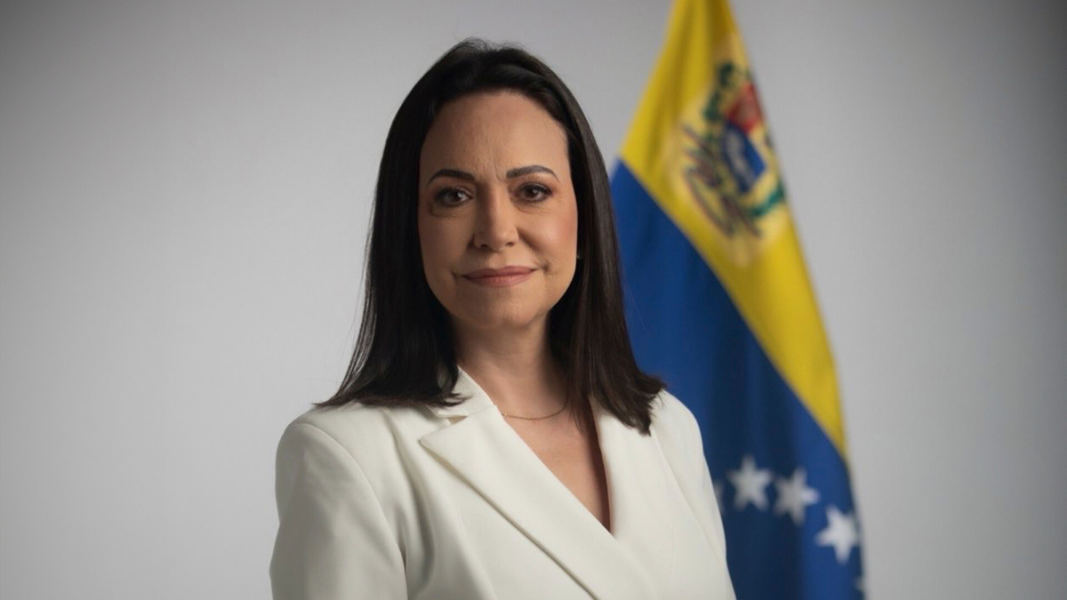
On October 10, the world has witnessed a historic moment: the Norwegian Nobel Committee has awarded the 2025 Nobel Peace Prize to María Corina Machado, leader of the Venezuelan democratic opposition, for her «tireless work in promoting democratic rights to the people of Venezuela» and for her struggle for a peaceful transition from dictatorship to democracy.
For the Catholic Church—which has accompanied social processes in Latin America for centuries, which has raised its voice against dictatorships, poverty, and injustices—this news poses a direct and urgent question: What ethical position must we assume in the face of María Corina Machado’s struggle? Where is the right side of history… and where is the Church?
The Committee’s statement is not simply a congratulation. It is a clear and frontal denunciation against the Venezuelan regime, which it accuses of fraud, repression, militarization, and the systematic impoverishment of its people. It also denounces the forced exile of millions, the judicialization of politics, the persecution of dissidents, and the manipulation of electoral results. And, in the face of this dark scenario, it exalts the figure of a woman who chose ballots over bullets, peaceful resistance over violence, internal exile over flight.
It is no longer just about a political figure. Machado has been recognized on the same level as other leaders who, without taking up arms, have been beacons of hope and change for their peoples: Martin Luther King Jr., Malala Yousafzai, Lech Wałęsa, Nelson Mandela. Her struggle is moral, civil, deeply human. Where should the Church look in this moment?
A Silence That Weighs
In Venezuela, the Church has often been a voice of consolation. At other times, a critical voice. But there have also been moments when a prudent, or even ambiguous, silence has prevailed. Today, that ambiguity is no longer a morally valid option.
The Nobel Committee has been clear: «Democracy is a precondition for lasting peace.» And it adds that María Corina “has demonstrated that the tools of democracy are also the tools of peace.” Isn’t that what the Gospel also teaches? Isn’t that what the social Encyclicals have proclaimed from Rerum Novarum to Fratelli Tutti?
On Which Side of History Does the Church Want to Stand?
The Catholic Church—particularly in Latin America—has staked its position in other eras for the rights of the poor, for justice in the face of dictatorships, for truth in the face of repressive regimes. It did so in Chile, in Argentina, in El Salvador. Today, that same fidelity is demanded of us in Venezuela.
It is not about adopting a political party or issuing diplomatic statements. It is about affirming, with pastoral clarity and prophetic courage, that those who fight for the rights of their people, in a peaceful, persistent, honest way, deserve not only our respect, but our support.
The Church must stand with those who, like María Corina, “refuse to remain silent,” as the Committee says. It must accompany the millions of Venezuelans who saw real hope in her leadership. It must reject the lie, the manipulation, the repression.
Today the world has recognized a brave woman. And we, as believers, as disciples of the Truth, will we remain silent?