


By: A perplexed (ex) Catholic
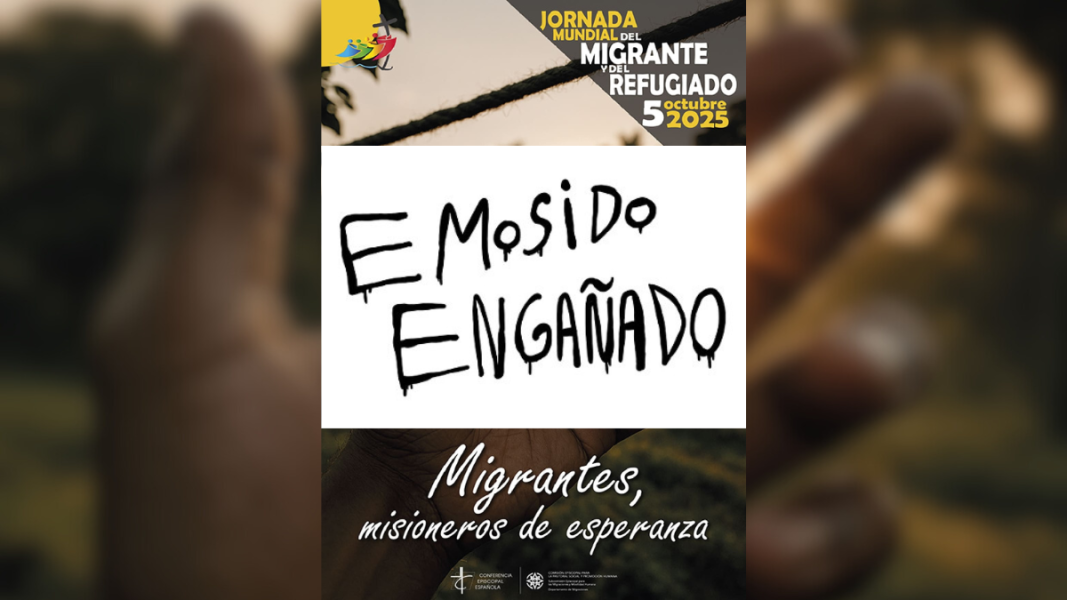
On Sunday, October 5, the Church celebrates the World Day of Migrants and Refugees, which the Spanish Episcopal Conference presents on its website like this, and which has as its motto this year “Migrants, Missionaries of Hope”.
I must be very ignorant, but I was convinced that this was a Franciscan invention; until I informed myself and it turns out that no, that the World Day of the Migrant and Refugee was instituted by St. Pius X in 1914 as “the Day of the Migrant”, in response to the tragedy of millions of Italians emigrating abroad in the midst of the world war, to earn their bread, asking Christians to pray for them. After St. Pius X died that same year, his successor, Benedict XV, consolidated this annual Day.
Decades and pontiffs later, in 2004, St. John Paul II established the Pontifical Council for the Pastoral Care of Migrants and Itinerants and extended the Day also to refugees. And finally, since 2018, Pope Francis moved the Day to the last Sunday of September (although this year it is celebrated on October 5). “Each year – we can read on the CEE website -, the Vatican publishes a message from the Pope for this day, inviting reflection on the humanity of migrants and refugees, promoting love, fraternity and inclusion, and calling for action for charity and justice”.
We have seen what the origin of this day is, that of Catholic Italians who had to emigrate in the midst of the world war to earn their bread in other countries, and the pope invited the Church to pray for them. That is why we are going to see what this Day has become now, to understand the staging of the photograph that illustrates this text because, indeed, we have been deceived; or, in the words of Gonzalo J. Cabrera, “they have changed our faith”, in a series of texts that I recommend starting here.
From its website, the Spanish Episcopal Conference provides parishes with materials for the celebration of this day of the migrant and refugee. The date of celebration, we can read on the website, has been chosen to coincide with the Jubilee of Migrants in Rome. And we can read verbatim: “The bishops of the Episcopal Subcommission for Migrations and Human Mobility invite us to highlight that migrant people are bearers of hope in a double sense for the communities that welcome them. First of all, they are an example because they come with ´the hope of achieving happiness and well-being beyond their own borders, which leads them to trust totally in God´. Migrants show us and teach us the courage of life from the certainty that God accompanies them in their tribulations and grief to achieve a better future. On the other hand, migrants and refugees are also bearers of hope because ´they are revitalizing, with their youth, their values, their work, their lives, their families, their faith, their ideals, the social and ecclesial reality of our country´”.
I seriously wonder in what world those who have drafted this live. What immigrants and refugees are they referring to? At least, let them speak properly if we are to believe anything of what they say and not lump together here indiscriminately legal and illegal immigrants, Christian Ibero-Americans and Muslim North Africans and Sub-Saharans.
What seems clear is that, especially with the pontificate of Francis, the Day has taken a 180º turn, to keep the name and change the content. And along the way, indoctrinate the few faithful who still attend Mass with a message that has nothing to do with the Catholic faith, but is quite the opposite. The message from the Spanish bishops for this year’s day states that “this year’s Day is marked by the key of hope to which Pope Francis summoned us at the opening of the jubilee year. Our first grateful remembrance is precisely for him who, from his special sensitivity and from his gestures and magisterium, gave a new impetus in our Church in the key of welcoming, protecting, promoting and integrating migrant and refugee people” (…) “First of all, we are invited to look at migrants, concrete men and women, with faces and particular stories” (…). “Only when we approach from this personal key are we allowed to open the horizon and better hit our judgment and perception of the phenomenon. It is true that migrations constitute a structural fact of this new era we live in” (…). “The word ´missionaries´ speaks positively to us of the presence of migrants among us” (…). “In our context, missionaries have a very positive repercussion that beautifies the task of the Church. Recognizing that migrants are also missionaries helps us to discover them as bearers of good news, as something positive. Indeed, they can be the hidden presence of the mystery of God (cf. Gen 18, 1-14)”.
The materials for the liturgical celebration of the day include monitions to the Mass readings in an immigrationist key. Let’s see the example of the first reading, for which the monition indicates that “Habakkuk speaks to us of the clamor of the oppressed people, of the cry of so many migrants and refugees”. Resorting to crude psychological and emotional manipulation techniques, the monitions use a language that appeals purely to feelings: “It is moving to hear stories in which the centrality of their motivations is not directly in themselves, but in their family environment. It is the hope of achieving happiness and well-being beyond their own borders, the hope that leads them to trust totally in God”. But, what is the “god” of those who “cross deserts and seas”? It is not the true God. So, how can these immigrants be missionaries of Christian hope for us? It is a language not only manipulative because it is emotional, but lying, forgetting God and appealing to purely human “values” ignoring statistics, the danger to the common good and the Church’s social doctrine. The rest is the same, so it’s not worth getting upset reviewing all the monitions. You can see them yourselves in the materials that your respective dioceses will send to the parishes.
Where do the bishops get that “(migrants and refugees) contribute to revitalizing the faith and promote an interreligious dialogue based on common values? That, “in short, they are revitalizing with their youth, their values, their work, their lives, their families, their faith, their ideals, the social and ecclesial reality of our country and of our parish communities, in addition to doing so in their own countries of origin?”. The pastors are deceiving the souls entrusted to them with these words. For what purpose, who is the father of lies?
Underlying all this is the Masonic idea of the universal religion of Fratelli Tutti in which one works to dilute Catholicism, the only true religion, when, manipulating the language of the Church again, it is affirmed: “Feeling ourselves all pilgrims toward the definitive homeland where God embraces us, we welcome in migrants and refugees a valuable testimony of hope that pushes us in our lives”. Where did the necessary conversion to Christ and the mandate of baptism as a condition for the salvation of souls go?
Tremendous elements shoehorned in also in the composed intercessions for the Day, like the first one that says “for Pope Leo and for all the bishops: that they deepen the synodal process promoting welcoming and missionary communities from their pastoral action. Let us pray to the Lord”. And the fourth: “For migrant and refugee people: that their dignity and freedom be respected at all times, and that human rights inspire policies that seek to regulate human mobility. Let us pray to the Lord”. Between freedom and human rights, one no longer knows if one is in the Catholic Church or giving a talk at the United Nations. The intercessions are topped off with a fifth that subliminally introduces Protestantism into our souls with this definition of the Mass: “For all of us, that listening to the Word and sharing the table of the Eucharist moves us to live an authentic fraternity in our day to day, especially in the encounter with the most fragile and vulnerable of our society. Let us pray to the Lord”.
To conclude, the materials for the liturgical celebration of the Day propose a prayer to the Most Holy Trinity that begins by saying: “God Father and Mother, you who are so close…”. And after praying to Jesus Christ, who was persecuted and had no roof, invokes the Holy Spirit, “breath of justice and consolation, open our hearts to welcome, to break down walls and build bridges, to see your image in every person, wherever they are from, wherever they come from. We ask you for migrants, for those who cross seas and deserts seeking life (…). Lord, may our faith not be indifferent. May we fight for a world where dignity is not negotiated, where every life is recognized (to no one’s surprise, the life of unborn children is not mentioned; only explicit mention is made, as “vulnerable”, of unaccompanied children, forgotten elderly, wounded women and desperate men). Make us instruments of your love and your kingdom, where no one is a foreigner and we are all brothers. Amen”.
The Holy Father Leo XIV caps the nonsense by stating in his message for the day that “in a world darkened by wars and injustices, even there where everything seems lost, migrants and refugees rise as messengers of hope. Their courage and tenacity are a heroic testimony of a faith that sees beyond what our eyes can see and that gives them the strength to defy death on the different contemporary migratory routes”. “Indeed, with their spiritual enthusiasm and their dynamism, -adds the Holy Father- they can contribute to revitalizing rigid and tired ecclesial communities , in which the spiritual desert advances threateningly. Their presence must be recognized and appreciated as a true divine blessing, an opportunity to open up to the grace of God, which gives new energy and hope to his Church”.
We could say many more things, but, to not go on too long, I will refer to an article on the topic of immigration in which Julien Langella demonstrates how the current position of the Church departs from social doctrine and has forgotten the common good. Nor does it seem to interest our bishops to look at the statistics on thefts and sexual assaults by origin and the degradation of social coexistence.
I am not going to Mass this Sunday to listen to these scandalous barbarities that have nothing to do with the Catholic faith, that are a deception to the faithful and endanger our faith. And since they are instructions coming from the government of the Universal Church, it is most likely that we will find them in any parish we try to go to. I consider this attitude of not attending Mass on Sunday, October 5, totally justified, to not approach an occasion of danger to my faith, in accordance with numbers 384 to 386 of the Compendium of the Catholic Faith by Monsignor Athanasius Schneider, which say as follows:
- 384: Should we avoid a Mass in which liturgical abuses are predictably going to occur? Yes. Even if it is a valid Eucharist, ceremonies with liturgical abuses are objectively contrary to divine and apostolic Tradition, displeasing to God, scandalous and, often, dangerous to the faith.
- 385: Should we attend a Mass with liturgical abuses to fulfill our Sunday obligation? That depends on the gravity of such abuses in each place. If a Sunday Mass includes practices such as dances, heresies in preaching or other serious liturgical abuses, it is possible that we are not obliged to attend said Mass, even if it were the only one available in our neighborhood, because we cannot be obliged to put ourselves or our families in an occasion of danger to the faith.
- 386: In this specific case, would we violate the third commandment? No. The obligation to attend Sunday Mass is an ecclesiastical and not divine law and, therefore, is subject to exemption and dispensation. If a Sunday Mass with liturgical abuses were the only option available, we should sanctify the Sunday in some other way and, in this way, we would be keeping the third commandment.