


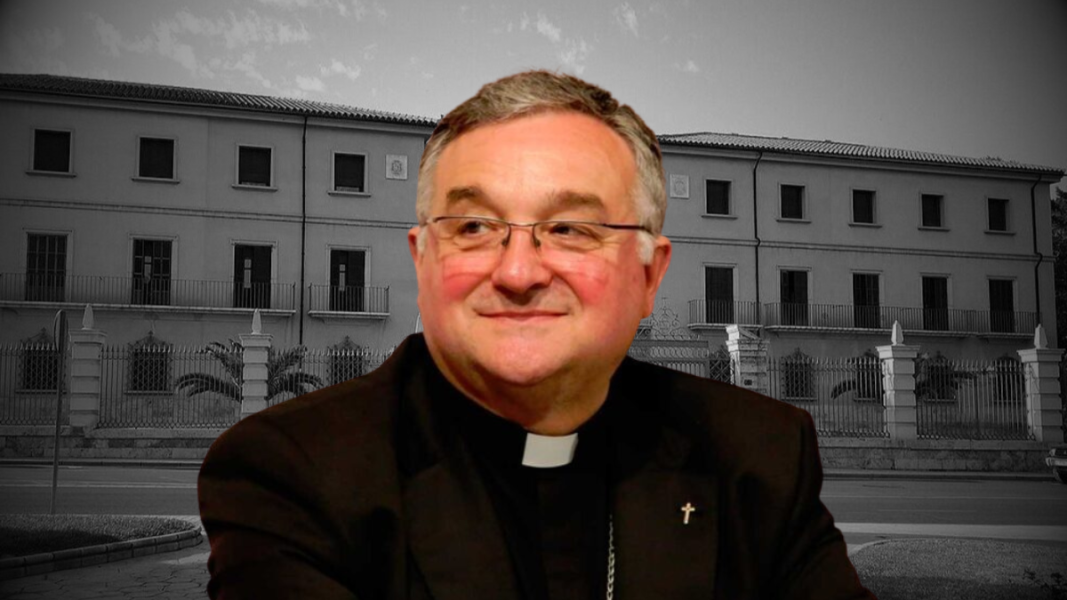
According to the Diocese of Almería, Bishop Antonio Gómez Cantero presented this Tuesday, September 23, a new project for welcoming and training young migrants at the Minor Seminary in the city. The initiative, developed with the Society of Jesus, aims to offer professional training in hospitality, logistics or care, in addition to academic reinforcement and personal accompaniment.
A personal decision by the bishop
In a meeting with journalists, Gómez Cantero emphasized that it is a «serious, well-planned and deeply evangelical» proposal, unlinked from economic interests. «This project is neither rented nor done to make money. It is a free service that arises from the Church’s Samaritan mission. And if necessary, I myself would come to live here with them,» the bishop affirmed.
“I put a face to migration. I have met these people in Senegal, in Bolivia or in Colombia, and I know they seek the same thing we sought: bread and dignity”
The initiative involves setting up eight rooms for young migrants from Monday to Friday, with the presence of nuns from the Congregation of Christ Jesus who will reside in the building.
A Seminary without seminarians
The episcopal decision comes in a delicate vocational context: this year, barely two new seminarians joined the diocese of Almería. The Minor Seminary building, empty of vocations, is now destined for social use, without explicit references to faith formation or the promotion of new priestly vocations.
The bishop spoke of «regulated training» and integral accompaniment, but made no mention of catechesis or Christian formation for the beneficiaries. In this way, the proposal appears closer to a humanitarian integration project than to a pastoral itinerary.
Concern in the surroundings
Statements from the seminary’s neighbors, reported by La Gaceta, show concern about the origin of the young people who would come to live in the facility, as the media claims they come from shanty settlements in Níjar and Vícar.
«We don’t know their history from their country. The school hasn’t been clear. We parents communicated our uncertainty about the environment around the school,» explained a mother. «Now the safety of our children is not total as was said. The situation is very worrying,» said another.
The concern centers on the fact that the welcomed young migrants will leave freely after classes and will mingle in the surroundings of the educational center.
Works of mercy or social action
Although the Church has always been present in situations of need, the approach of this project seems to remain in the realm of job training. It is striking that the traditional works of mercy—such as teaching those who do not know and giving lodging to the pilgrim, among others—are not explicitly mentioned, which would have framed this proposal within the Church’s evangelizing mission.
Gómez Cantero himself recalled historical examples of accompaniment to Spanish emigrants in France or to marginalized patients, and evoked his experiences in Africa and Latin America. However, on this occasion, the emphasis has been placed on the formative and social aspect.
The bishop concluded the event with a phrase that summarizes his vision: “Against the protest, the proposal. And our proposal is clear: an evangelical, serious and forward-looking project, that arises from the heart of the Church and seeks to serve those who need it most”.