


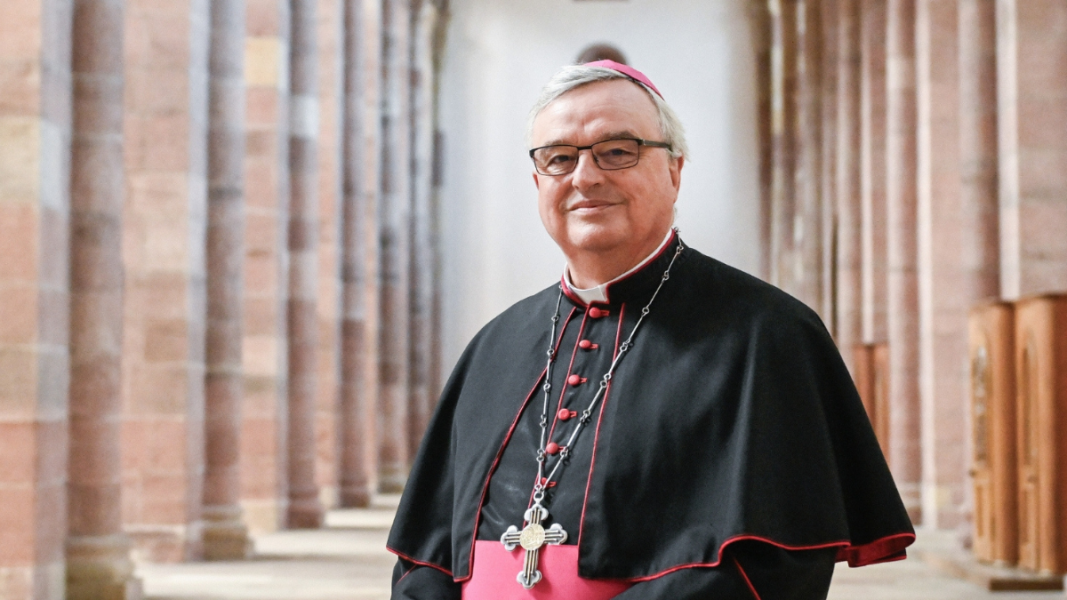
The German portal katholisch.de published an interview with the Bishop of Speyer, Karl-Heinz Wiesemann, in which the prelate directly questions the mandatory nature of priestly celibacy, calls for opening a debate on the ordination of women as deaconesses, and suggests rethinking the role of the priesthood in the Catholic Church.
Wiesemann calls for eliminating mandatory celibacy
Wiesemann, who has just celebrated 40 years of priestly ordination, stated that “we lose many good candidates for the priesthood because they do not want or cannot live celibacy.” In this regard, he maintained that the “exclusive link between the priestly ministry and the obligation of celibacy should disappear” and that it should be a voluntary option, as it is in some current exceptions.
Although he acknowledged that celibacy “remains a spiritually valuable way of life,” the bishop defended the idea that a priest could also live his dedication to Christ and the Church within marriage. He even suggested a model similar to that of religious orders, where temporary vows are made before perpetual profession.
Proposal for local changes in Germany
The Bishop of Speyer went further and proposed that “some local Churches, like the German one, could follow this path without it needing to be universal.” According to his vision, this flexibility would allow for a response to the growing problem of vacant priesthoods and the “exodus of vocations” that, in his opinion, is caused by mandatory celibacy.
Female diaconate: challenge to defined doctrine
Another of the controversial points in the interview was his support for the ordination of women as deaconesses. Wiesemann declared that the theological argument excluding women from the sacrament of holy orders “has lost strength” and that “there is no absolute reason” to prevent it.
These words clash with the magisterium of St. John Paul II, who in the apostolic letter Ordinatio sacerdotalis (1994) -citing Paul VI- defined that the Church «does not consider itself authorized to admit women to priestly ordination», a doctrine repeatedly reaffirmed by the Holy See.
The priesthood “as pastoral service”
The bishop also suggested “rethinking the priestly ministry” and delegating parish management tasks to laypeople, so that presbyters can focus on spiritual care. According to him, the figure of the priest has been reduced “to a manager of communities” and should recover its essentially pastoral character.
Unity in the Church, but divisive proposals
Although he insisted that he would not act on his own against the Church’s norms, Wiesemann defended the need to open a debate around celibacy and the role of women in ordained ministries. He assured that he would not place himself “outside canon law,” but admitted that the current discipline “is difficult to sustain in the contemporary social context.”
These statements by Wiesemann are neither new nor isolated, the Bishop of Speyer had already publicly expressed his support for the female diaconate, the possibility of married priests, and even blessings for homosexual couples. This reflects the intention to push toward the progressive reform promoted by various heads of the German episcopate.