


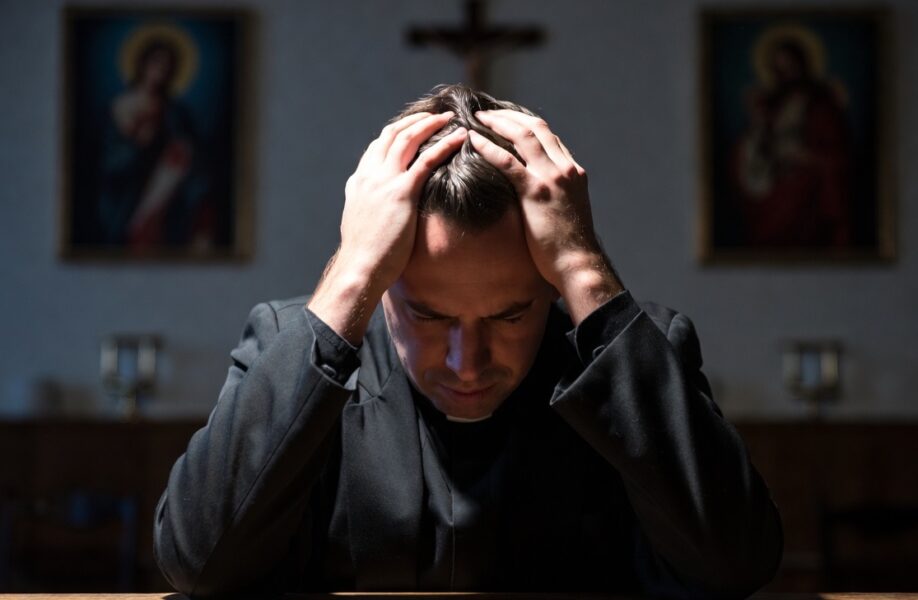
Following the official communiqué from the Diocese of Papantla about the causes of the death of Father José Medina García, the confirmation of the fact is as hard as it is sad: suicide. “According to preliminary information, the priest would have ingested a toxic substance, a situation that led to his urgent hospitalization. Despite the medical efforts made, he unfortunately lost his life”. The text asks for “prudence and respect for his dignity, as well as for his family’s pain”, avoids any premature judgment and entrusts the priest’s soul to the “infinite mercy of God”.
Unfortunately for any community, facing such a difficult situation deserves special emphasis. The personal decision of a priest to end his life also raises perplexity and astonishment… Everything that went through his mind, the way he prepared his death and the pain he must have suffered from a poison that did not have immediate effects. What pushed Father Medina to such a grave act? Depression? External pressures? Threats? Loneliness? The case is not an isolated episode; it reveals the mental fragility that many presbyters in Mexico might suffer and the almost non-existent network of real accompaniment that the Church offers.
In rural contexts like Misantla or Pueblo Viejo, the priest usually lives isolated without professional psychological support, surrounded by extreme poverty, extortion from organized crime and constant pastoral demands. The Diocese of Papantla, like others in Veracruz, faces an environment of high vulnerability. In urban areas the pressure is different, but just as intense: saturated agendas, public scrutiny, misunderstanding from the faithful, impeccable ideals of unattainable holiness and a formation that often represses human vulnerability instead of integrating it.
A 2009 doctoral thesis presented at the University of Salamanca and disseminated in media in 2017 analyzed 881 priests from Mexico, Costa Rica and Puerto Rico and detected a significant incidence of burnout syndrome or burnout. In Brazil, a country with similar cultural and pastoral realities, reports from the National Conference of Bishops of Brazil recorded 17 priestly suicides in 2018 and 10 in 2021.
In Mexico, the Mexican Episcopal Conference has no references, at least not public ones, of statistics on the clergy’s mental health or on completed suicides or attempts. The silence in the Mexican Episcopal Conference is absolute and does not mean the absence of the problem; it shows that the topic is taboo. How many presbyters struggle in silence with severe depression, alcohol dependence, consumed by addictions or pastoral exhaustion?
The current structure offers very little. After ordination, the priest is at the mercy of his bishop. Few dioceses have formal prevention protocols, specialized psychological accompaniment teams or funds allocated to therapies. Added to this is the “fraternal accompaniment”, which is rather deficient and usually limited to hackneyed spiritual talks, the recommendation to “pray more” or feeding the idea that the priest, by being anointed, eliminates all defects of human nature. This is compounded, at times, by the tremendous pressure on a person when they are subjugated and submitted, either by the bishop or by religious provincials who, instead of being masters in charity, are true overseers treating peons like draft animals.
Bishops also do not escape this reality; governing a diocese in a country of 126 million inhabitants, marked by violence and vocational scarcity, generates chronic stress and isolation. The hierarchical model makes it difficult for them to recognize their own fragility without fear of losing authority.
Father Medina García was exactly 41 years old, an age that coincides with the group most affected by suicide in Mexico. According to the official INEGI report “Statistics on the Occasion of World Suicide Prevention Day” of September 8, 2025, with preliminary data from 2024, 8,856 suicides were recorded among people aged 10 and older, with a national rate of 6.8 per 100,000 inhabitants.
The 30 to 44 age group, exactly Father Medina’s age segment, was the highest in 2024, 10.7 (18.8 in men and 3.1 in women) per 100,000. Veracruz recorded a standardized rate of 5.6, one of the lowest in the country.
Faced with this panorama, the Papantla communiqué becomes a paradigm of a problem that is also evident in deficient ecclesial communication. It mentions the ingestion of the toxin and the death, eluding the obvious. It asks for prudence while leaving ambiguity afloat. This approach does not protect the family, the community or the deceased himself; on the contrary, it invites more harmful rumors and aggravates the pain. A transparent communiqué that recognized the suicide, lamented the suffering and announced concrete prevention measures would have been an act of evangelical truth.
The teaching of the Catechism of the Catholic Church on this topic offers a merciful balance. It states that each person is responsible for their life before God, who gave it to them; we are administrators, not owners, and we are called to receive it with gratitude and preserve it. Suicide contradicts the natural inclination to preserve life, it is gravely contrary to the just love of self, it offends the love of neighbor and the love of the living God. However, it recognizes that grave psychological disturbances, intense anguish or extreme fear can notably diminish the responsibility of the one who commits it. Therefore, the eternal salvation of those who took their own lives should not be despaired of, God may have offered them, by ways that only He knows, an opportunity for saving repentance. The Church prays for them. (Cf. Nos. 2280 to 2283)
This merciful vision resonates in the reflections of Cardinal Joseph Ratzinger, Pope Benedict XVI. In texts compiled and analyzed in “Ratzinger’s Response to the Crisis of Meaning” (Nueva Revista, July 3, 2018), he explains that the human being aspires to an infinite happiness and meaning that neither science, nor consumption nor subjectivism can fulfill. Religion, when reduced to a “consumer product” chosen “to each one’s measure”, is comfortable in times of prosperity but abandons man in crisis. Authentic meaning is not manufactured: it is received as a gift from God. Faith is a personal encounter with Jesus Christ, a love that redeems and sustains even in the deepest darkness.
The case of Father José Medina García challenges the situation of our presbyters and their health by recognizing that there are cases in which a cleric, who has life as a divine gift, considers ending his own by crossing the threshold of the false door. Until these lessons are assumed with concrete actions, the diocesan and episcopal offices will continue in the pastoral of the communiqué that only obeys the circumstances, eluding solutions and inventing truisms.
The Father Josesito could have had deep accompaniment, and perhaps the signs and events surrounding his life could have anticipated a tragedy. If the Church wants to announce God’s mercy with credibility, it must begin by caring for its own with the same tenderness it preaches to the world because, as Benedict XVI taught, only love redeems. And love, in practice, is called real accompaniment, transparency and concrete hope.