


On the early morning of Sunday, October 26, violence erupted in the Sierra Tarahumara as shootouts, bullet-riddled vehicles, and inert bodies in the streets marked a new page of horror in this Rarámuri land, the result of clashes that left seven injured and seven dead.
In the midst of mourning, the Diocese of Tarahumara rejected this violence through a manifesto of repudiation and a letter of solidarity from Bishop Juan Manuel González Sandoval and the homily of Father Enrique Urzúa, the local parish priest, who denounces the «abandonment» by the authorities. «They no longer listen to us,» cried the priest, asking for prayers to awaken from indifference those responsible for public safety.
The events that plunged Guachochi into mourning broke out shortly after midnight, in the Turuseachi neighborhood. An armed commando, possibly linked to factions such as «Los Cheyenes,» «Los Reyes,» or «La Línea»—groups that dispute control of drug trafficking routes in the sierra—burst in pursuit of supposed enemies. In their murderous frenzy, they mistook a civilian family for criminal targets. Professor Luis Cruz Palma, 44 years old, was traveling in his vehicle with his wife Blanca Rosa C. E., his two-year-old son L. D. B. T., and other relatives when bursts of high-caliber weapons hit them. Four died on the spot: Cruz Palma, his wife, and two unidentified companions. Nine seriously injured were evacuated to the IMSS-Bienestar Rural Hospital number 26, including the child, Sergio J. F., 27 years old, and Eddy Omar F.
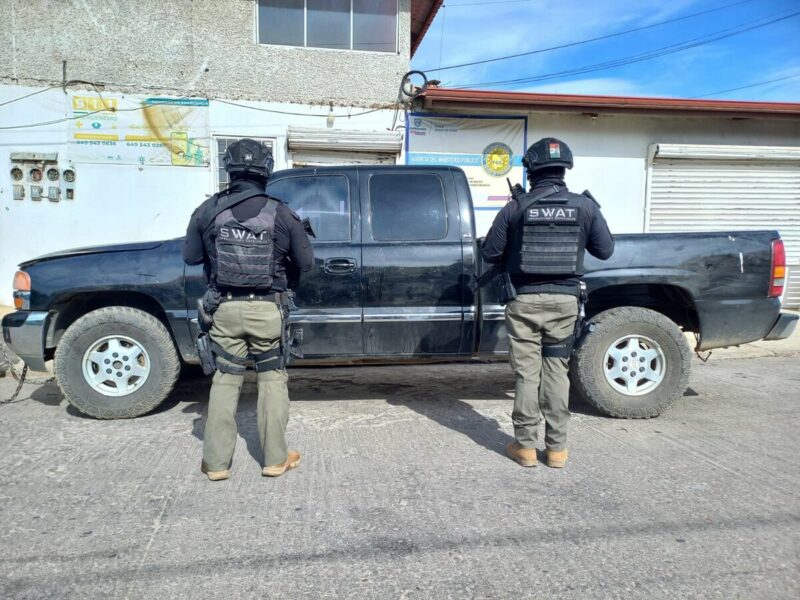
Just an hour later, on the road to Yoquivo, known as El Lobito, two more bodies lay abandoned: Liborio L. C., 25 years old, and María C. G., 26. The Chihuahua State Attorney General’s Office (FGE) confirmed a total toll of seven homicides and seven injuries, all from firearm projectile impacts. Bullet-riddled vehicles—a 2000 sand-colored Chevrolet Tahoe, a 1987 red Nissan Sentra, and a 2004 red Dodge Durango—were seized with artisanal armor and altered plates, evidence of the underground war ravaging the region. Panic gripped the area with a telephone signal blackout that lasted more than 15 hours, leaving residents in absolute uncertainty. A spontaneous curfew, dictated by fear, paralyzed the streets; schools closed, and Rarámuri mothers hid their children in ancestral caves, recalling traditions of resistance against invaders.
This massacre is not an isolated incident. The Sierra Tarahumara has become a powder keg for organized crime for years. In October 2025, Chihuahua accumulates 107 homicides, ranking as the fourth most violent state in the country. Guachochi, with its mestizo and Rarámuri population of just 50,000 souls, has seen the dispute over territorial control escalate, with weekly shootouts, extortion of corn and chickpea producers, and forced recruitment of indigenous youth. «Violence has gone from being between groups to striking society as a whole,» warns the Magisterial Defense Network in a statement of condemnation, highlighting the murder of Cruz Palma, an educator dedicated to rural schools.
That same Sunday the 26th, during Mass at the Cathedral of Santa Anita, Father Enrique Urzúa delivered a homily: «They have abandoned us, they no longer listen to us,» he exclaimed, addressing state and federal authorities directly. He denounced the official minimization of the attacks as «bullets in the air,» and revealed the palpable terror: «Guachochi lives between fear, anger, and impotence. We don’t have bulletproof vests or armored vehicles. We need real help, not empty promises.»
Bishop Juan Manuel González Sandoval, MNM, issued a public letter of solidarity to the bereaved families. «You are not alone,» he assured, expressing «deep pain» for the losses and condemning «all forms of violence that threaten the peace and dignity of our communities.» González Sandoval, a missionary in the sierra for decades, called on the authorities to «reinforce security immediately and effectively,» emphasizing that «life is a gift that must always be protected. Violence will never be the path to justice or peace.»
That same day, the diocese published a collective manifesto, signed by the bishop and the local clergy. «Every human life is sacred and unique: no justification can shelter violence, hatred, or revenge,» states the document, repudiating the attacks and demanding a «comprehensive plan for justice and peace.» It invokes Our Lady of Guadalupe, «Mother of the Tarahumara and Queen of Peace,» so that «this blessed land overcomes violence.» The Church commits to accompanying the people with prayer, closeness, and community action, rejecting «getting used to the death that strikes repeatedly.» «Fear does not have the last word. God does not abandon his people,» it concludes, with hope placed in the Risen Christ.