


As the dusk of the ninth month of the year arrives, reflection is obligatory due to an event that went unnoticed and will mark the course of evangelization toward the third decade of the century. On September 2, 495 years were commemorated since a foundational event in the history of the Church in this country: the canonical erection of the Diocese of Mexico.
For centuries, it was the epicenter of ecclesiastical power until its power faded in the paradox that its eclipse came from within, from the archbishops themselves, especially in less than a decade. Its glory led to, in those dawns, the archbishops of Mexico being viceroys of New Spain one of them, Lizana Beaumont, faced the crises and ideals of emancipation. Elevated to the dignity of archdiocese until 1546, the year 1530 was the birth of the organized Church in the heart of New Spain.
495 years project the once powerful and fertile archdiocese toward a sincere examination of its conditions, its historical context, and vitality toward the half-millennium of its foundation.
The conquest of Tenochtitlán in 1521 opened the doors to the evangelization of the New World. At that time, the absence of a formal ecclesiastical structure was one of the impediments to the expansion of the Catholic faith. Initially, the territory of the city of the vanquished depended on the oldest diocese, that of Tlaxcala, erected around 1525, which will celebrate its 500 years in October.
Clement VII, amid the European turbulences such as the sack of Rome, responded to the requests of Emperor Charles V, king of Spain. Under the Royal Patronage, the monarch proposed ecclesiastical candidates and the Pope confirmed them. Toward September 2, 1530, the pontiff issued six related bulls, the main one being that of the conformation of the diocese, a decision that responded to spiritual needs and the consolidation of Spain’s power in the New World.
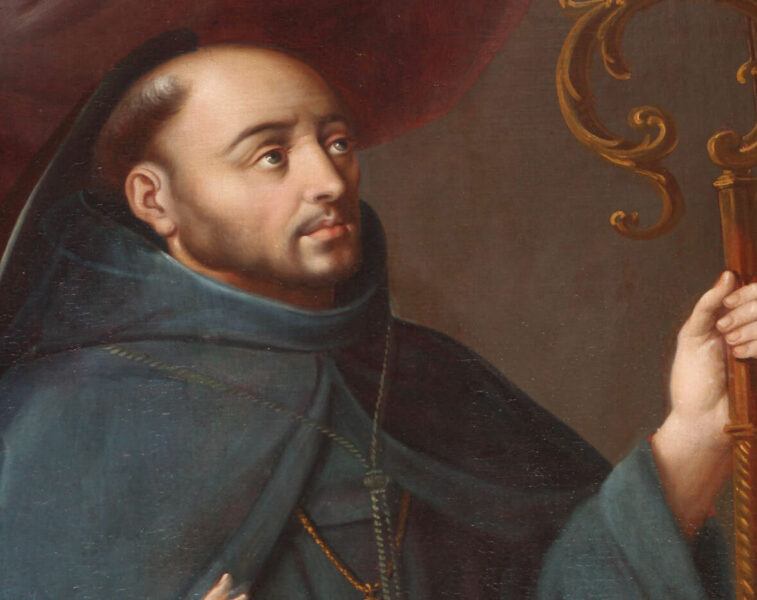
The Basque Franciscan Juan de Zumárraga (1468-1548), sent to New Spain, by one of those historical coincidences was named the first bishop of Mexico on December 12, 1527. Called the “protector of the Indians,” the date of his election is significant and needs no further explanation since on December 12, 1531, according to tradition, he received from Juan Diego the roses of the Guadalupan miracle. Zumárraga emerged as a figure positioning himself as the great educator bishop, missionary, and defender of the natives of New Spain; he held inquisitorial powers in his hands, the granting of indulgences, and although in 1547 he had the bull that elevated him to archbishop, he did not receive the archiepiscopal pallium upon dying in 1548.
The heart of the 495th anniversary lies in the papal decree as the birth certificate and foundational document, highlighting its structure and key provisions. The Sacri apostolatus ministerio, Of the ministry of the sacred apostolate, formally erected the diocese as an episcopal see, separating it from Tlaxcala and making it suffragan to the Archdiocese of Seville.
The decree determined the erection of the diocese with the capital of the viceroyalty, the ancient Tenochtitlán, as the bishop’s seat, encompassing a vast territory from the Gulf of Mexico to the Pacific Ocean. Its power and extent even led it to be the metropolitan see of distant dioceses such as that of the Philippines.
The birth certificate emphasizes the apostolic mission by ordering the construction of churches, the formation of clergy, and the conversion of indigenous people. Clauses on ecclesiastical revenues derived from tithes and royal donations ensured its economic stability. Tensions are also revealed; the decree promoted evangelization but also cultural imposition on indigenous peoples. Zumárraga, despite his defense of the natives (as in his denunciation against Nuño de Guzmán), presided over autos-da-fé that burned pre-Hispanic codices, illustrating the double edge of religious colonization.
The creation of the Diocese of Mexico marked the transition from scattered Franciscan missions to an institutionalized Church and was the beginning of the great works that still leave us in awe: the construction of the Metropolitan Cathedral (begun in 1573) and the foundation of seminaries, and elevated to archdiocese in 1546 by Paul III with the bull Super universas orbis ecclesias, it became the Primate of Mexico, influencing the formation of other dioceses such as Puebla and Michoacán.
In social terms, the decree promoted the «reduction» of indigenous people to civilized towns, combining faith and Spanish control. Today, in a secularized Mexico, this legacy persists in debates about the separation of Church and State and the role of faith in national identity. The archdiocese faces modern challenges such as secularization and violence, but its foundation reminds us of the resilience that has weathered storms thanks to divine providence.
Today, due to the unfortunate pastoral intuitions of those who hold the destinies of faith and evangelization in their hands, the Archdiocese of Mexico has been reduced to its minimum extent, which in the future would no longer allow for further dismemberment; at its maximum peak, around the 1980s, the archdiocese housed nearly 9 million Catholics; today it barely reaches 4.5 million (as of 2024, the Archdiocese of Guadalajara, for example, has nearly 6 million Catholics); it is no longer the focus or epicenter of ecclesiastical power; its archbishop, currently, is rather a gray prelate who serves as decoration to say that there is a cardinal in the primatial see with no greater influence than that of the bucolic, measured, and careful homilies in the Basilica of Guadalupe.
As we project toward the 500 years of the conformation of the Diocese of Mexico, we will be faced with the mirror of the religious evolution of the Church of Mexico, a work of God that was worthy of admiration in our eyes. Today, it demands a serious and paused reflection on the past of an archdiocese in decline, to illuminate the ecclesiastical and social future of Mexico, to recover the value of faith and hope.