


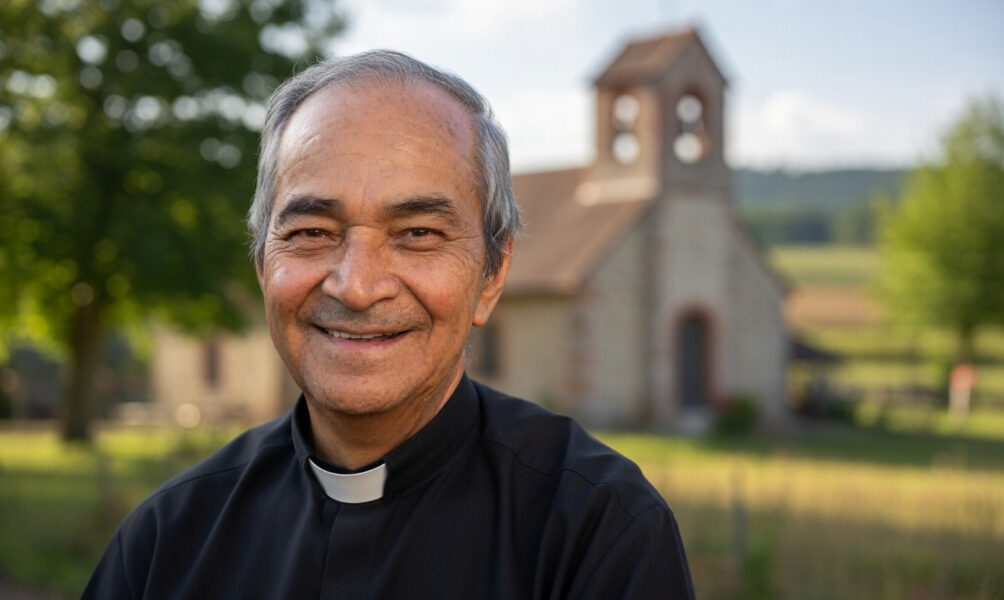
The Archdiocese of Tuxtla Gutiérrez confirmed this Monday the discovery of the lifeless body of Father Juan Manuel Zavala Madrigal, vicar of the San Marcos Evangelista church in Ocotepec, Chiapas.
The 60-year-old priest disappeared on the night of Sunday, March 8, after officiating a mass in a nearby community and his body was located near the Laguna Verde ecotourism center in the municipality of Coapilla. State authorities have initiated investigations to clarify the causes of his death, although preliminarily no evident signs of violence have been reported.
According to initial reports, Father Zavala Madrigal headed to San Andrés Carrizal after the Eucharistic celebration but never arrived at his destination. Hours later, local residents found his black Jetta vehicle with license plates DMD-885-K, along with his backpack, cassock, and religious items in the San Juan neighborhood of Coapilla. After a fruitless search during the night, the body was discovered on Monday morning by residents of the area, who alerted the authorities. The Chiapas State Attorney General’s Office opened an investigation file to determine whether it was an accidental incident or if there are elements of criminality involved.
In a statement, the Archdiocese of Tuxtla Gutiérrez expressed its deep sorrow for the «regrettable event» that took the life of the priest, highlighting his pastoral dedication. «He gave his life to accompany the communities,» the diocese noted, recalling his 36-year trajectory of service in parishes such as San Juan Bautista in Ocozocoautla. The ecclesiastical institution requested prayers for his eternal rest and collaboration with the authorities to clarify the facts, without speculating on the causes. This incident has shocked the Chiapas Catholic community, where Father Zavala was known for his closeness to indigenous populations and his commitment to proclaiming the Gospel in rural areas affected by poverty and insecurity.
This event is set in an alarming context of violence against members of the Catholic Church in Mexico, particularly during the administrations of Andrés Manuel López Obrador (2018-2024) and Claudia Sheinbaum Pardo (2024-present). According to the 2025 Annual Report of the Catholic Multimedia Center (CCM), between 2018 and 2025 at least 13 priest murders were recorded, plus three disappearances. During López Obrador’s administration, 10 priest homicides and one seminarian were documented, with emblematic cases such as that of Father Ícmar Arturo Orta in Tijuana (2018), the Jesuits Javier Campos and Joaquín Mora in Cerocahui, Chihuahua (2022), and Father Javier García Villafaña in Michoacán (2023).
In the initial period of Sheinbaum (2024-2025), the CCM reports three additional murders: Father Marcelo Pérez Pérez in Chiapas (2024), Father Bertoldo Pantaleón Estrada in Guerrero (2025), and Father Ernesto Baltazar Hernández Vilchis in the State of Mexico (2025).
The CCM emphasizes that priests are perceived as «social stabilizers» who hinder the control of criminal groups in vulnerable communities, making them frequent targets. From 1990 to 2025, 92 violent events against the Church have been recorded, including 62 priest murders, one cardinal, and several laypeople. Although the number of homicides decreased slightly compared to the previous administration (2012-2018, with 19 priests murdered), violence persists with new modalities, such as executions in crossfire or forced disappearances.
In Chiapas, the death of Father Zavala Madrigal evokes the case of Father Marcelo Pérez in 2024, murdered amid conflicts over territorial control between cartels. Although authorities have not confirmed a criminal motive in this new incident, organizations like the CCM and human rights defenders urge a thorough investigation, considering the pattern of aggressions. «The Church is not immune to the people’s pain,» an ecclesiastical spokesperson noted, recalling that these events not only affect faith but also social cohesion in marginalized regions.